Close Search
Behind the Masks: A Backstage Look at Sant Antoni in Alcúdia
- By
Laura Pott
sustainability 2030
off the island
Behind the Masks: A Backstage Look at Sant Antoni in Alcúdia
Jan 20, 2026
by
Laura Pott
Behind the Masks: A Backstage Look at Sant Antoni in Alcúdia
sustainability 2030
off the island
Behind the Masks: A Backstage Look at Sant Antoni in Alcúdia
Jan 20, 2026
- By
Laura Pott
Behind the Masks: A Backstage Look at Sant Antoni in Alcúdia
off the island
sustainability
Behind the Masks: A Backstage Look at Sant Antoni in Alcúdia
Jan 20, 2026
- By
Laura Pott
All Photos by Duncan Kendall
W

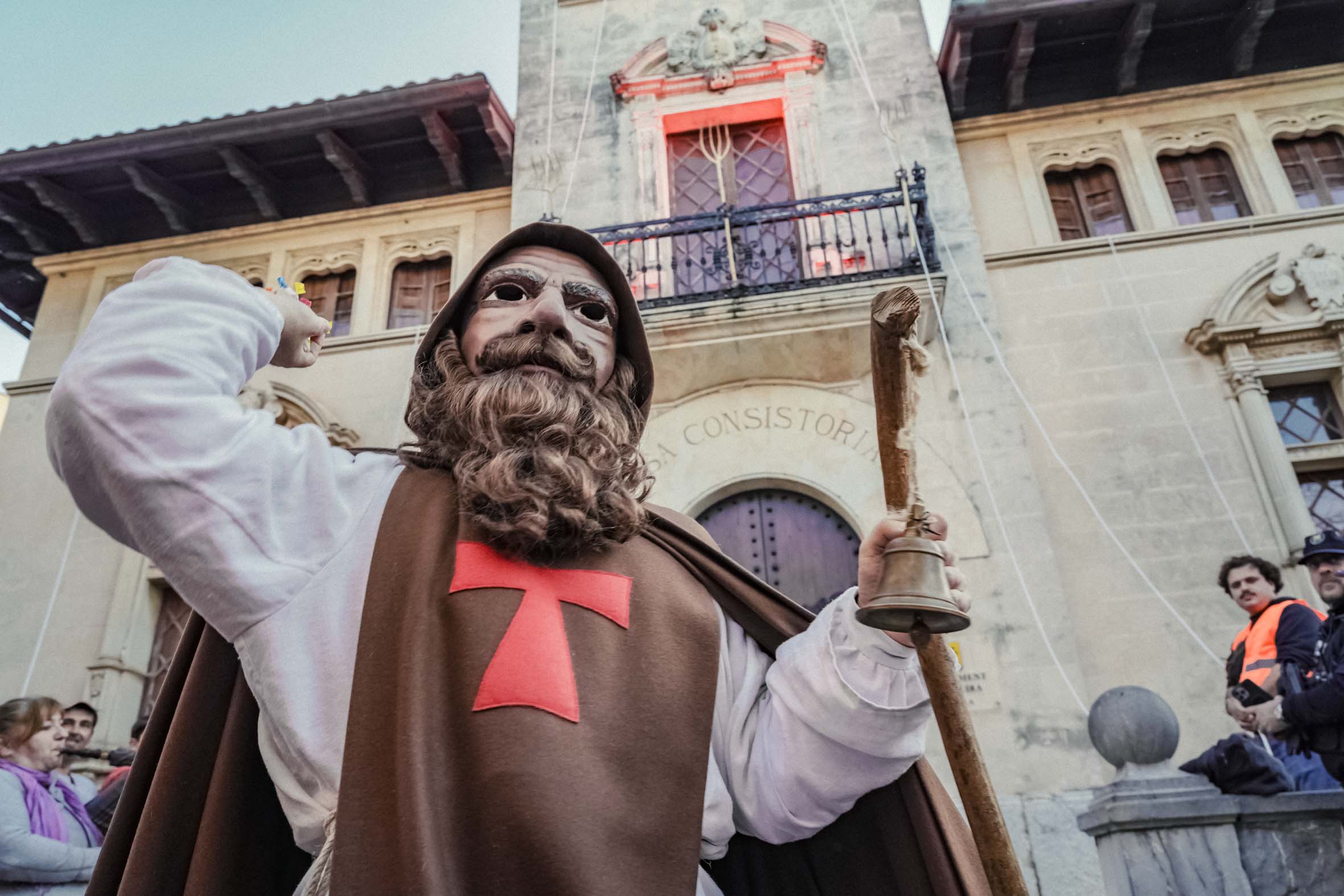
hile much of Spain settles into a quiet winter routine after the holidays, Mallorca prepares for one of its most deeply rooted and emotionally charged celebrations: Sant Antoni. Across the island, Sant Antoni is celebrated on January 16 and 17, a tradition with roots in medieval agrarian rituals that sought to protect livestock and ward off evil spirits. Sant Antoni Abat became the central figure, the patron saint of animals who resisted the demons’ temptations through faith and endurance. Fire became part of the narrative, and the once-feared demons transformed into theatrical figures dancing through the streets and setting the stage for a night of tradition and communal celebration.

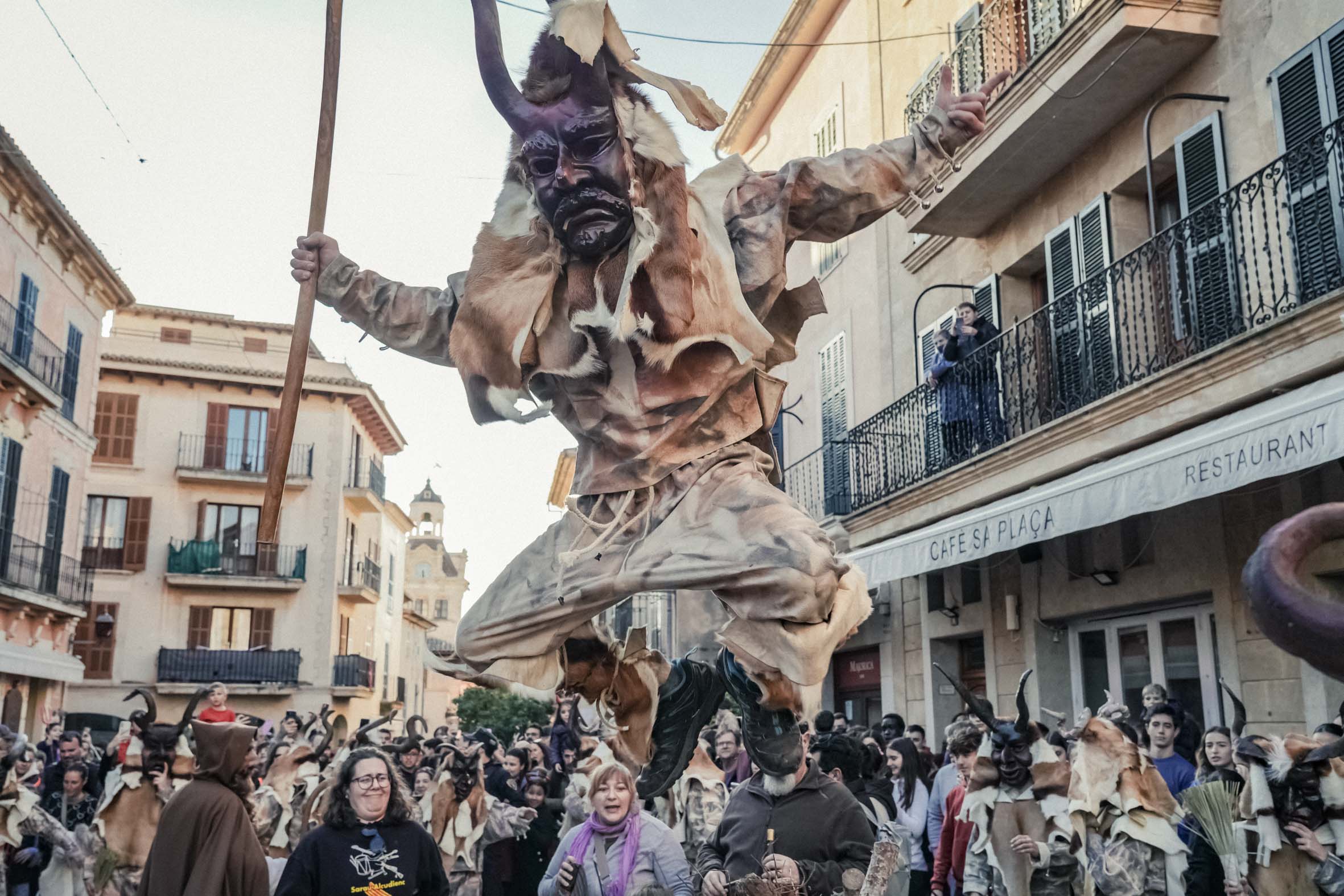
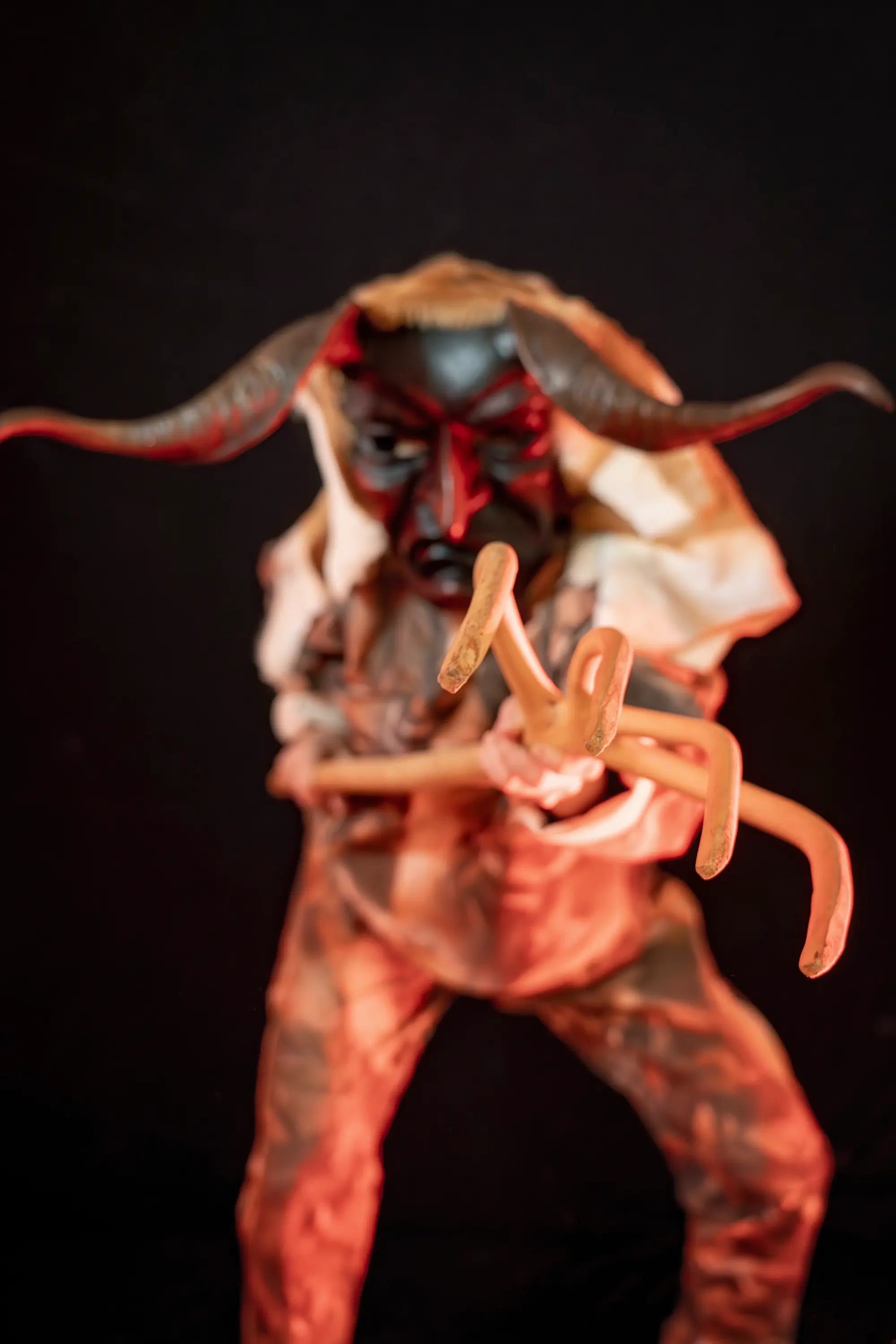
Sant Antoni is a week-long celebration. In the days leading up to January 16, Mallorca is filled with unmistakable signs that the fiesta is approaching. Foguerons (bonfires) appear in streets and squares, the scent of smoke fills the air, and the sounds of xeremiers, ximbombas and flabiols resonate through the towns. In Alcúdia, Sant Antoni has its own distinct rhythm, history and character. One shaped not only by tradition, but by people who over decades have lived and reinvented the fiesta. Especially the dimonis carry a rich history, the masked figures who dance through the streets, play tricks and symbolize the temptations and the evil that Sant Antoni resisted. Compared to villages such as Sa Pobla or Artà, where Sant Antoni celebrations date back centuries, Alcúdia’s dimonis are relatively young.

The official dimonis of Alcúdia were created in 1990, following the success of a major island-wide Dimoniada held in the town in 1989, a gathering or festival of dimonis where multiple groups from different towns come together to perform. The driving force behind this creation was Antoni Bibiloni, then councillor for culture at Alcúdia Town Hall and founder of the cultural association Sarau Alcudienc. Known for its work preserving traditional dance and folk culture, Sarau became and remains inseparably linked to the dimonis.

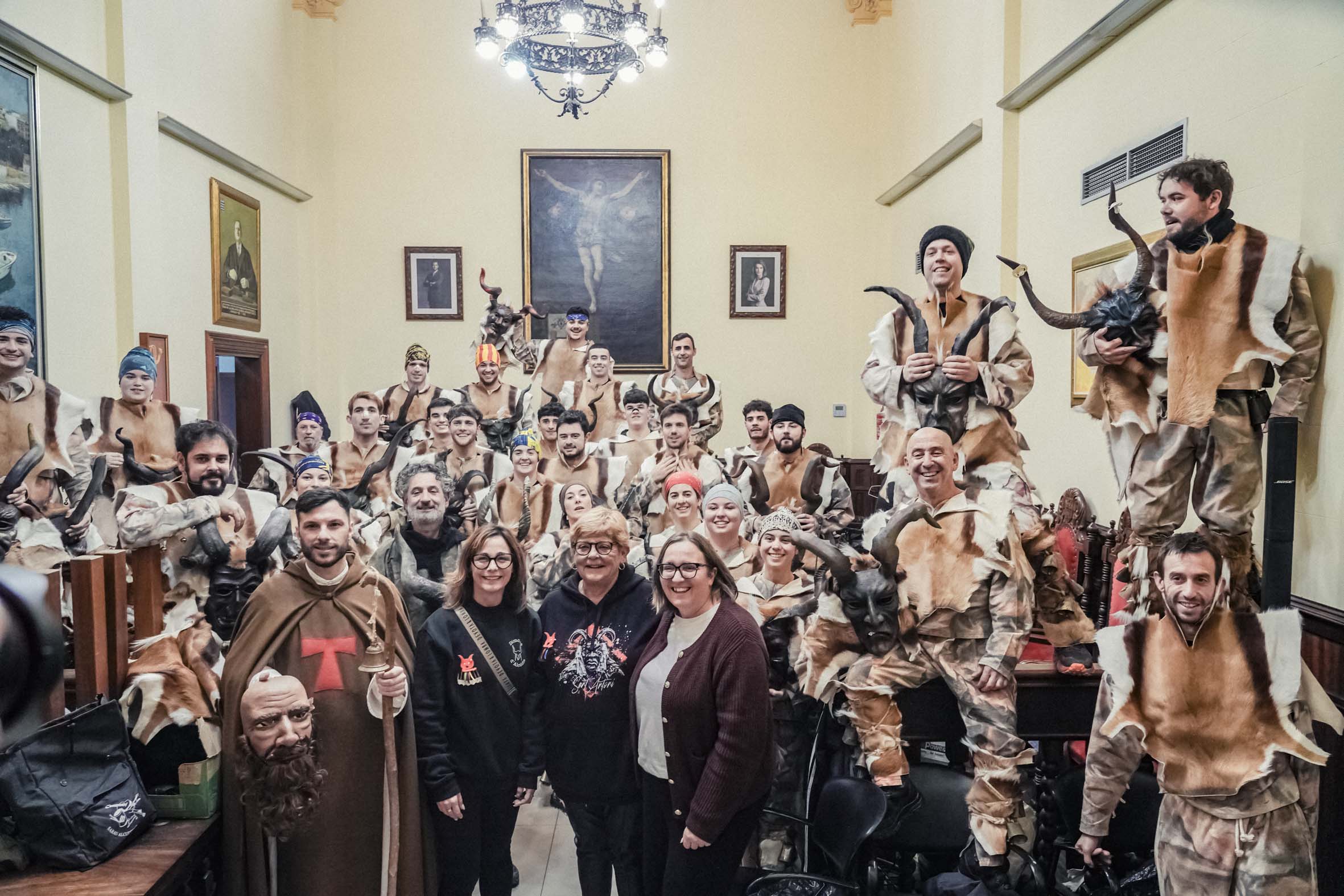
The first appearance in 1990 featured just nine dimonis. Their masks and costumes were simple, and their performances largely improvised. Yet the impact was immediate. What started as a cultural experiment quickly became a fixed element of Alcúdia’s Sant Antoni celebrations. Over the following decades, the group evolved both in size and structure: first to nineteen, later twenty-six, and since 2024, thirty official dimonis form the core of Alcúdia’s Sant Antoni spectacle. Despite this growth, one principle has remained unchanged. “The masks and the costumes belong to the town,” explains Jaume Martí Capó Viver, current president of the Associació de Dimonis d’Alcúdia, “while their maintenance, the organisation and performances are coordinated by Sarau Alcudienc and our association.”
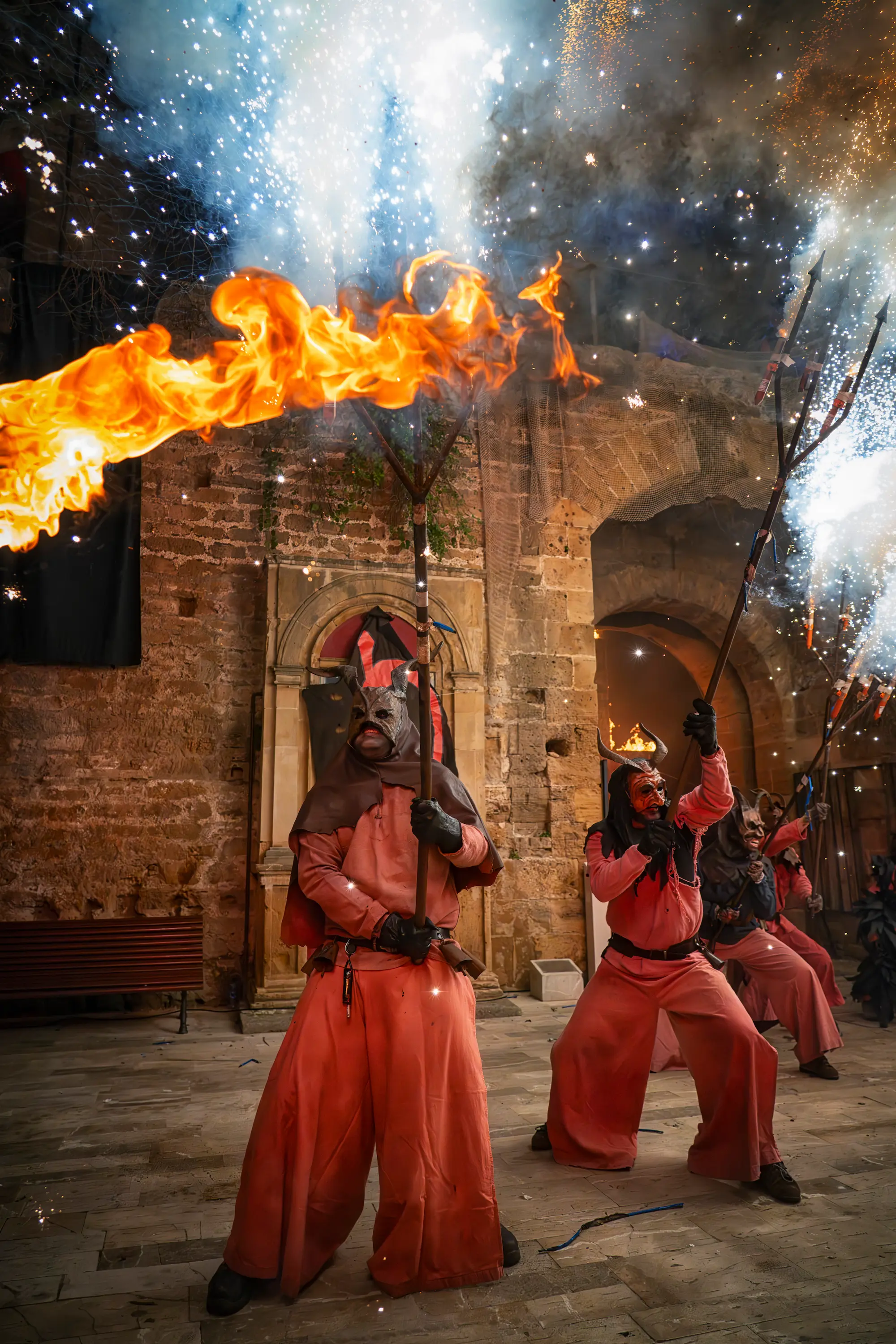
All Photos by Duncan Kendall
T

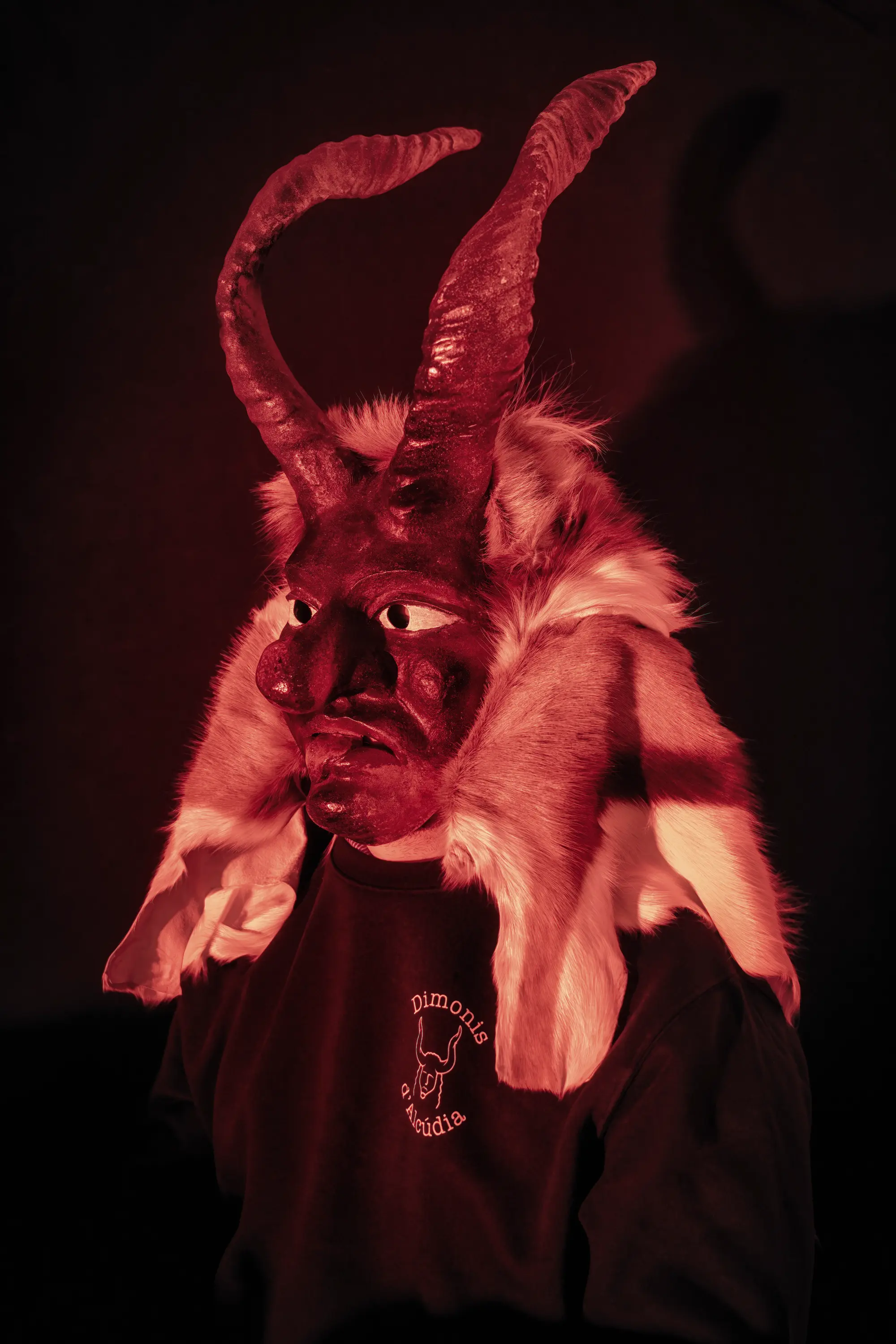
oday, the group is structured as follows: 10 persons from Sarau Alcudienc, another 10 from the Associació de Dimonis d’Alcúdia and 10 persons selected by public lottery perform as dimonis. After the lottery, another 7 people were added this year. Among the thirty-seven figures, one stands apart: the Dimoni Negre, this year performed by Pere Malondra Sánchez. “This dimoni became famous because he’s different. He’s the only one with a black mask and costume,” Jaume Capó says. 

Jaume first dressed as a dimoni in 2008, when he was just seventeen. Today, at thirty-five, he has worn the mask for eighteen consecutive years. “My father is from Sa Pobla,” he says, “where Sant Antoni is experienced with incredible intensity. He took me every year to see the celebrations.” Although he was not originally part of Sarau, Jaume became increasingly involved through his passion for the performance of the dimonis. “I helped with preparations, with the masks, the costumes.” After Antoni Bibiloni’s passing in 2019, Jaume gradually took on more responsibility, eventually becoming the president of the newly formed Associació de Dimonis d’Alcúdia, created by veteran dimonis to ensure continuity, care and organisation.

While the public sees only two hours of controlled chaos, the preparation behind the Sant Antoni performance lasts all year. “I’m always doing something,” Jaume admits. “Sometimes it’s repairing a mask, touching up paint, checking horns.” The unique masks, originally created by Pep Fluxà, and the costumes, made by Toni Mayol Adrover, are never thrown away, everything is part of the story. “We restore everything, many masks and bells are 35 years old.” Each mask, crafted in papier-mâché and covered in gazelle or goat hide, reflects its own character and beauty. “You really grow fond of the masks,” Jaume says lovingly. 

Formal preparations begin in mid-November with coordination meetings. By early December, the official rules are published, and the public lottery (sorteo) opens. This system, introduced to strengthen community involvement, allows residents of Alcúdia to become dimonis themselves. In 2026, 46 people applied for the lottery, including six women. The new regulations guarantee that at least three of the ten selected dimonis must be women, a significant step in the evolution of a traditionally male role. Applicants must be over eighteen, have lived in Alcúdia for at least four years and be physically capable of enduring the demands of the performance.

“If a mask doesn’t fit, there’s nothing we can do. These are historic masks. You adapt to them, not the other way around.”
All Photos by Duncan Kendall
Related Stories.
Oct 30, 2024
sustainability 2030
Open House Palma 2024