Close Search
Ela Spalding: Working Between Art, Ecology and the Landscape
- By
Blaire Dessent
sustainability 2030
off the island
Ela Spalding: Working Between Art, Ecology and the Landscape
Jan 26, 2026
by
Blaire Dessent
Ela Spalding: Working Between Art, Ecology and the Landscape
sustainability 2030
off the island
Ela Spalding: Working Between Art, Ecology and the Landscape
Jan 26, 2026
- By
Blaire Dessent
Ela Spalding: Working Between Art, Ecology and the Landscape
Jan 26, 2026
- By
Blaire Dessent
sustainability 2030
off the island
off the island
sustainability
Ela Spalding: Working Between Art, Ecology and the Landscape
Jan 26, 2026
- By
Blaire Dessent
Cover of the Suelo Field Guide . Opening image of Ariant by Ela Spalding
H

ow can the seemingly simple act of interacting with the landscape transform the way we understand and think about our surroundings? In this subtle space where art and nature coexist, Mallorca-based artist Ela Spalding invites us to relook at and to reconsider the layered ground upon which we live our everyday lives. “We are disconnected from our surroundings and we need to find ways to relate to it,” the artist explains. Spalding’s work acts like a bridge between art, nature, science and community - using various tools and platforms, from artist’s books to sound installations, as guides to expand our awareness. 

In the last decades, the relationship between art and nature has been explored mainly through the lens of the Land Art Movement, from the late 1960s, that was grounded in bold statements such as Robert Smithson’s  Spiral Jetty, on the salt beds of Utah, or Richard Long’s A Line Made by Walking. These were wildly new actions that engaged directly with nature, exploring ideas of site, the environment and geology, but they were also more about the artist’s mark imposed on nature, or the use of nature to make a work of art for documentation. Spalding’s approach offers a new investigation into the art-nature relationship, one more attuned to 21st century concerns and realities. She explores the landscape through artistic gestures that are more about listening to the land and changing yourself than changing the landscape to express your ideas. Through projects such as Suelo (Soil) or Ocaso (Sundown), Spalding merges science, art and nature as a way to acknowledge place and encourage a shift in patterns and ways of thinking about the environment and the landscape. Born in Panama, Spalding studied cinema and photography and minored in dance. She thought about going into theatre but then moved more towards photography and art. These experiences come to play in her multidisciplinary, community-based practice that spans writing, performance, photography, sound, and a podcast, among other things.

In 2012, she founded Estudio Nuboso, an art and ecology platform in Panama that that for over a decade functioned as “a collective of artists, designers, educators and researchers designing and facilitating space and time for encounters between people, nature, science, culture and diverse communities.” With Estudio Nuboso, she co-created residencies and workshops, collaborating with conservation, scientific and cultural organizations such as the Smithsonian Tropical Research Institute and the Green Art Lab Alliance."

In Our Hands, a project by Ela Spalding from 2020
Ela Spalding in her Ocaso installation for Hearth at the CCA Andratx, Photo: Laura Wencker
F

or the 2019 Havana Biennal, she created Ocaso, which she describes as a “collaborative sound installation,” that invites people to sit and relax on hammocks while listening to stories, poems or sounds associated to the location where the piece is installed. She created another version of this in Berlin, in 2022, where she was living at the time, and then in 2025, at the CCA Andratx, as part of “HEART.H”, the exhibition curated by Sylvia Sanchez Montoya. “Ocaso was the first work I created that I felt really integrated the work I'm doing around art and ecology and bringing people together,” Spalding says of the project. 

While in Panama and as a pilot with Estudio Nuboso, she developed the first ideas for SUELO, which is now a field guide and a methodology for “reconnecting with the places we inhabit through soil as sustenance, home, land, ecosystems and territory.”  Having done projects in Panama, Colombia and Berlin, in 2024, she initiated her first Suelo project in Mallorca, shortly after moving to the island with her family. “The idea of Suelo is that as you go through the journey of the Suelo profile you meet different people and aspects of your surroundings, and it transforms you. You find yourself connecting to the place differently… therefore your role, what you perceive as your role might change as well. You make alliances, small gestures, possible horizons for the future and reconsider how you can connect with the place,” she explains. Made in collaboration with the Biennal B, an initiative around art and ecology (that rethinks the Balearic territory through art and sustainability) led by the Es Baluard Museum and the Consell de Mallorca, Spalding led field trips over several days between May and June in Randa, Ariant, Pollensa, Puigpunyent, and the Sea with local specialists including Magadalena Adrover from APAEMA, geologist Lluís Moragues Zaforteza, Joe Holles, Daniel Wahl and archeologist Jaume Deyà. In addition to walking and discovering the land through these experts, Spalding wove in gastronomic experiences as well as listening and sensing practices that tied into and enhanced the experience. She created a limited edition publication about the experience, which she will present at a 2-day symposium for Biennal B, on Friday, January 30th.

With increasing distractions from AI to heated politics, Spalding asks us to slow down and pay attention—to become participants rather than observers in the landscapes we inhabit. Through projects such as Suelo and Ocaso, her podcast, Weaving Corridors,  music, drawings and artist’s editions, Spalding facilitates a platform for listening, for building relationships with the ground beneath our feet, and for reimagining our role within the ecosystems we call home. 

Ela Spalding

@elaspalding

"You find yourself connecting to the place differently… therefore your role, what you perceive as your role, might change as well. You make alliances, small gestures, possible horizons of the future and about how you can connect with the place.”
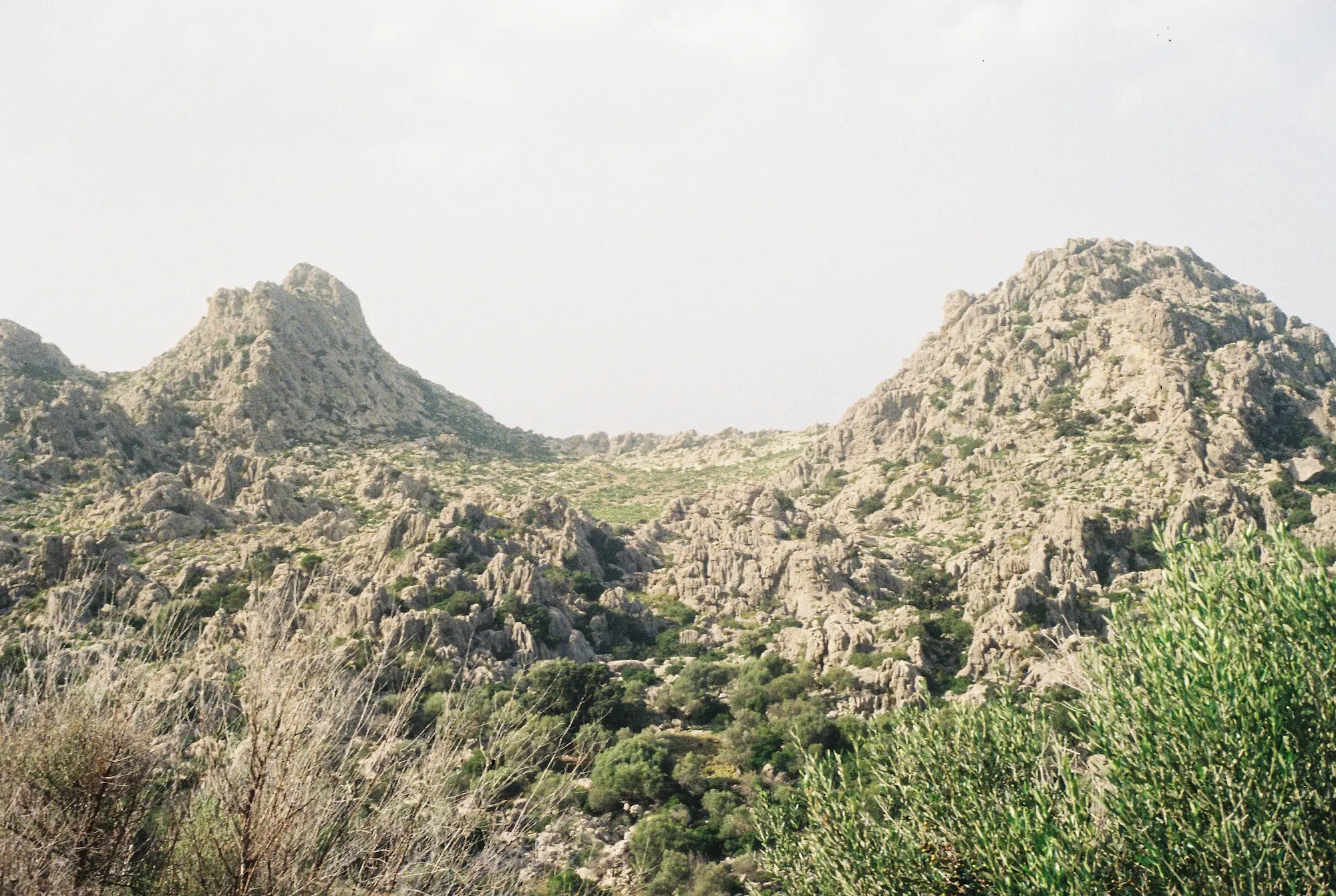
Puig Mayor. Photo: Ela Spalding
Related Stories.