Close Search
Jō : A Nettle Fibre Triptych That Reinvents the Landscapes of Mallorca
- Von
Hélène Huret
sustainability 2030
off the island
Jō : A Nettle Fibre Triptych That Reinvents the Landscapes of Mallorca
Jan 23, 2026
by
Hélène Huret
Jō : A Nettle Fibre Triptych That Reinvents the Landscapes of Mallorca
sustainability 2030
off the island
Jō : A Nettle Fibre Triptych That Reinvents the Landscapes of Mallorca
Jan 23, 2026
- Von
Hélène Huret
Jō : A Nettle Fibre Triptych That Reinvents the Landscapes of Mallorca
Jan 23, 2026
- Von
Hélène Huret
sustainability 2030
off the island
off the island
sustainability
Jō : A Nettle Fibre Triptych That Reinvents the Landscapes of Mallorca
Jan 23, 2026
- Von
Hélène Huret
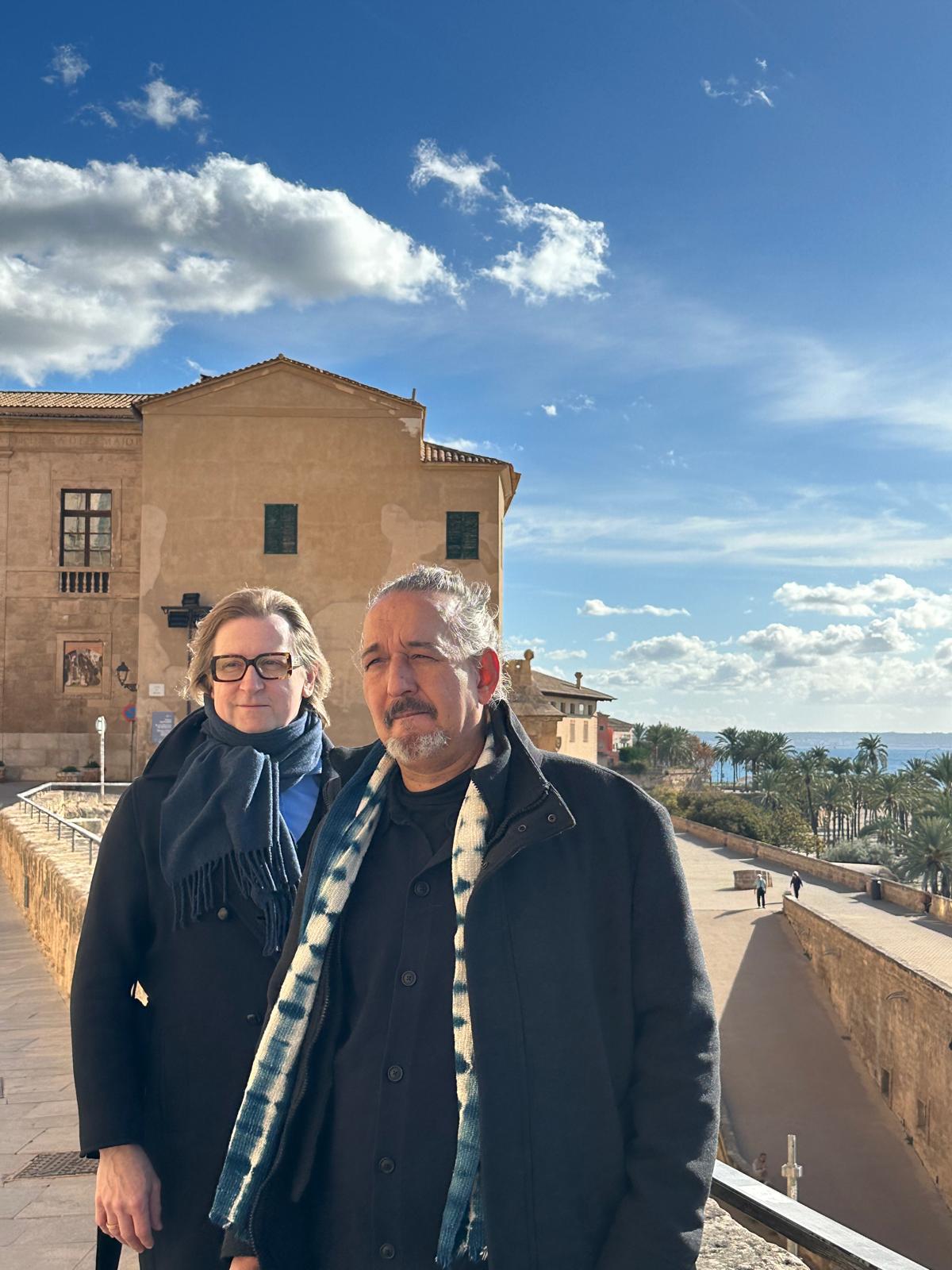
Xavier Deshoulières and Éric Boehm
J

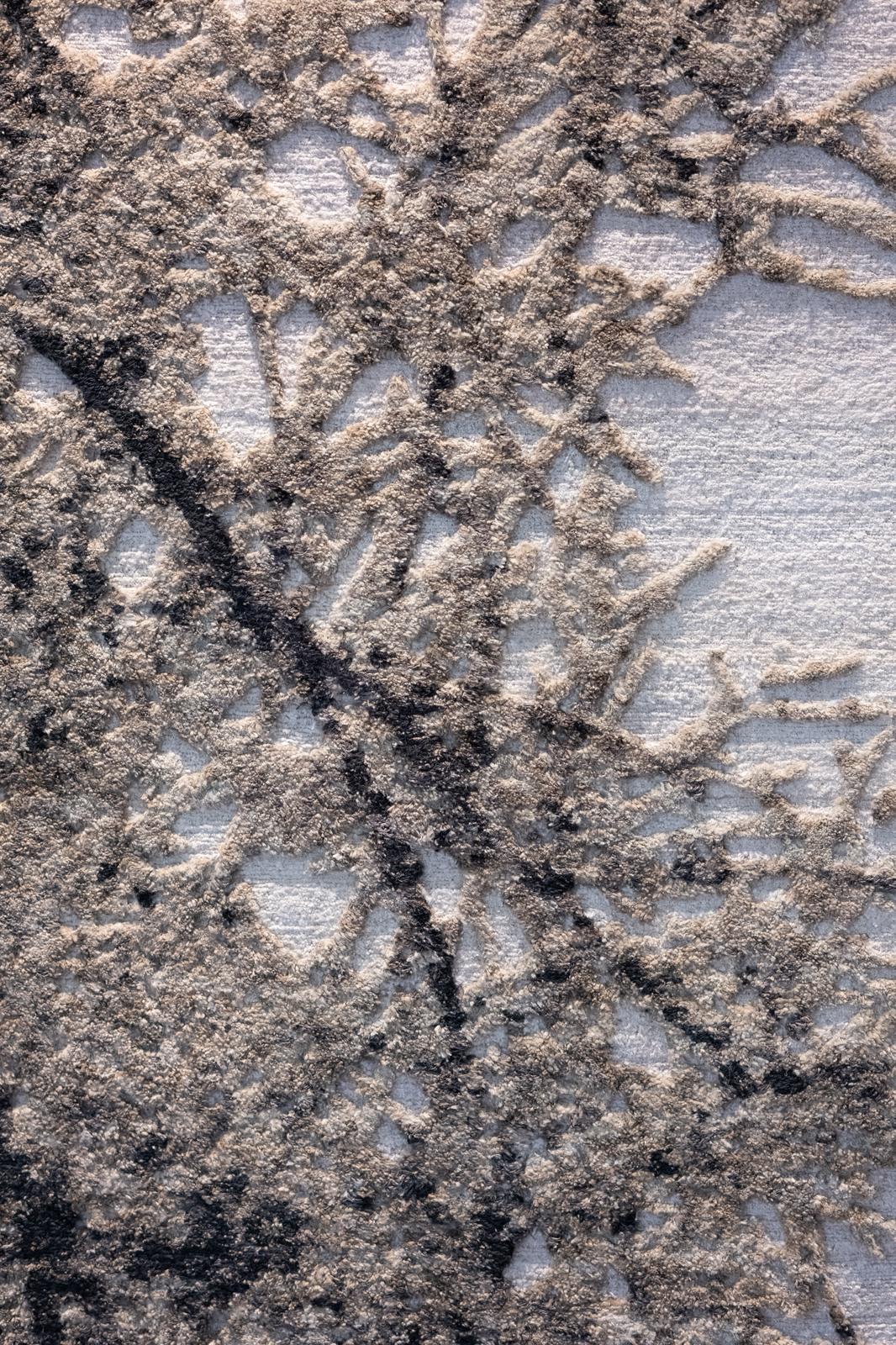
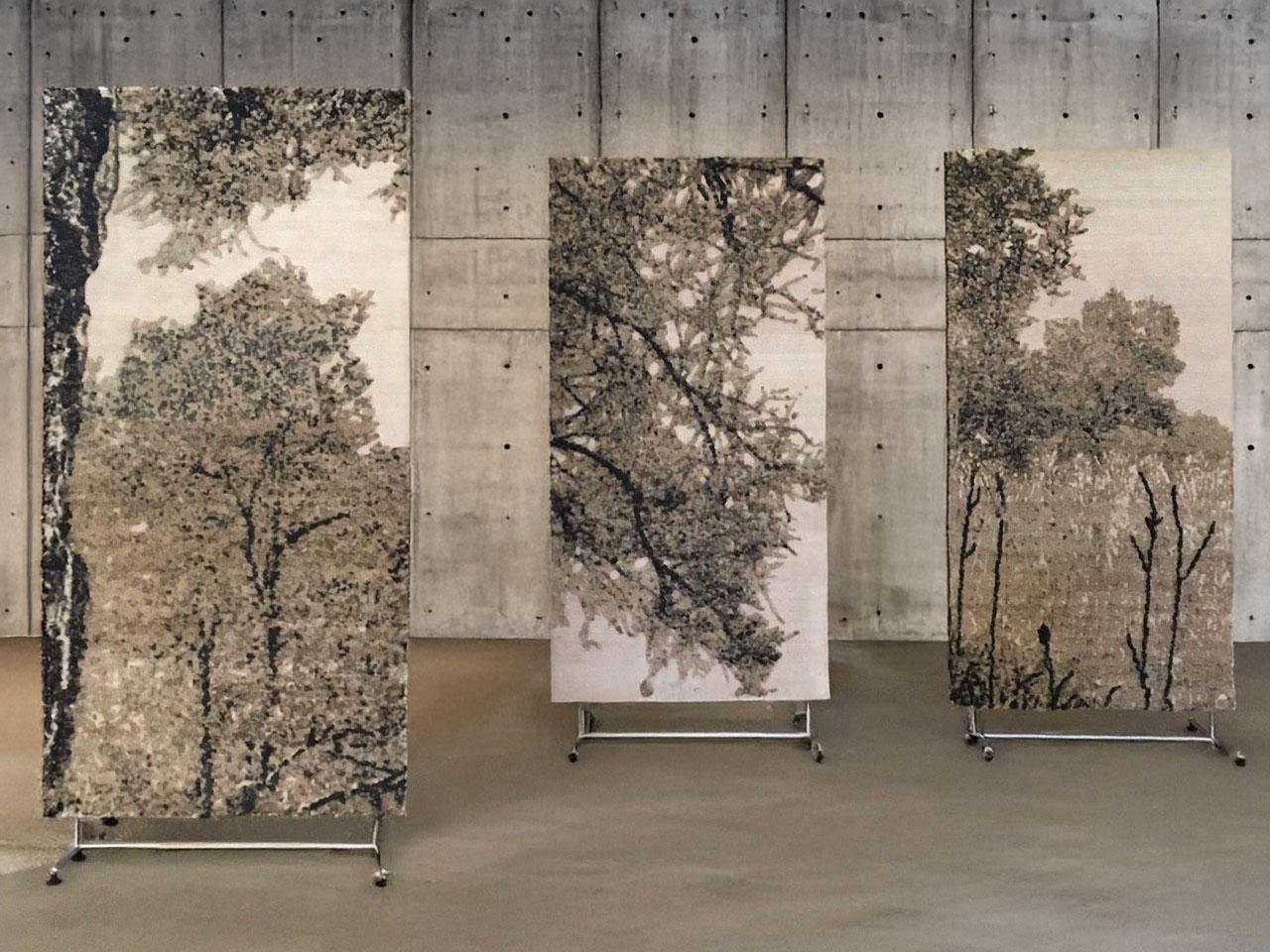
ō is a triptych, three tatami-sized tapestries made from nettle fibre, which depict details from two paintings created in Mallorca by Xavier Deshoulières. This highly poetic ensemble, which was on display at the Santa Catarina bodega this winter, is the result of a unique collaboration between artists and artisans from different countries united by a shared sensibility.

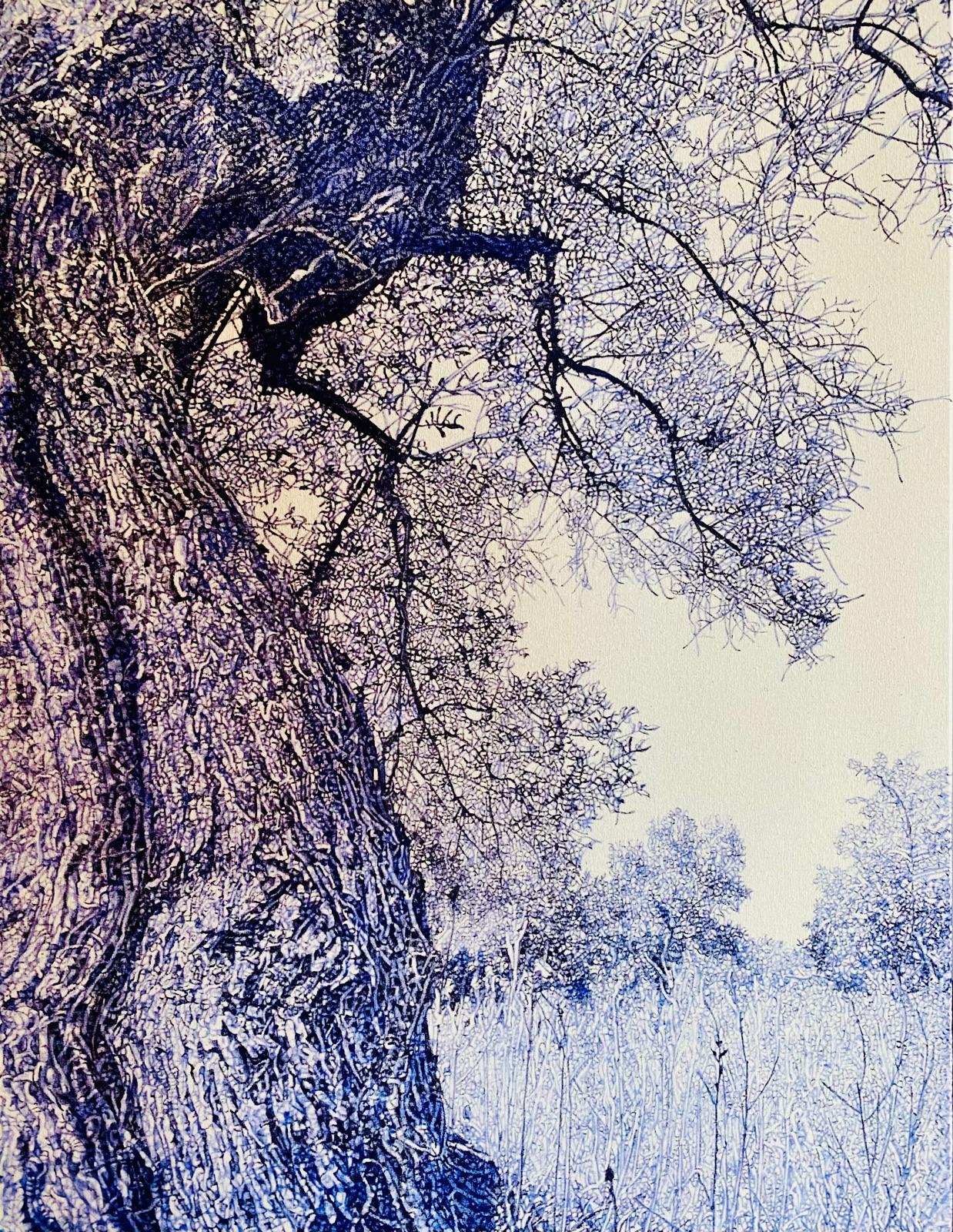
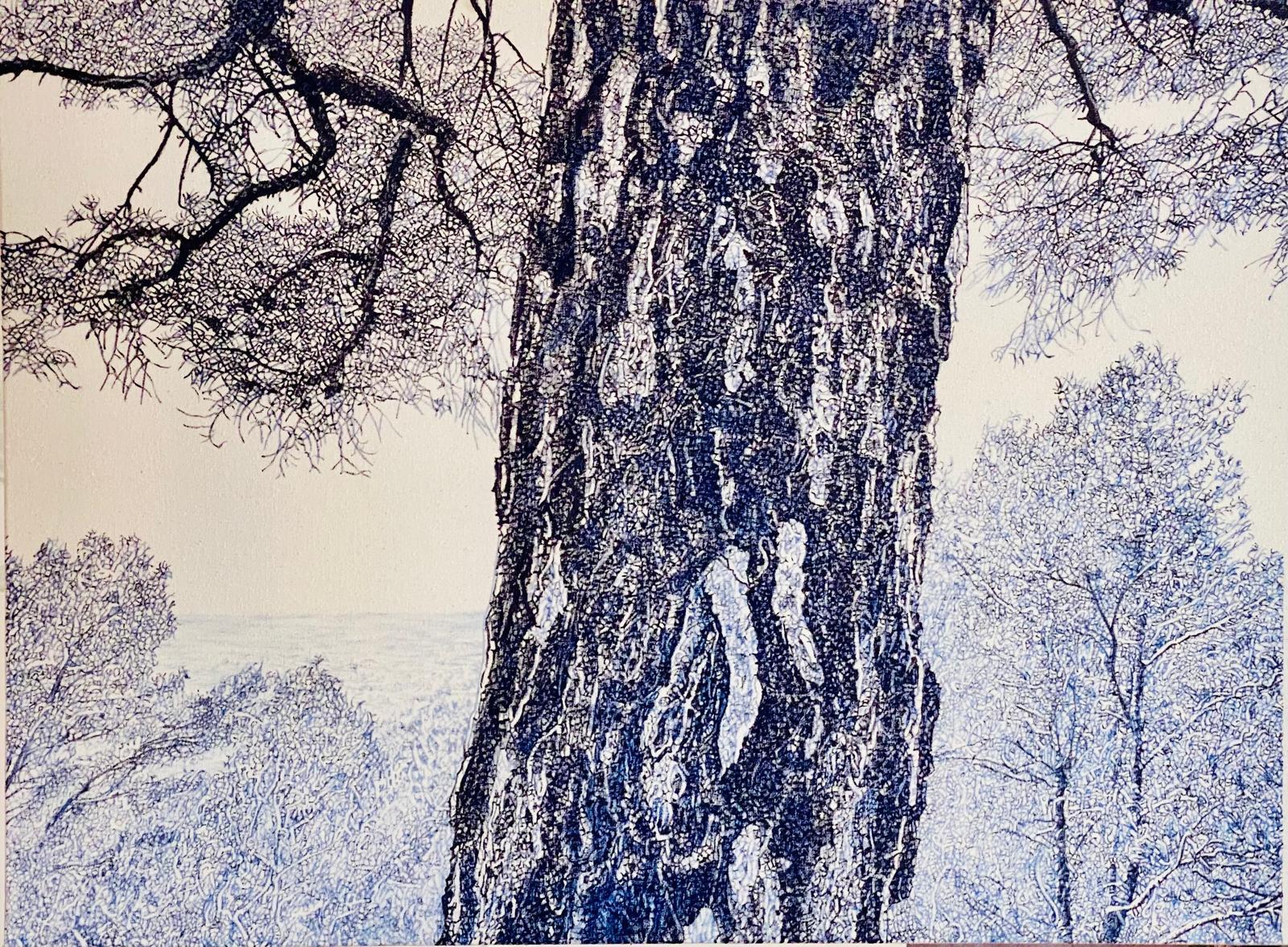
The inspiration for this work came from the pine trees and landscapes of Mallorca. In 2014, Xavier Deshoulières, who had previously painted the urban landscapes of New York and the Andaman jungle, moved to the island, where he found a new lease of life. "Here, you are immersed all the time. I live in a house facing the sea. I had never lived with a garden before." The painter was captivated by the landscapes that surrounded him. During the weekend, he would go hiking in search of new angles and new ways of depicting the landscapes of the Tramuntana mountains.

“I first painted the sea, and then, one painting led to another, and I painted tree bark.” Between Buddhist asceticism and the rigour of a copyist, Xavier Deshoulières deploys an artistic practice of rare temporal rigour. He devotes up to four months of daily work to each canvas: large formats on which he patiently and delicately brings out landscapes and details of remarkable precision. We see the gnarled trunks of trees, the texture of the bark, the branches stretching outwards, the wind blowing through them. These large monochrome formats, which invite us to immerse ourselves in nature, are incredibly precise, as Xavier paints with an ultra-fine brush. “I use colours that are very dense, such as dark blue, purple or dark pink, because I work solely with contrast,” he explains. To avoid any variation in light, the painter works in dim light, which allows him to increase the contrasts. 

Xavier's paintings, which unfortunately are rarely exhibited on the island, travel all over the world. France, of course, his country of origin, New York, where the painter lived for several years, Los Angeles, and for several years now, Japan, where his work has been met with success. One of Deshoulières paintings was purchased and is now on display at the prestigious Living National Treasure Museum of Tokyo, dedicated to perfection of craftsmanship. There is something Japanese about his approach to representing nature and his technical mastery.

I

t was during a trip to Japan that his adventure in tapestry began. “In January 2024,” Xavier recalls, “the Tokyo art school invited me to present my work. At the same time, there was the Salon du Chocolat, where I met Christine Ferber, a pastry chef well known in France and Japan for her chocolates and jams.” In fact, the Ferber company, and the village of Niedermorschwihr, where she is from, were the setting for a very popular Japanese television series. Christine Ferber, who loves to combine flavours as much as she loves to bring people together, played the role of fairy godmother and invited Xavier Deshoulières to meet Éric Boehm in Alsace. They hit it off immediately.

After extensive experience in the textile industry, Eric Boehm, an engineer in the art and textile industry, followed his artistic instincts and launched himself into contemporary carpet design at the end of 2021. Alongside his own collections, Eric works with artists who want to change scale, moving from canvas to carpet. He discovered the potential of Nepalese weavers, who had been moving into the world of contemporary tapestry since the 1990s, and decided to collaborate with them. “These artisans,” he explains, “have mastered the technique of knotting for thousands of years. When Tibet was invaded by China, a million Tibetans took refuge in the Kathmandu Valley, where they lived in extreme poverty. NGOs helped them collaborate with Western countries so that they could make a living from their expertise. The Tibetan weavers have created software that pixelates the design of each creation, opening the door to numerous collaborations and allowing them to go even further in their creativity."

“When I met Xavier,” Eric continues,”I was immediately captivated by his paintings and the level of detail in his work. Together, we selected fragments from two of Xavier's canvases.” Surprisingly, the two paintings chosen by Xavier are small in size. Xavier and Eric agreed that “the tapestry should not be a simple reproduction of a painting, but a separate, original, different and complete work of art.”