Close Search
A Day in the Studio with Olaf Hajek
- By
Chiara Ferrari
sustainability 2030
off the island
A Day in the Studio with Olaf Hajek
Feb 27, 2026
by
Chiara Ferrari
A Day in the Studio with Olaf Hajek
sustainability 2030
off the island
Feb 27, 2026
by
Chiara Ferrari
sustainability 2030
off the island
A Day in the Studio with Olaf Hajek
Feb 27, 2026
- By
Chiara Ferrari
A Day in the Studio with Olaf Hajek
Feb 27, 2026
- By
Chiara Ferrari
sustainability 2030
off the island
off the island
sustainability
A Day in the Studio with Olaf Hajek
Feb 27, 2026
- By
Chiara Ferrari
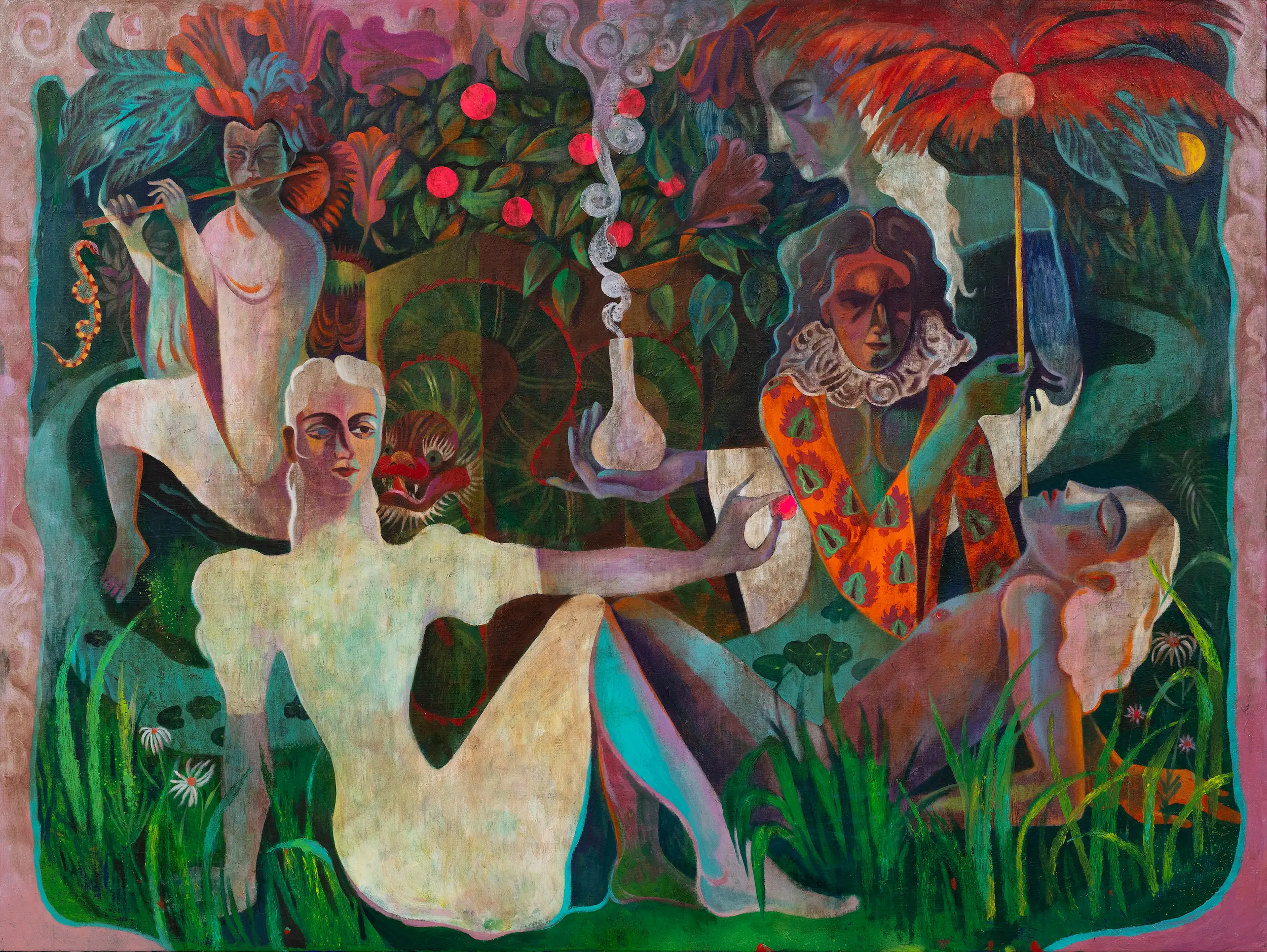
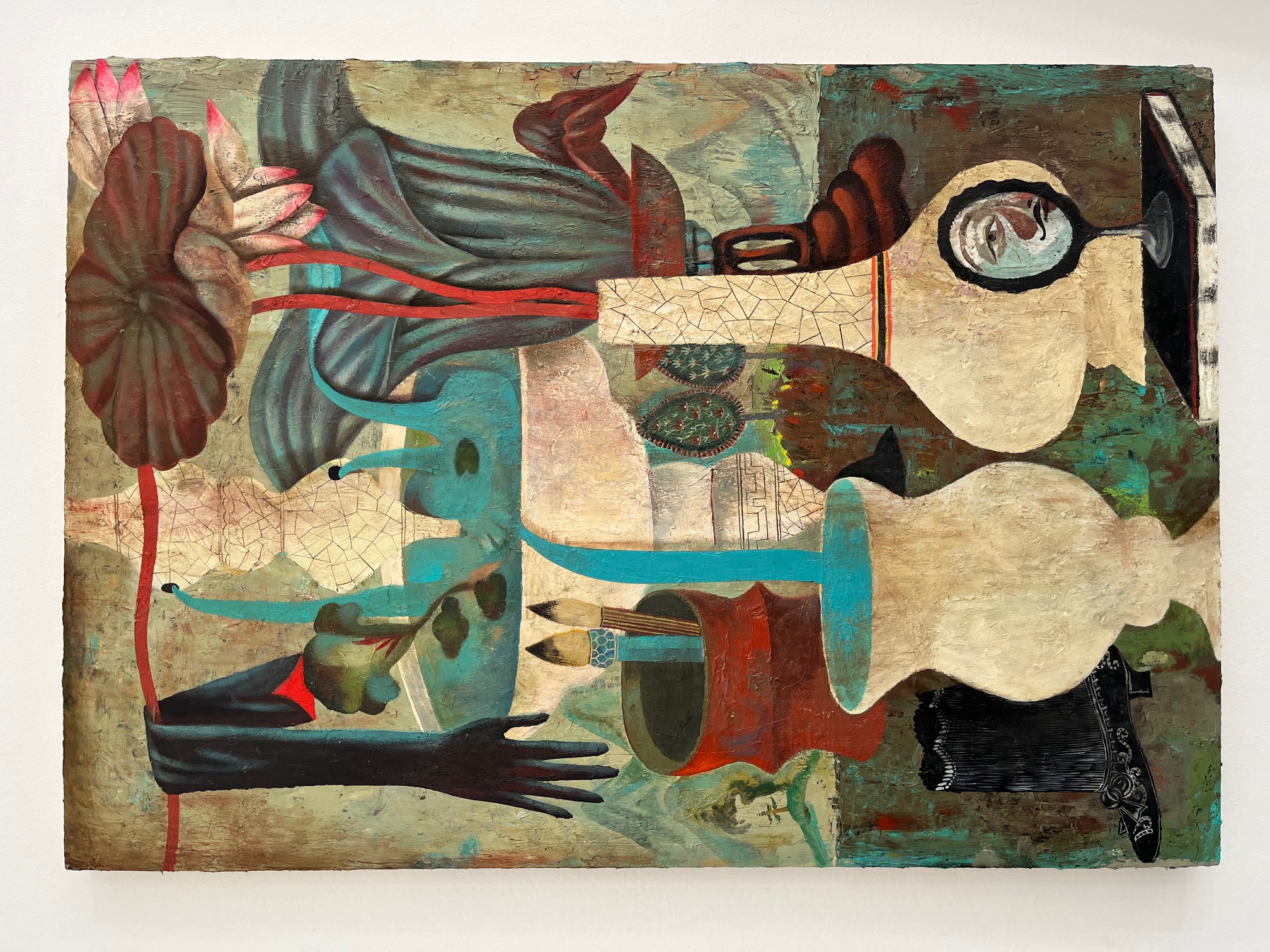
Olaf Hajek, Still Life with Big Bowl / Opening image by Anthony Perez
O

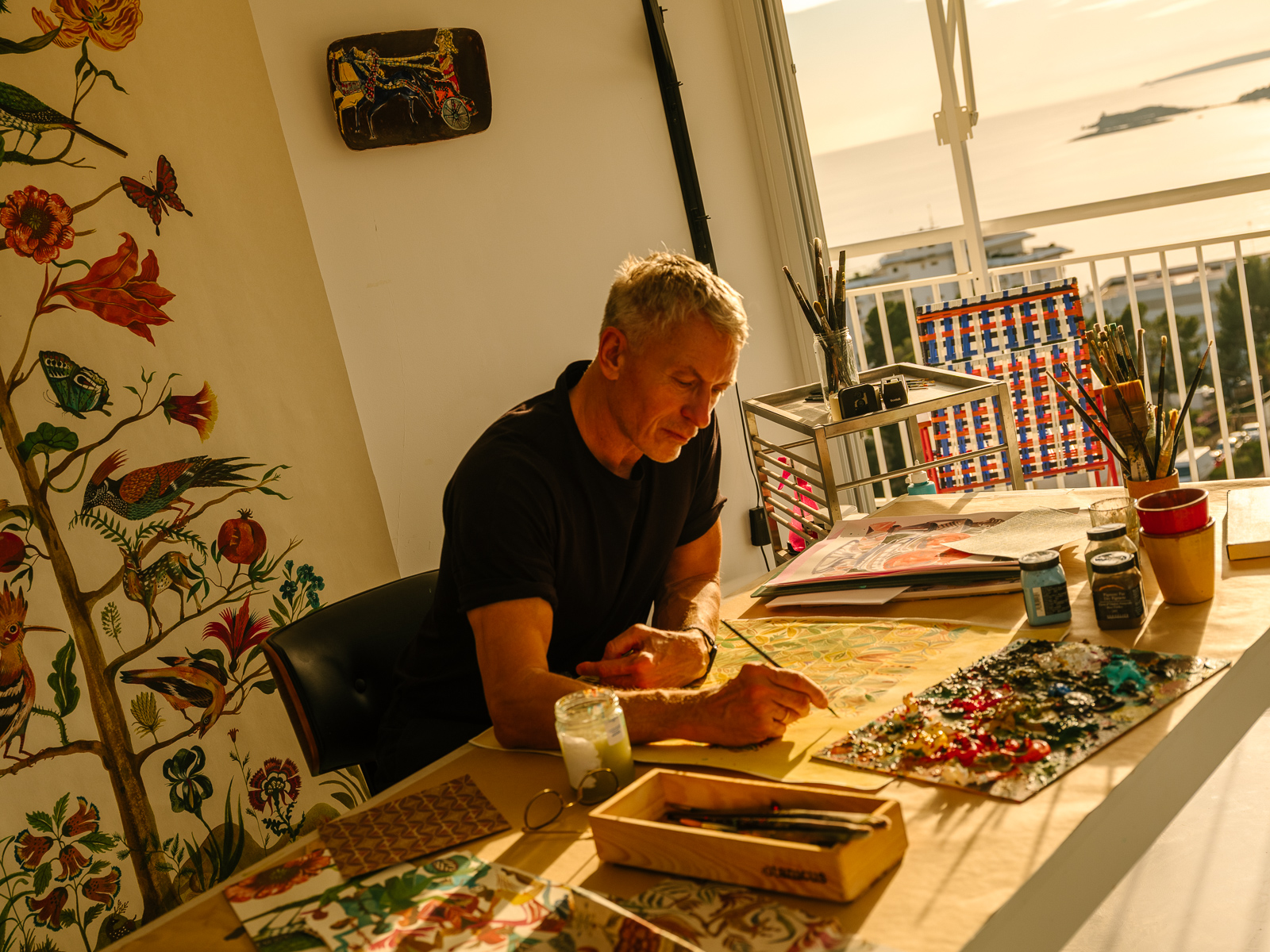
n the tenth floor of an old apartment building located near the Miró Foundation in Palma, Olaf Hajek works between the city on one side and the Mediterranean on the other. Trained in graphic design, in Düsseldorf, and shaped by formative years in Amsterdam and Berlin, Hajek has developed a singular visual language that moves fluidly between illustration, painting and applied art. His images are highly imaginative yet technically impeccable; drawing from mythology, folklore, ornament and pop culture, he creates richly staged scenes that feel at once balanced, contemporary and timeless.

His connection to Mallorca began just before the pandemic, when a short stay unexpectedly turned into something more permanent: what started as a temporary escape grew into a deep attachment to the island, eventually leading to a second apartment and a dedicated studio. “My studio is in an old apartment, on the 10th floor of a building next to the Miró Foundation, with a stunning view of the sea. I can see both the town and the water, and having Miró as my ‘neighbour’ gives me incredibly inspiring vibes every day,” he says.

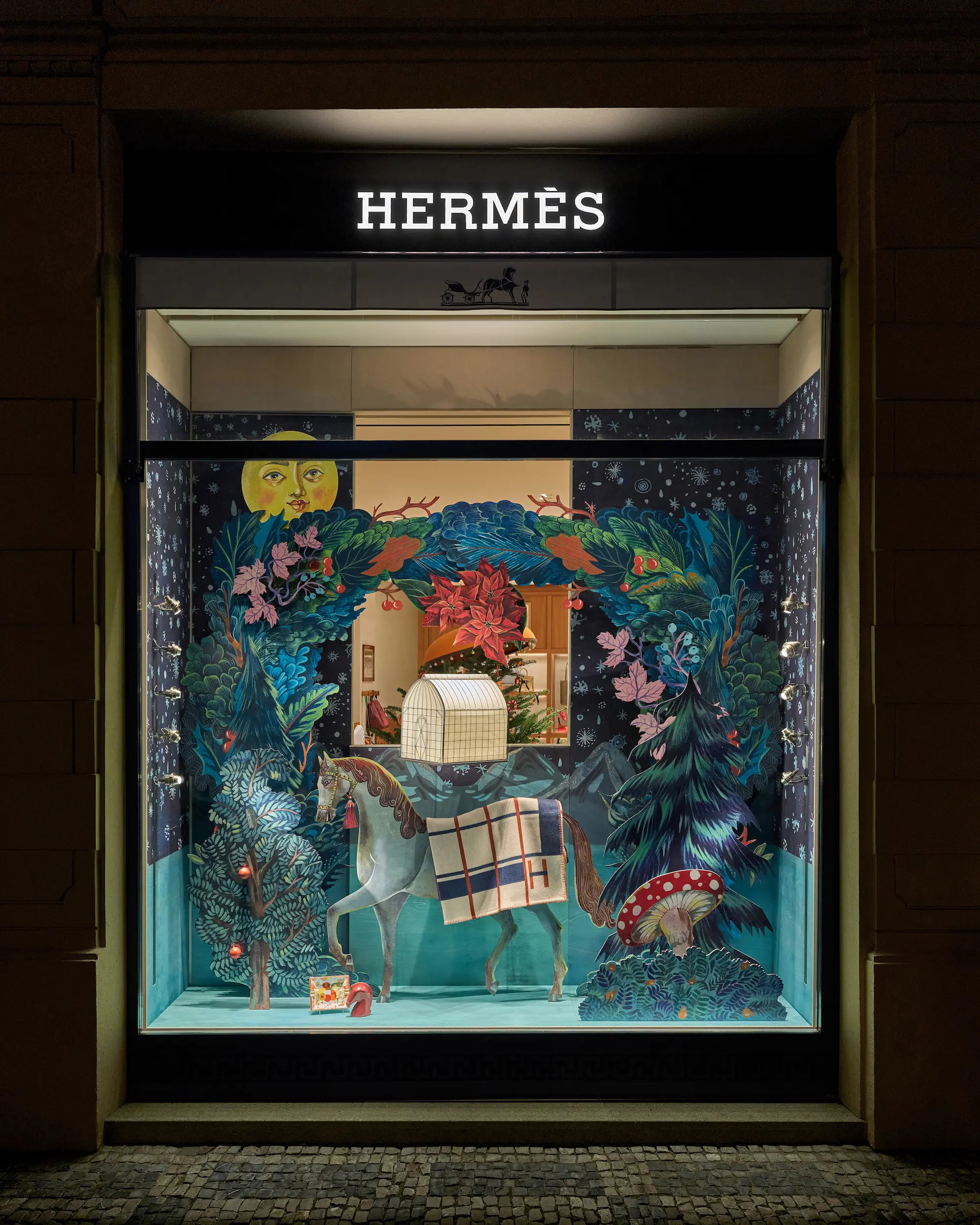
What distinguishes Hajek’s work is the dialogue between expansive imagination, theatrical staging and precision. Whether created for an international publication, a brand collaboration, or a gallery exhibition, his imagery belongs to a coherent symbolic world, one in which colour, pattern and surface function as carriers of meaning rather than decoration. His work has appeared in leading international publications such as The New York Times, The New Yorker, and The Wall Street Journal; his visual language has also been embraced by fashion houses - Hermès among them - as well as hotels and global lifestyle brands. At the same time, his personal work has been presented in solo exhibitions across Europe, the United States, and Africa, establishing a strong presence within the contemporary art market.

Hajek approaches commissioned projects and exhibition-based work as part of the same visual language: even when responding to a brief, his work carries a personal vision rooted in colour, texture and storytelling. Commissions also challenge him to think differently about materials, scale, or spatial context, often feeding back into his personal practice. He values this tension between the freedom of autonomous work and the dialogue a commission creates with a client or a specific space, seeing it as a generative force rather than a constraint.
I

n terms of media, Hajek works across paper, canvas, wood, textiles, and collage, allowing each material to shape the rhythm and character of the image. “Ideas and materials are inseparable in my work,” he explains. “On paper, I work fast and intuitively; on wood, I explore texture; with collage, the approach becomes more graphic. Each surface suggests its own rhythm and guides my use of colour, so the material itself shapes the way the piece feels and moves.”

His imagery draws from a vast internal archive of what he describes as “mental images”: fragments collected through travel, research, observation, and everyday life. References to African traditions, Indian temple art, South American folklore and pop culture compose his vocabulary and are transformed into a personal visual language rich in atmosphere and meaning. Hajek conceives his images as small stages, where ornament, recurring motifs and symbolic figures each play a role. Patterns and symbols establish rhythm, while theatrical staging builds atmosphere and presence, suggesting stories without fully defining them.

While Berlin remains a central base for his work, Olaf lives between Germany and Mallorca, a rhythm that has become essential to his creative process. Moving between cultures and visual environments allows him to absorb and transform diverse influences, shaping what he describes as a universal visual language: one that can be understood across geographies. 

Hajek has an upcoming exhibition at Kaplan Projects in Mallorca that will present a new body of work focussed on painting. We spoke with him about the ideas behind the show and his fascinating process:

C.F.: Your imagery draws from African traditions, Indian temple art, South American folklore, and pop culture. You’ve spoken about “collecting mental images”: what does that archive look like and how does it resurface in your work?

O.H.: My “mental archive” is really just a collection of images, stories, and textures that I carry with me from everywhere I’ve been and everything I’ve seen. African patterns, Indian temple carvings, South American folklore, pop culture – they’re all stored in my mind like a constantly shifting collage. I don’t consciously plan to use them; they resurface intuitively in my work, often in surprising ways. Sometimes it’s a color palette, sometimes a gesture, a motif, or a mood. This archive lets me create a world that feels familiar and strange at the same time, connecting different cultures and histories through a personal visual language. 

C.F.: You work with a wide range of publications, brands, and institutions. What makes a collaboration interesting for you, and when do you feel it truly works? Do collaborations push you toward new materials or formats you might not explore otherwise?

O.H.: A collaboration becomes truly interesting for me when there’s a shared curiosity and a space for experimentation. I’m drawn to projects where the partner is open to risk and play, and where my visual language can meet theirs in unexpected ways. Collaborations often push me to try materials, formats, or techniques I wouldn’t normally explore on my own – whether it’s a new printing method, a large-scale installation, or working across different media. For me, the best collaborations are those that expand my practice without diluting my personal vision, creating something neither side could have made alone.

"My “mental archive” is really just a collection of images, stories, and textures that I carry with me from everywhere I’ve been and everything I’ve seen. African patterns, Indian temple carvings, South American folklore, pop culture – they’re all stored in my mind like a constantly shifting collage."
Christopher Farr and Hubert Zandberg Studio