Close Search
Gin Eva, The Alchemy of a Terroir
- By
Hélène Huret
sustainability 2030
off the island
Gin Eva, The Alchemy of a Terroir
Jun 1, 2026
by
Hélène Huret
Gin Eva, The Alchemy of a Terroir
sustainability 2030
off the island
Jun 1, 2026
by
Hélène Huret
sustainability 2030
off the island
Gin Eva, The Alchemy of a Terroir
Jun 1, 2026
- By
Hélène Huret
Gin Eva, The Alchemy of a Terroir
Jun 1, 2026
- By
Hélène Huret
sustainability 2030
off the island
off the island
sustainability
Gin Eva, The Alchemy of a Terroir
Jun 1, 2026
- By
Hélène Huret
A

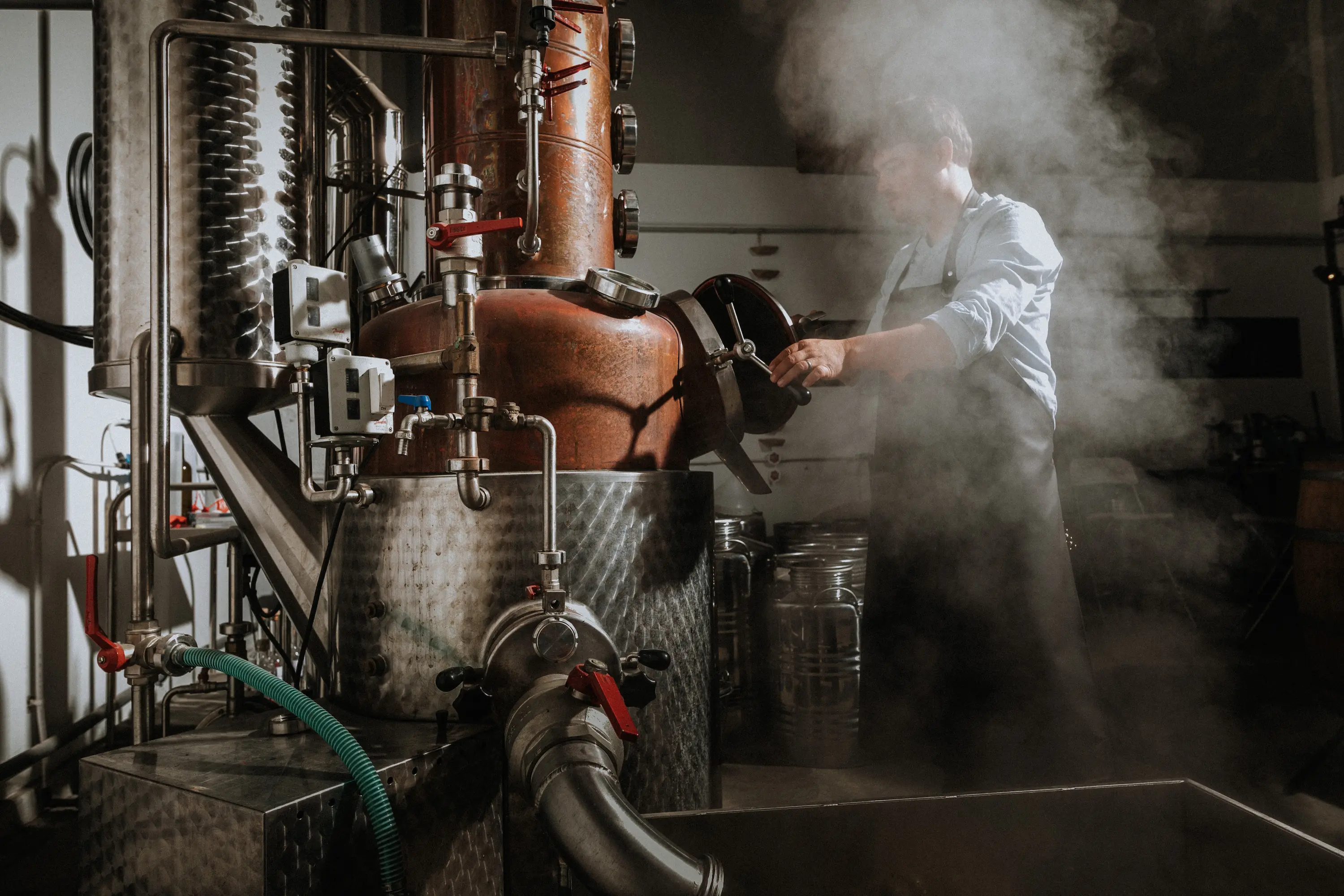
s a wedding gift, Stefan Winterling and Eva Maier asked for an alembic, a traditional distilling vessel. Whereas most young couples might choose to ask for money for their honeymoon or to invest in designer furniture, the couple made a radical decision: to put the money from their gifts towards a still. This precious tool is now the beating heart of Gin Eva, and it is used to distil juniper berries, oranges, mandarins, lemons, olives, thyme, rosemary and the grains needed to make their much-loved gin.

Nothing had prepared Stefan for making gin. Coming from a family of winegrowers, he studied oenology and was set on a career in the wine world. But whilst at university, he met Eva, an oenology student from Barcelona. After finishing his studies, Stefan, keen to learn Spanish, found a job at Can Vidalet, a bodega run by a German and located near Pollensa. And in this bodega, there was a still. Stefan suggested distilling juniper berries to make gin and discovered a passion for the process. “We made our first gin out of pure curiosity,” explains Stefan. “There was nothing special about it, nothing in particular that really appealed to us. But it sparked a lot of interest and we quickly realised there was a market for it. That gave the project a new lease of life.” Three years later, in 2011, Stefan and Eva sealed their fate: they got married and founded Gin Eva, one of the first craft gin brands in Mallorca.

Whilst the classic gin and tonic has always reigned supreme on the Iberian Peninsula, its conventions began to shift in the 2000s, when a wave of young Basque and Catalan chefs emerged on the international gastronomic scene. In the Basque Country, chefs began to reimagine what a gin and tonic could be. They banished the lemon wedge in favour of fresh citrus zest, herbs or berries, and they treated the glass as if it were a dish, seeking to highlight its aromatic profile. They abandoned the classic straight-sided glasses, which warm up on contact with the palm of the hand, in favour of the copa de balón, a large round glass held by the stem that easily accommodates two or three huge ice cubes, ensuring an even chill. This new gin culture quickly caught on, taking over the bars of Madrid and Barcelona before conquering the rest of Europe.
B

ut back in 2011, speciality gins weren’t yet all the rage. “The first gin we made,” recalls Eva, “was a London Dry Gin. It’s the best-known and most traditional type of gin. The recipe is simple: you macerate all the botanicals together. To make our London Dry, in addition to juniper, we added spices from all over the world: pepper, tonka bean, coriander, star anise, and so on. We ended up with a very good gin, but it was just another gin on the market, which could have been distilled anywhere in the world…"

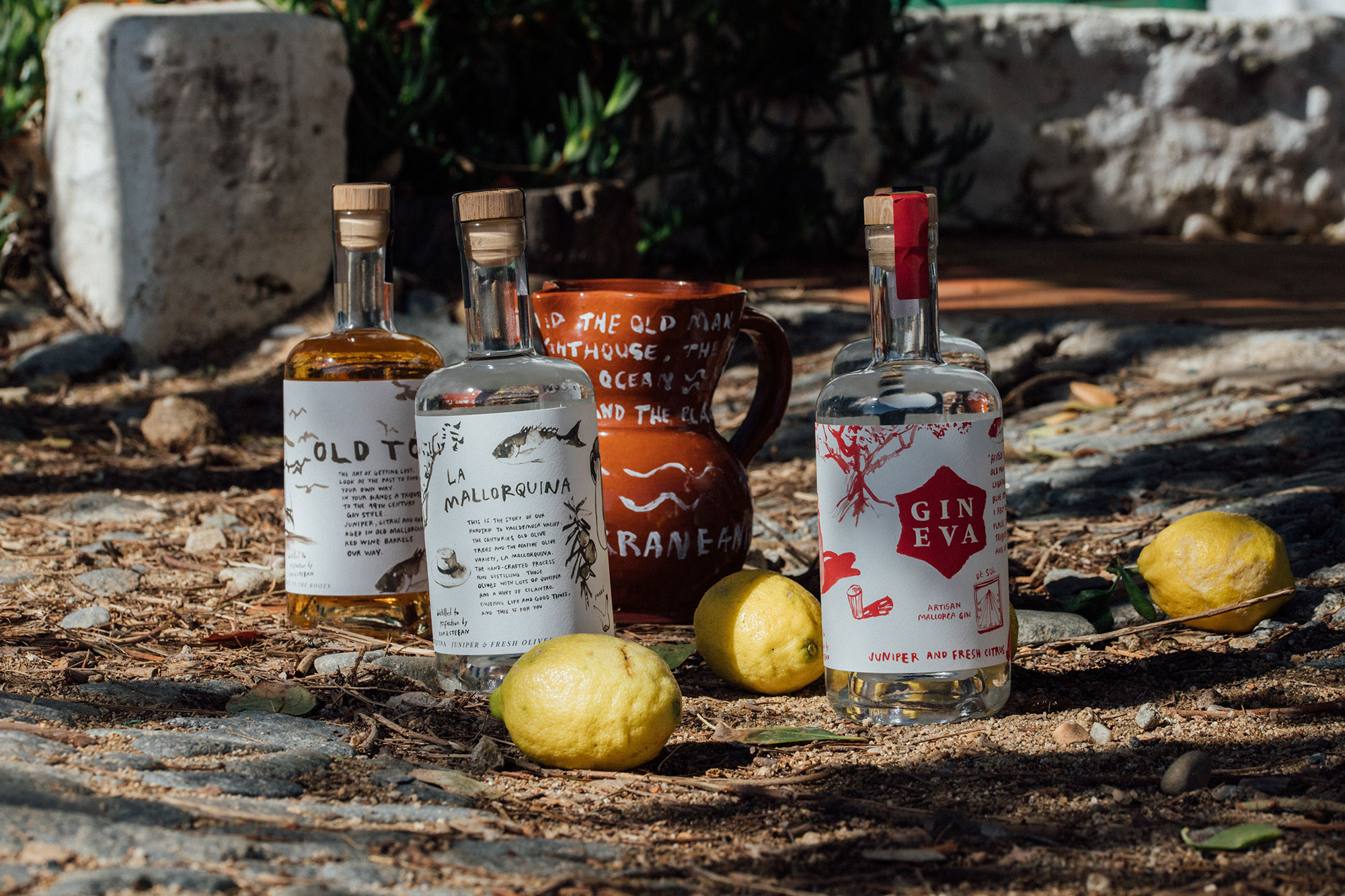
“It’s an incredibly creative sector,” enthuses Stefan, “because you can distil practically anything. You learn so much from every experiment; it’s extremely rewarding.” “And,” adds Eva, “the production is quick; unlike with wine, you don’t have to wait a year to see the result.” Driven by this passion, the couple settled in Mallorca. They took stock of what grows on the island and launched fresh citrus distillates, produced only at the height of the season. “We distil all the botanical ingredients separately,” explains Eva. “This allows us to make the most of a fresh product, picked exactly when nature offers it at its peak. We don’t want to use dried peel from the other side of the world.” This approach is part of the new European trend for terroir gin. Across Spain, a young new generation of distillers is breaking away from the rigid London Dry dogma to create deeply local spirits. In Catalonia, the Gin Mare brand is shaking up the rules by distilling olives and garrigue. In Galicia, the famous Nordés gin is causing a stir by replacing neutral grain spirit with a novel base of white wine spirit made from the Albariño grape, whilst Andalusia is focusing on sun-drenched fruit gins.

“We arrived right at the very start of this fundamental shift,” explains Stefan. “Today, the most interesting gins on the market are undeniably linked to their geographical origin.” They capture and convey the most iconic aromas of a place. “However,” Eva points out, “many of the brands that have emerged in recent years were created from scratch by marketing professionals. They’d say to themselves, ‘We want to do this’, then come up with the design, the packaging and the story, and only then would they make the product to force it into the box. We did exactly the opposite. We shaped the product first, perfecting it by trial and error in our garage, and only afterwards did we think about the design, distribution and the market.”

“This allows us to make the most of a fresh product, picked exactly when nature offers it at its peak. We don’t want to use dried peel from the other side of the world.”
Honoring Traditional Mallorcan Foods - View Mallorca
Mar 31, 2026
sustainability 2030
Honoring Traditional Mallorcan Foods