Close Search
The Ephemeral Language of Bartomeu Sastre
- By
Chiara Ferrari
sustainability 2030
off the island
The Ephemeral Language of Bartomeu Sastre
Dec 5, 2025
by
Chiara Ferrari
The Ephemeral Language of Bartomeu Sastre
sustainability 2030
off the island
Dec 5, 2025
by
Chiara Ferrari
sustainability 2030
off the island
The Ephemeral Language of Bartomeu Sastre
Dec 5, 2025
- By
Chiara Ferrari
The Ephemeral Language of Bartomeu Sastre
Dec 5, 2025
- By
Chiara Ferrari
sustainability 2030
off the island
off the island
sustainability
The Ephemeral Language of Bartomeu Sastre
Dec 5, 2025
- By
Chiara Ferrari
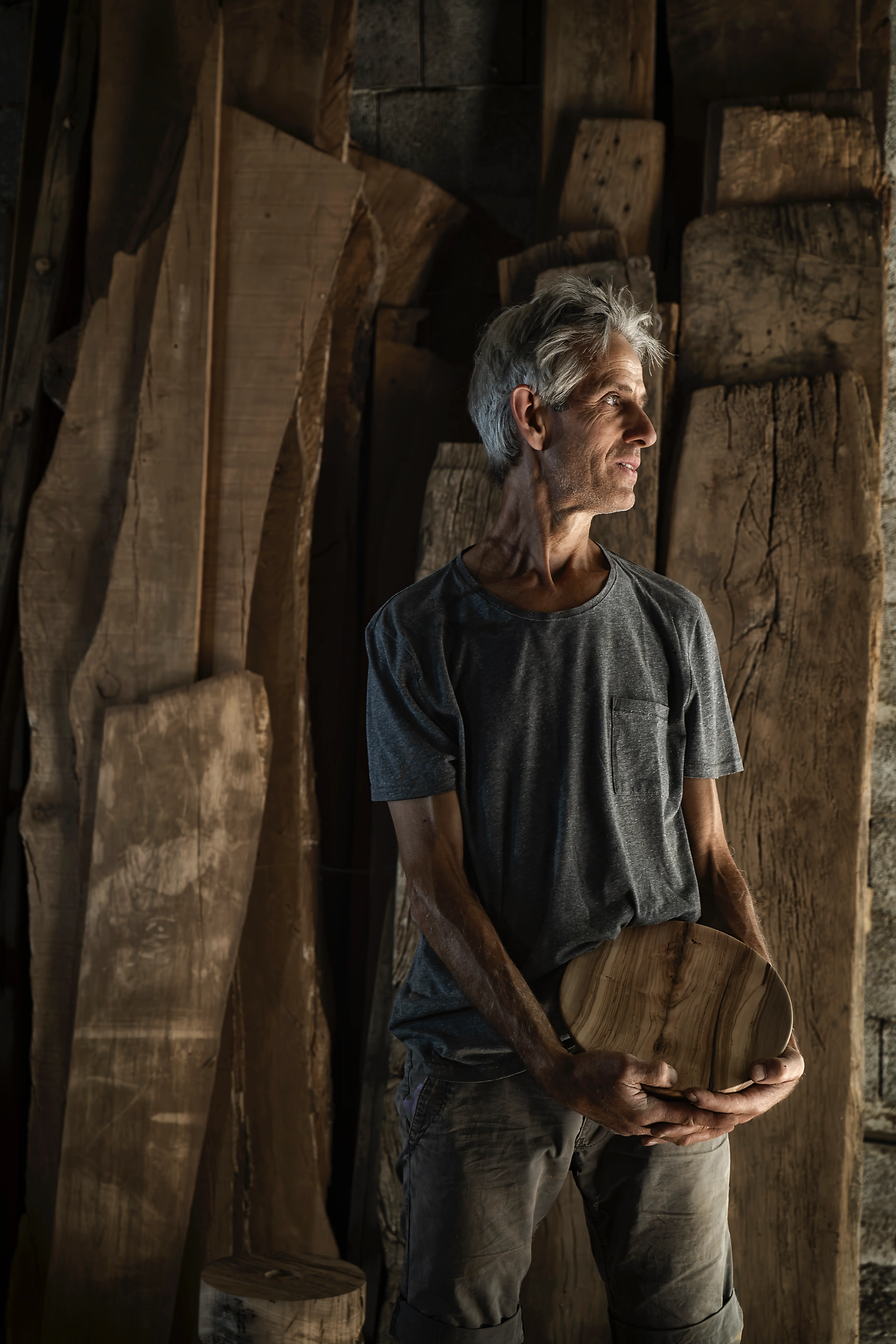
Bartomeu Sastre
S

et within the context of Bibliotecas en Llamas, a collective exhibition at the Biblioteca Municipal Joan Alcover in Palma —curated by Francesco Giavieri —Bartomeu Sastre’s work emerged as a natural point of focus. A 15-meter projection activated by the sunlight quietly takes over the library wall in the early morning hours, feeling both effortless and deeply intentional. The surrounding works, shaped by explorations of memory, light and nature, create a thoughtful prelude to engaging with Sastre’s approach, motivations, and the evolving language of his practice. 

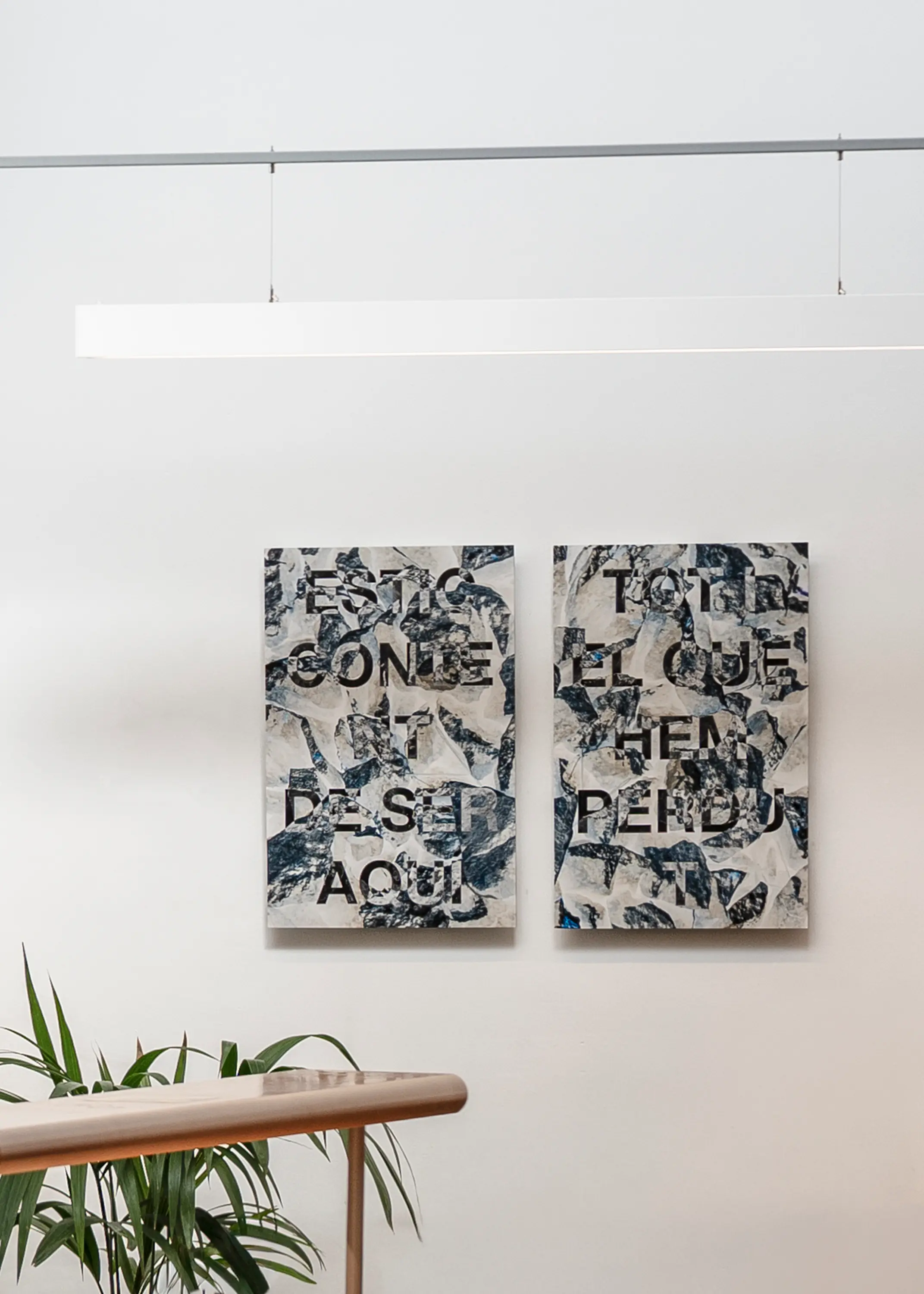
Born and based in Mallorca, he belongs to a wave of contemporary Balearic artists who use conceptual art, performance and site-specific interventions - rather than traditional painting/sculpture — to create socially engaging art, inviting critical reflection. His artworks pair text with various media—frequently photography, light, and the natural environment—using subtle interventions that blur the line between what is seen and what is felt; inviting viewers to decode phrases, silhouettes and fleeting impressions. He uses language as both material and metaphor, transforming personal memories and social tensions into delicate visual poetry. 

“I constantly have sentences running through my mind, and when I bring them out, I arrange them so they make sense in context. Sometimes I think it would be easier to publish a book of these phrases, but they still need to be adapted—whether through the materials I use or their final placement. For me, the most direct and effective way to express an idea is through a sentence.”
A

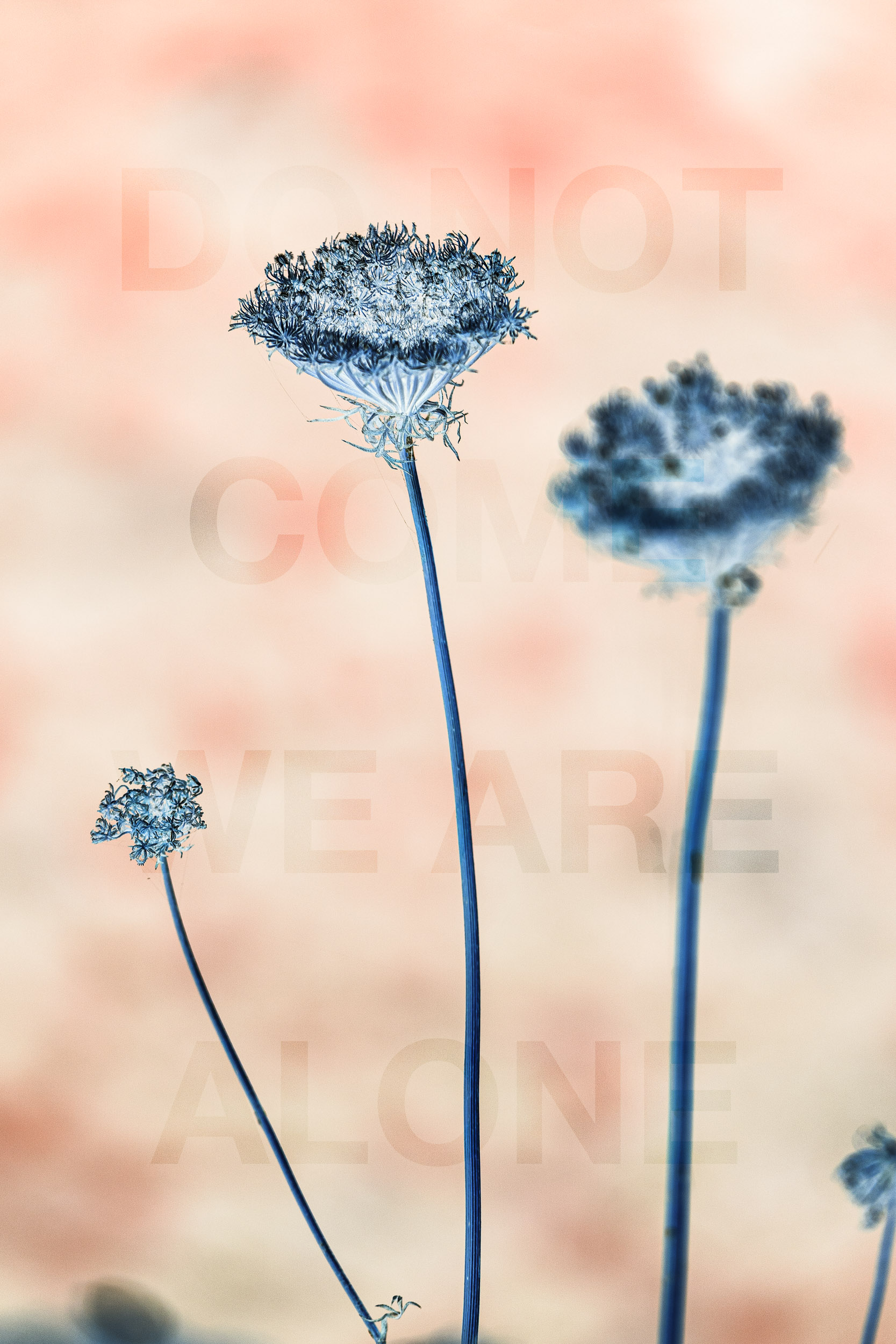
mongst the media acting as cohesive partners in delivering the message and adapting to context, Sastre works with elements drawn from nature— sometimes presented in their raw form, but often framed through photography, a medium central to his practice as both a tool of exploration and a catalyst for discovery.  “At the same time, I like to see how far I can push photography—how much I can alter it to take it somewhere different from the moment it was captured. Is it still recognisable? Does it reveal something new? Does it interest me? Marina Garcés notes that we live in an age of extremes, and that’s what I seek in some of my photographic projects: to reach all of its extremes. I often convert images into negatives, as if making them more analog—taking a step back, a step we lost with digital photography but one that speaks to process and history. In doing so, details emerge that remain unnoticed in the positive image.” 

Words drift through his pieces like clues — sometimes blurred, sometimes hidden: his work resists instant readability, inviting viewers to engage with it beyond a quick glance. Rather than offering a direct message, the pieces introduce a degree of difficulty that encourages viewers to decipher both the text and the materials that shape it. The elements that blur, obscure, or camouflage meaning are not obstacles but integral components of the work itself, emphasising the value of slow interpretation and sustained attention. The intention is for each person to interpret the works in their own way, bringing them into their own world, concerns, history, and experiences. At the same time, this is also how the ideas behind them are conceived and expressed. Having endured years of bullying in childhood, he learned to avoid drawing attention in order to remain unnoticed and lessen the risk of further harm. This experience helps explain his inclination to camouflage himself, to integrate into spaces without being perceived as something out of place. 

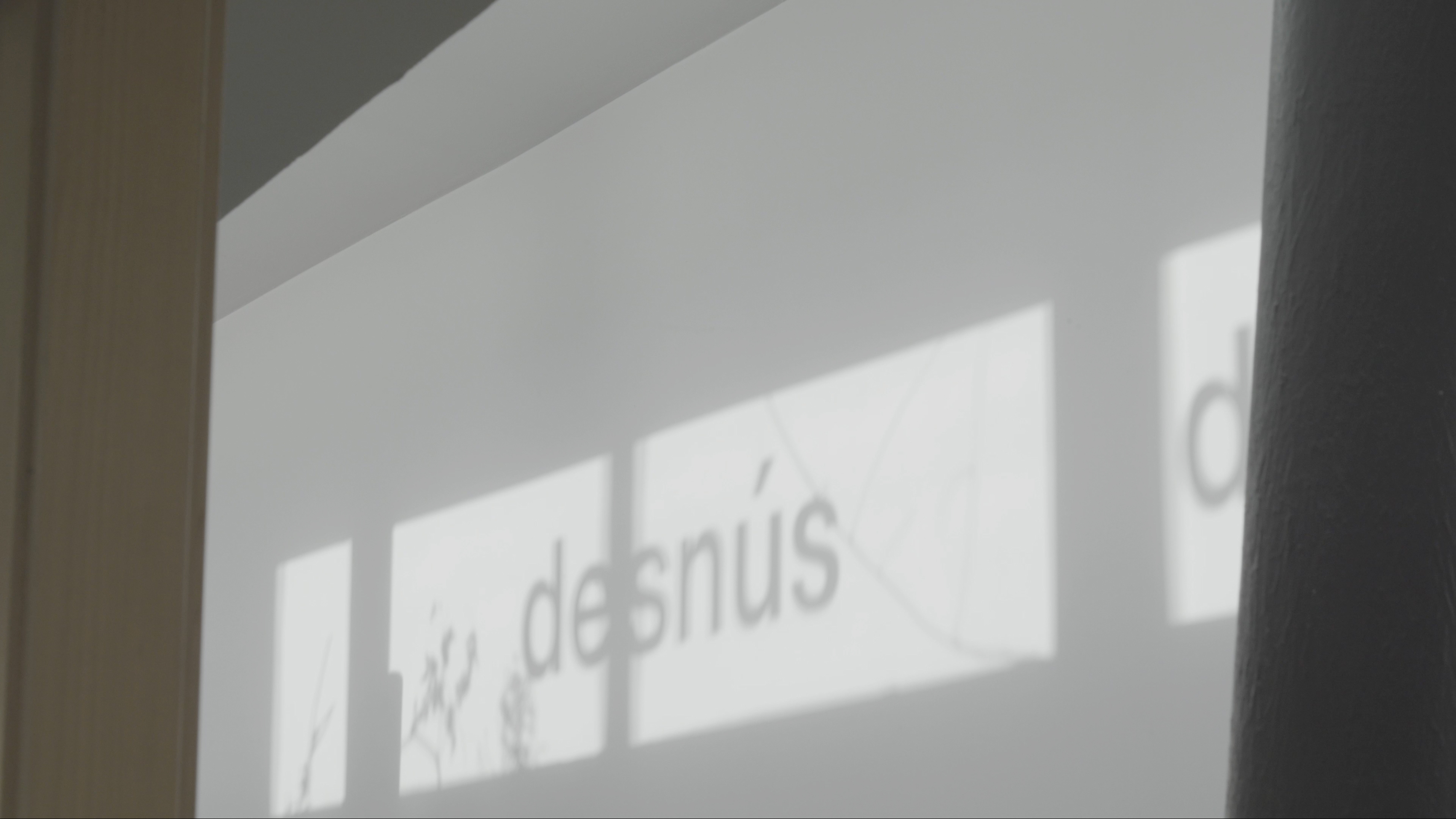
The site-specific artwork at the library represents a synthesis of Sastre’s work in all its elements: a projected shadow created by the sunlight entering the library, hence present only during early hours in the day. The work is composed of a phrase taken from Joan Alcover’s poem Resfa ‘The earth strips itself; the trees are skeletons, bare of fruit and leaf’ (from the book Poemes bíblics, first published in 1918) — accompanied by a series of silhouettes of branches, pruning remnants from various trees and shrubs in the surrounding public parks. 

"At the same time, I like to see how far I can push photography—how much I can alter it to take it somewhere different from the moment it was captured. Is it still recognisable? Does it reveal something new? Does it interest me?"
La terra se despulla... Installation view at the Biblioteca Municipal Joan Alcover in Palma. Photo: Bartomeu Sastre