Close Search
Son Bunyola Revives a Centuries-Old Wine for a Contemporary Palette
- By
Blaire Dessent
sustainability 2030
off the island
Son Bunyola Revives a Centuries-Old Wine for a Contemporary Palette
May 11, 2026
by
Blaire Dessent
Son Bunyola Revives a Centuries-Old Wine for a Contemporary Palette
sustainability 2030
off the island
May 11, 2026
by
Blaire Dessent
sustainability 2030
off the island
Son Bunyola Revives a Centuries-Old Wine for a Contemporary Palette
May 11, 2026
- By
Blaire Dessent
Son Bunyola Revives a Centuries-Old Wine for a Contemporary Palette
May 11, 2026
- By
Blaire Dessent
sustainability 2030
off the island
off the island
sustainability
Son Bunyola Revives a Centuries-Old Wine for a Contemporary Palette
May 11, 2026
- By
Blaire Dessent
The first bottles of Son Bunyola's Malvasia wine
T

he 330-hectare property of Son Bunyola, part of Richard Branson’s Virgin Limited Edition group, sweeps down from mountains to the sea along the northwest coast of Mallorca. This truly privileged setting has been part of the island’s agricultural heritage for centuries, with the first known production of wine dating back to the 13th century. The area’s niche microclimate gave way to successful harvests in wine until the end of the 19th century, when it was invaded by Phylloxera, as was much of Europe, and wine production completely dropped off. When Branson bought the property in 2015, for the second time, it was always part of his vision to revive the agricultural traditions of the land as part of the meticulous renovation project that also included a 13th century tower. Over the years, they have planted hundreds of olive trees, restored and repaired the stone terraces for irrigation and farming and planted numerous herb and vegetable gardens which are serving the hotel’s restaurant. 


Wine production was also on the agenda, but because of the difficult terrain, they needed to know what grapes would work best on the land and how to correctly revive it. They found evidence of early wine production, including a couple of very old bottles found on the property, but more importantly, they were able to trace the production of the Malvasia grape to the property thanks to a project overseen by Hipólito Medrano at UIB that began in 2000. The team had recuperated ancient vines from the Banyalfubar region, where Son Bunyola is situated and were working on recovering it for contemporary growing.
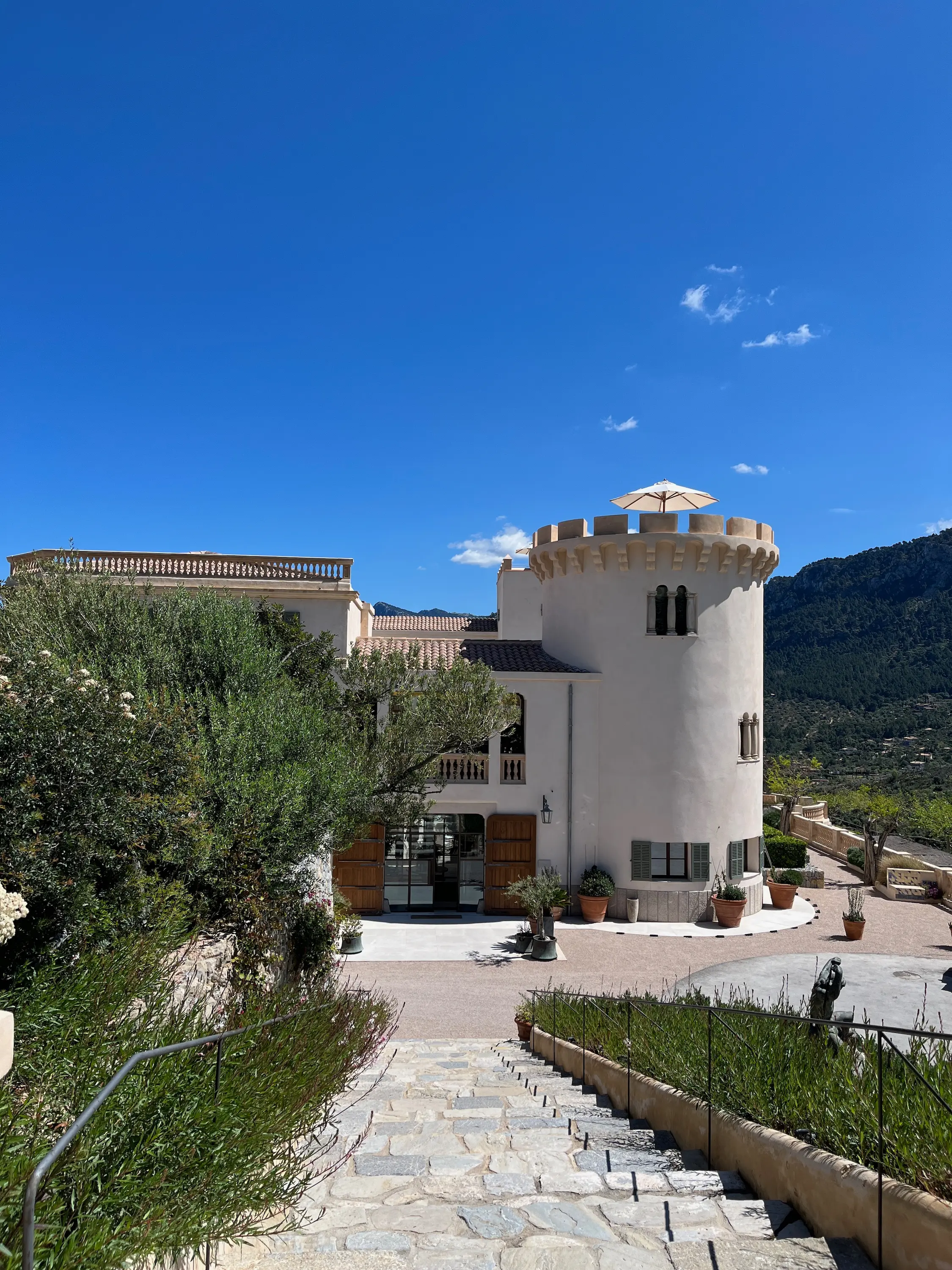
The historic tower at Son Bunyola
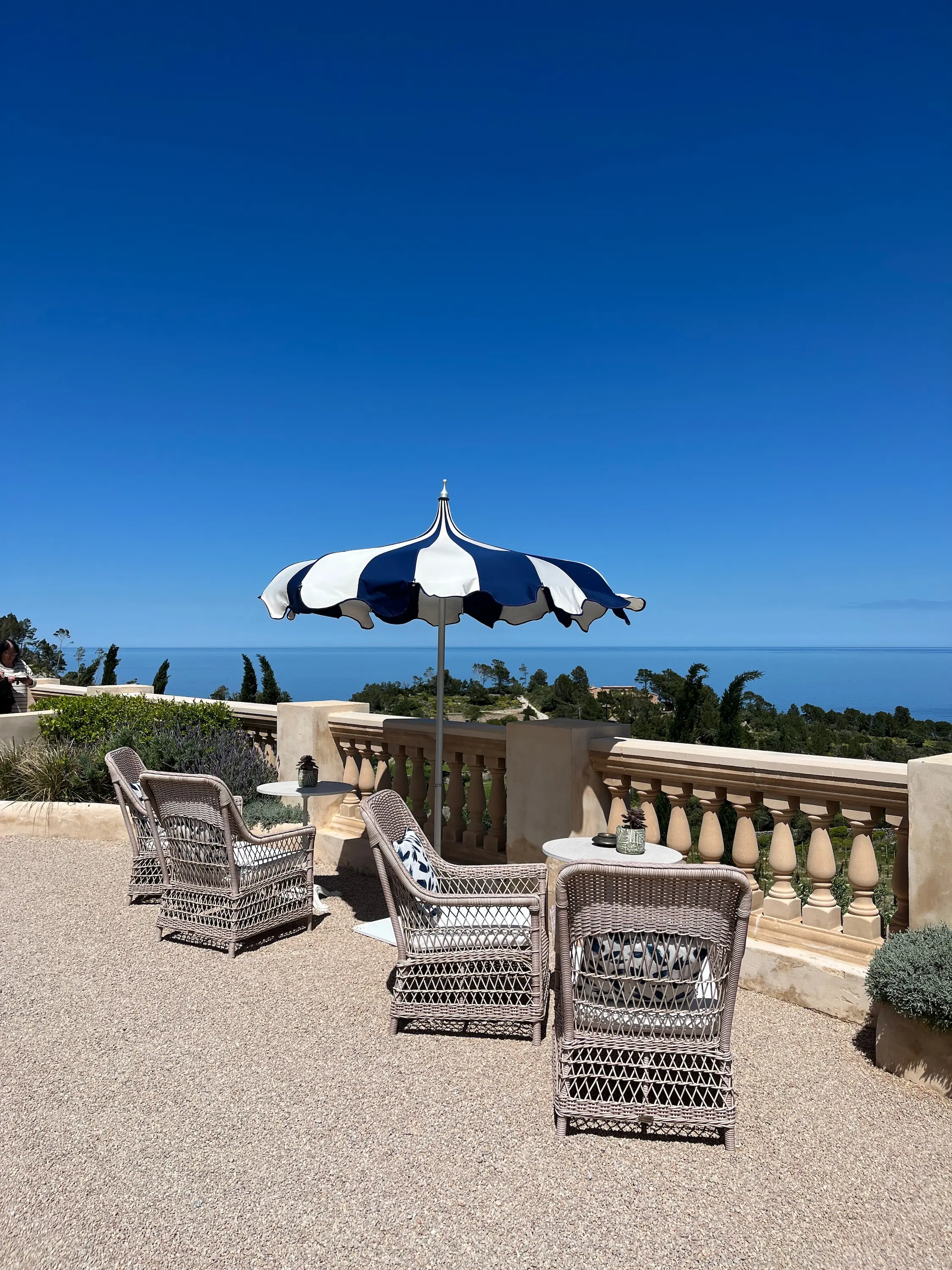
Son Buyola sits between sea and mountains
T

o get the project going, Son Bunyola brought in Pedro Balda, who has a doctorate in oenology and is from a 6-generation family of winemakers in Rioja. Balda is also known for specialising in recuperating ancient or native vines in Spain, as well as internationally. He has spent time on the island (he also happens to be married to a Mallorcan) and was working between the University of Rioja and UIB in Mallorca on projects over the years. For Balda, it was the Malvasia grape that surprised him the most partly because it was a grape only planted in this region of Mallorca, and because it was totally distinctive from the other nearly 200 Malvasia grapes known in other parts of Europe, including mainland Spain. 

Balda, together with local vine grower Jaume Font, planted the first vines at Son Bunyola five years ago, making their first harvest this year. They were delayed by a year due to birds eating all of the grapes in 2025, days before harvest, an unexpected setback. “It has been very satisfying but very difficult,” Balda says with a smile. The landscape itself is particularly complex for wine growing as well. The salt and strong winds from the sea creates additional salinity, which can cause damage but it also gives the wine its character. Cool mountain air, rain. “This area can be 4-5 degrees cooler in summer than Binisalem,” notes Balda, which makes a big difference in how the grapes grow. The region is also full of calcium, similar to the Champagne region. They planted the vines freely, with less structure, to let them grow more naturally. They began with 3 hectares in 2022, taking a holistic and sustainable approach, adding more hectares each year; sheep graze the land, along with pigs, burros, and even some turkeys, helping to preserve it. Nearby plantings of almond and olive trees complement the vines. The first harvest was all done by hand, taking in 2,300 kilos of grapes and 1,750 bottled bottles. By 2030, they hope to be fully planted and working in full production capacity, producing roughly 18,000 kilos of grapes and 14,000 bottles. The project is a labour of love to the land, to tradition and, of course, to wine. As Balda notes,  “Que la Malvasia vuelva a abrazar el mar,” a poetic phrase that links this unique grape to its distinctive setting.

@sonbunyola

"The salt and strong winds from the sea creates additional salinity, which can cause damage but it also gives the wine its character as does the cool mountain air and rain."
Related Stories.