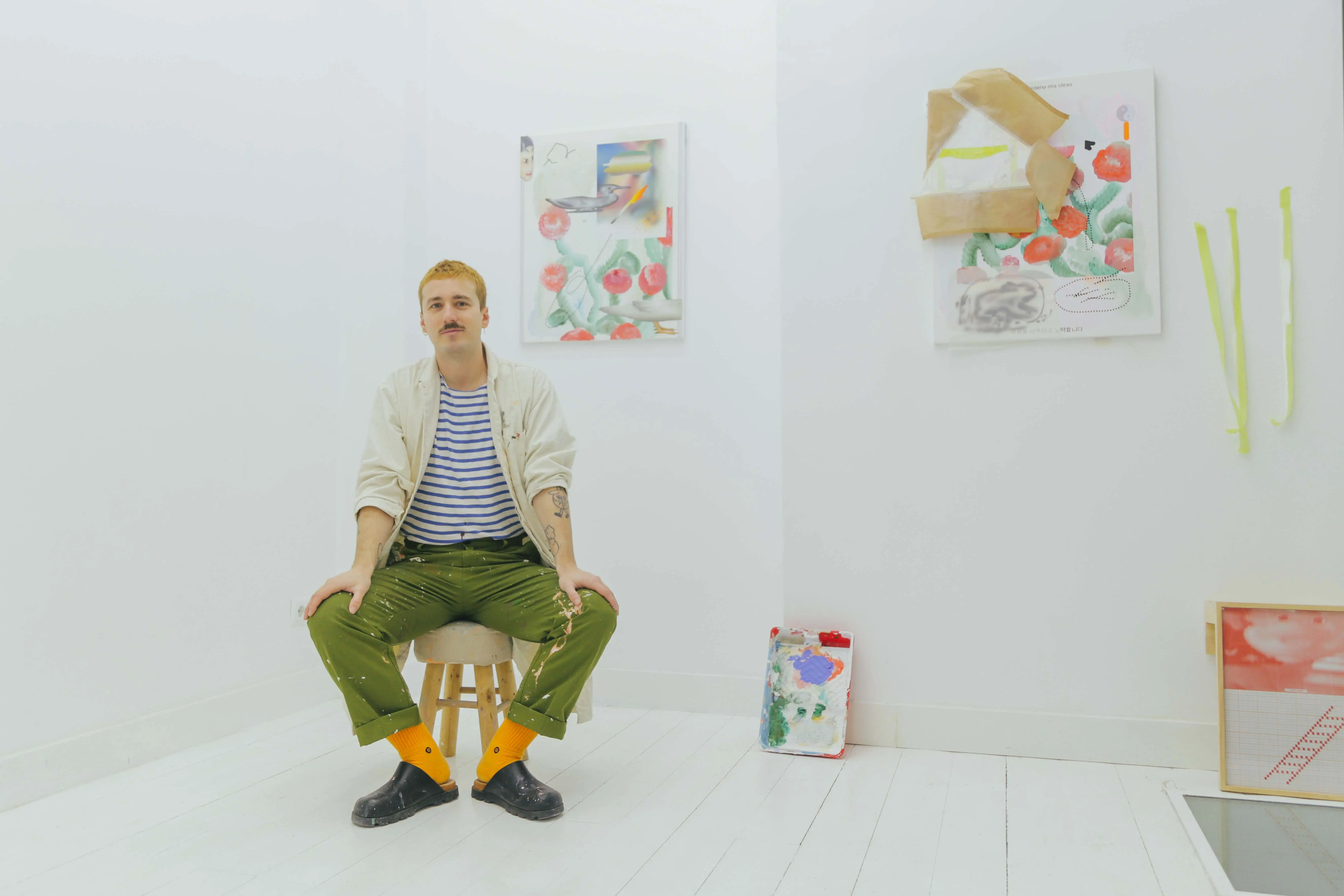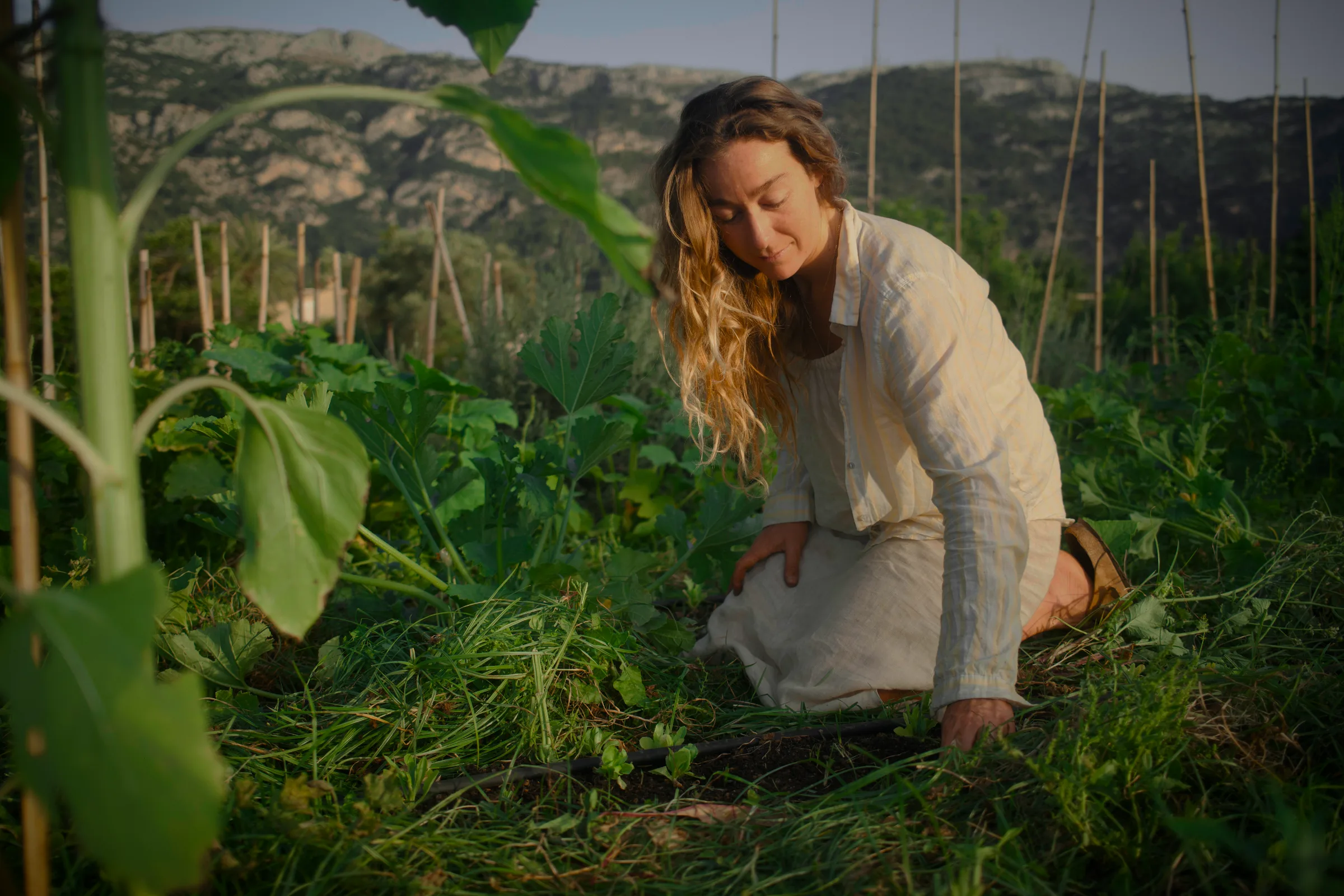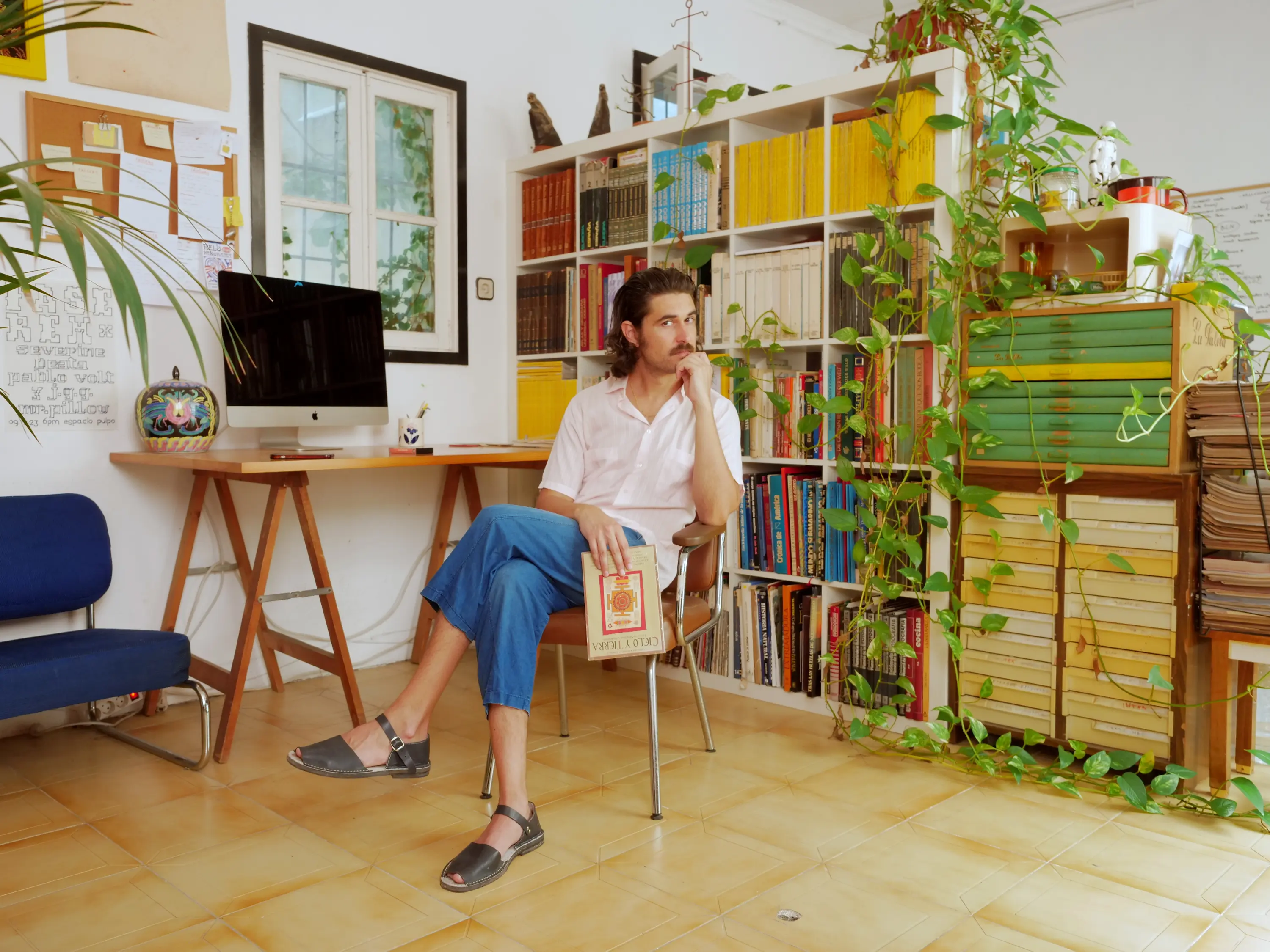
When I was 16, I saved up for my first trip abroad and got an InterRail card. After a three-day train journey from Sweden to Athens, I finally met the Mediterranean and thought, “Why on earth would anyone choose to live in cold and miserable Sweden when you could live by this paradise sea?” It was never a dream to live by the Mediterranean; it was a good plan, and now, here I am. But for how long, I don’t know, because I also have an appreciation for miserable, cold, ugly places too. I like Sweden and it’s misery although haven’t lived there for many years. I used to worry that if I lived in such a beautiful place as Mallorca, I might stop making art, as I wouldn't need the same distractions or search for meaning. However, I still work at the same pace as I did in London, where I lived before. But when I walk around my studio in Selva, I enjoy the mountains and the birds instead of having my nose in some one’s armpit in the underground.
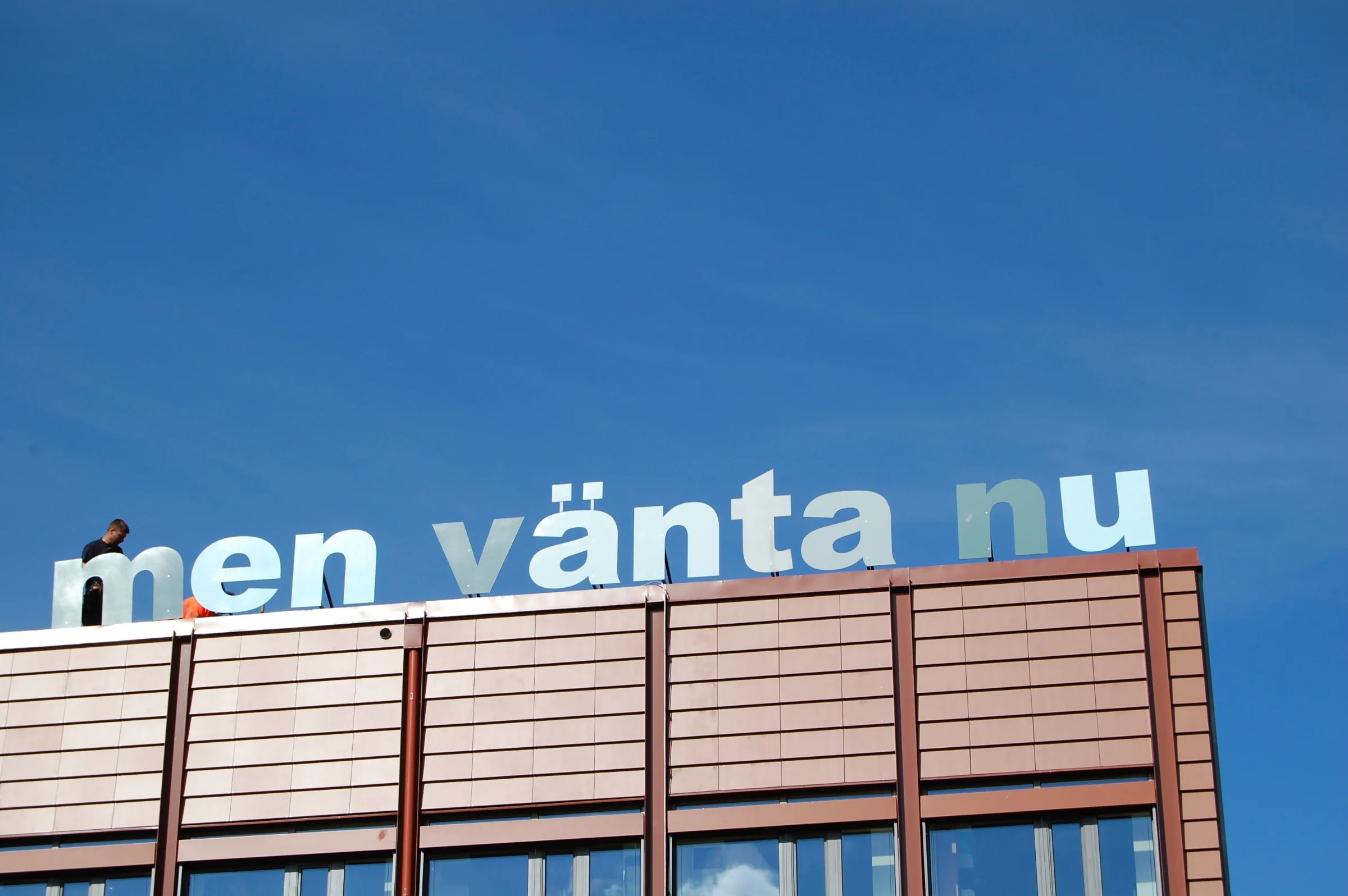
What is life if not the everyday? I don't really know how things come together, which is part of the enjoyment of being an artist like me. There are everyday phrases that are particularly intriguing in Swedish; the people there, who can be quite cold and pragmatic, often express themselves in a poetic way without even realising it. I like to highlight these phrases, even though they are difficult to translate into English. It’s surprising how an everyday phrase can evoke strong reactions. I once installed a permanent 10-meter-long metal text piece at the roof at Lund University: "men vänta nu," which translates to "hold on, but wait, wait a second." It encourages reflection, yet some people were upset about how such a simple phrase could be commissioned for a university filled with great philosophers and their profound quotes. I avoid solemnity in my work. There’s nothing particularly clever about the phrases I choose, they are meant to be accessible to everyone.
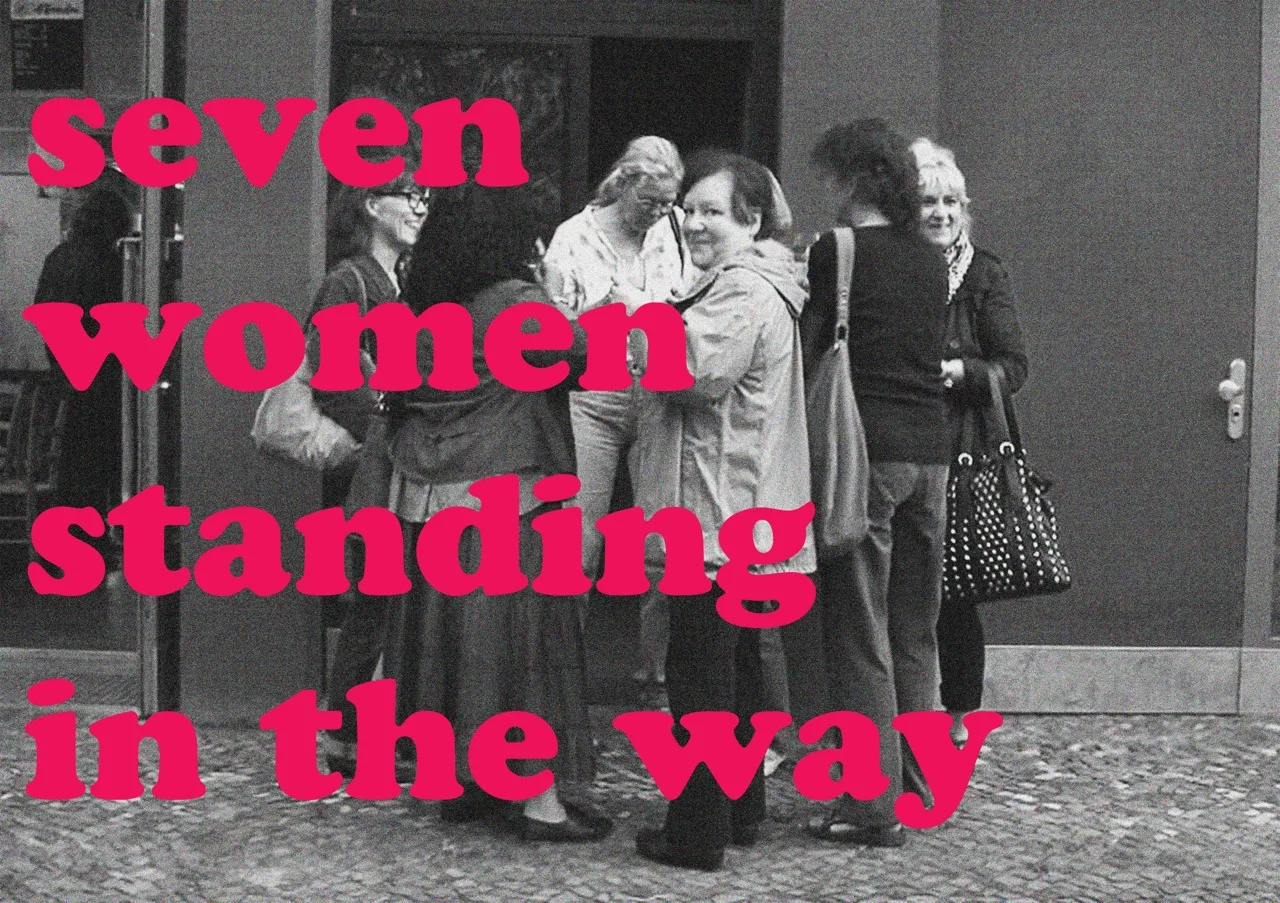
Many ideas emerge from conversations with others, often stemming from something comical. However, if I push the situation a bit, I find that the most humorous scenarios arise from something tragic or politically depressing for me. I guess that's where my work tends to focus. For example, "Seven Women Standing in the Way" (2011-) is a performance that has been performed around 20 times across Europe. In this piece, women in their 60s and 70s block the entrance of a museum, drinking and chatting, completely oblivious that visitors are trying to enter. It’s comical when you realise it’s a performance, but it also highlights the fact that artwork created by women has historically been underrepresented in museums they frequently visit. Thankfully, this situation has improved in recent years. But I hope that all my performances have many layers; seven women it’s also just a bunch of annoying women who finally possess some public space and they don’t care about you. They have a lot of fun, and me too.
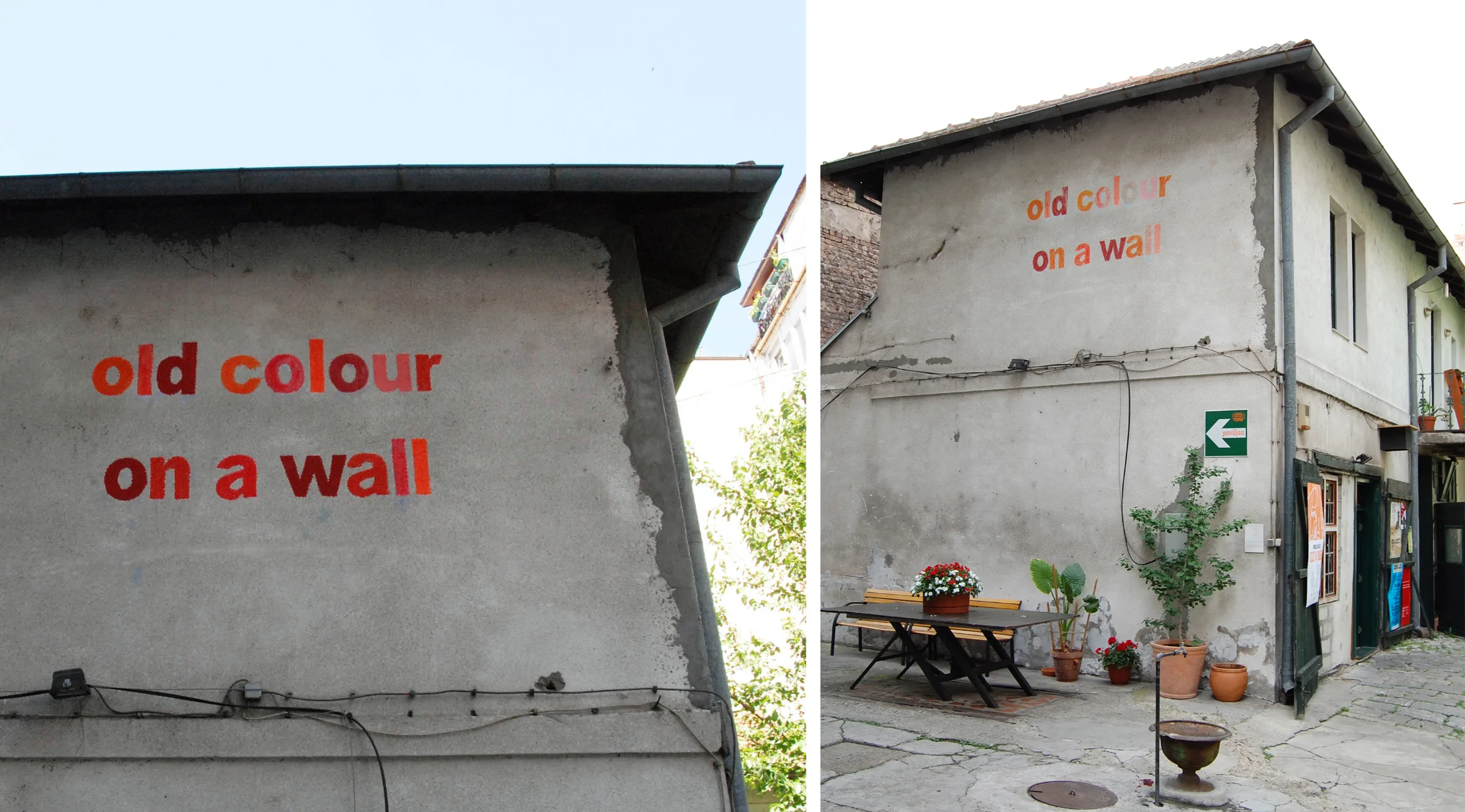
Yes, they interact with each other. I follow ideas, but I find myself unsure of where they are leading. I try with various materials, though I don’t always succeed. I initially started with painting, but my work became overly conceptual. My first paintings at the art school depicted a dirty towel. Then I got a video camera and filmed the towel. “Video art” felt like my true calling. I began to document my immediate surroundings—my mother, my friends, and myself. I soon realised I needed a soundtrack for my films, but I didn’t want to rely on copyrighted music. Since I used to sing, I discovered a synthesiser and started creating my own soundtracks. These compositions gained popularity, and I was invited to perform them. However, the songs were very brief, often consisting of just one line. If I played ten songs, the concert was over in 10 minutes and the audience probably missed them. This experience inspired a film titled “The Missed Concert,” which in turn led to a series of other films focused on failure. These projects prompted me to create text works exploring themes on the fear of failing. Which led to, for example, a 2- meter large text piece for a gallery show in New York saying; “Everything in this Show Can Be Used Against Me.” Yes, one thing leads to another, equal value, it’s just for me to join my own ride.
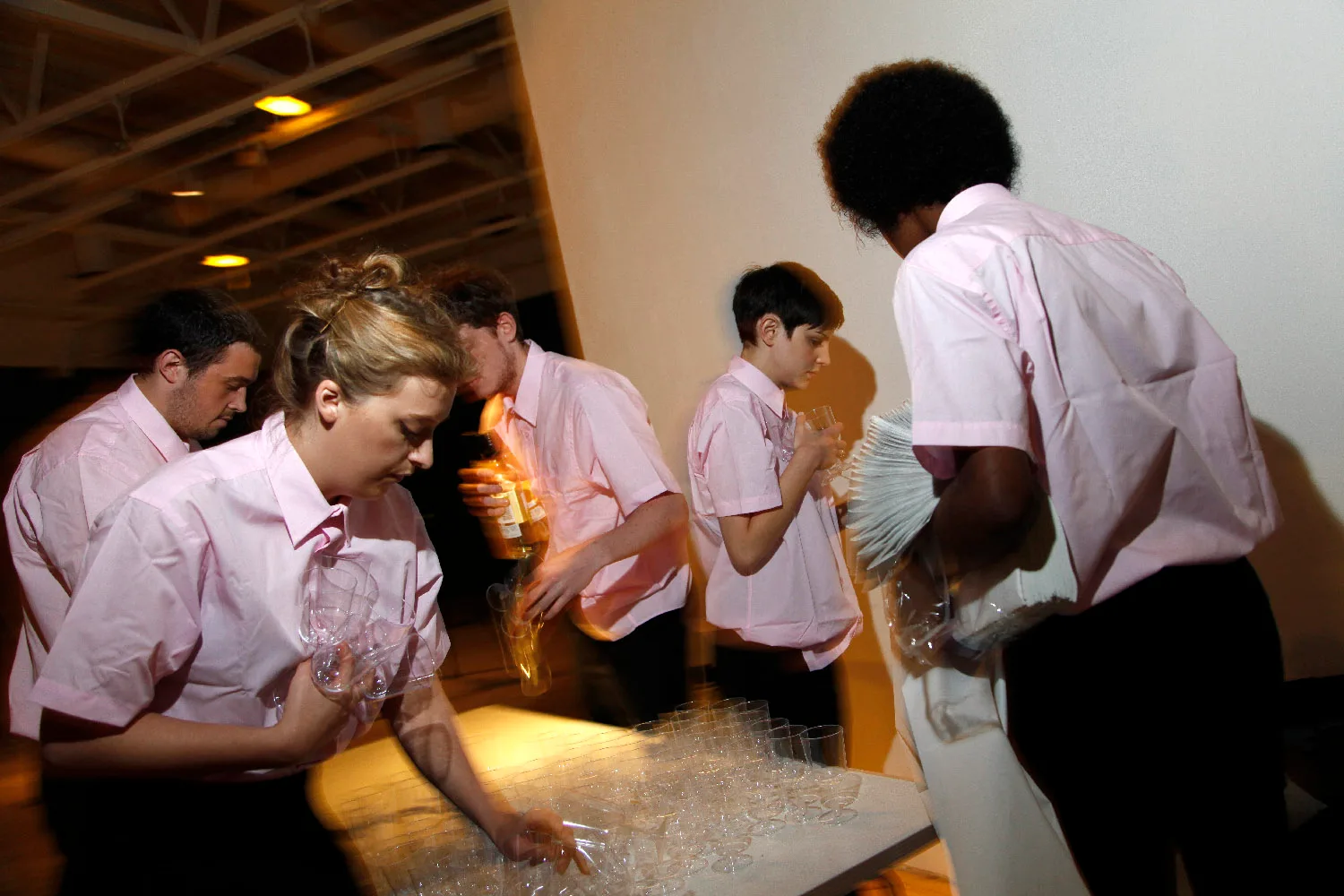
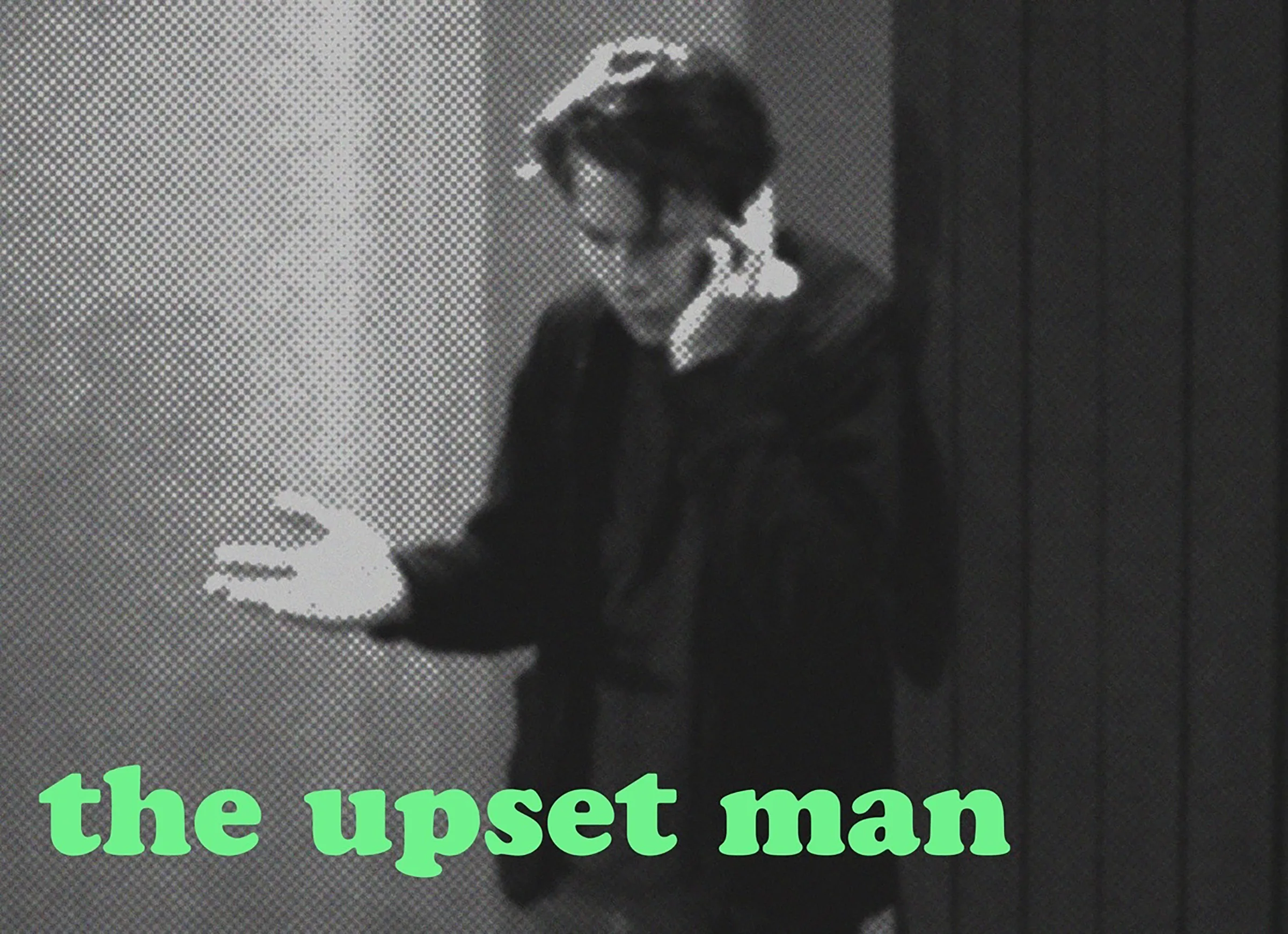
When I’m invited to create a site-specific work, I design something unique for that space. However, I often perform the same piece in various locations. One piece I've presented multiple times in different galleries and museums is called “The Inept Five.” In this performance, five young drama students, freshly graduated, are hired to serve drinks at the opening. A bread job. They struggle to perform their tasks, they are dreamers spilling drinks, drinking themselves, and inconsistently filling glasses, serve drinks with nothing in them. Their incompetence highlights how out of place they are; they belong on grand stages and in major films, not serving drinks. This work also addresses the theme of ‘the fear of failure’, but also again the expectation of the art space. In another I hired an actor to enter a gallery space with his fictive, very loud, very private and very upsetting conversation he has on his mobile phone. “The Upset Man” dominates the space, and when the formal speeches take place by the directors and curators, they can’t be heard. The upset man is asked to be quiet, although he is the actually the artwork. For example, these works wouldn’t make sense somewhere outside an art space.
The emotional layer feels just right. The imagery could depict a car driving to a car wash, accompanied by my song, which echoes a traditional love song slogan. It’s fascinating how even a simple soundtrack can evoke strong feelings, despite its apparent banality. Personally, I’ve taken a step back from performing the soundtrack because the experience becomes overwhelming; I feel as though I absorb the heartbreak of everyone in the audience, leaving me completely drained. I greatly admire how professional musicians navigate this. For years, I tried to understand how they can just “entertain.” It seems impossible for me, even when performing songs that are comical in their simplicity.
I follow my ideas, but I often don’t know where they are heading. For some years, I have been writing a novel, and it is truly enjoyable. It's like savoring a long-lasting word candy. I don’t think it will ever be published, but that doesn’t matter to me. I learn from the process, and I appreciate good literature even more—and I dislike bad literature just as much. I am working on a solo museum show in Norway for next winter. I have some ideas that will challenge the conventional notion of a retrospective, which feels too much like a celebration of success to me. I want to avoid the impression of simply saying, "Look what I have achieved” I have always enjoyed questioning the space for art. Now I know what to do, and it’s going to be a great, not a near death experience but a near failure experience! Welcome to Norway February 20th, 2027!
https://www.annikastrom.net/
@annikastrom100