Close Search
Al·lots de Llevant: Thirty Years of Reaching for the Sky
- By
Laura Pott
sustainability 2030
off the island
Al·lots de Llevant: Thirty Years of Reaching for the Sky
Nov 5, 2026
by
Laura Pott
Al·lots de Llevant: Thirty Years of Reaching for the Sky
sustainability 2030
off the island
Al·lots de Llevant: Thirty Years of Reaching for the Sky
Nov 5, 2026
- By
Laura Pott
Al·lots de Llevant: Thirty Years of Reaching for the Sky
off the island
sustainability
Al·lots de Llevant: Thirty Years of Reaching for the Sky
Nov 5, 2026
- By
Laura Pott
Photo: Duncan Kendall
I

n Manacor, generations come together to build human towers, turning individual courage into collective strength. As the Mallorcan casteller group Al·lots de Llevant celebrates its 30th anniversary in 2026,  its story reveals a tradition that extends far beyond the towers themselves.

‍

Originating in Catalonia in the late eighteenth century, the tradition was recognised by UNESCO as Intangible Cultural Heritage in 2010. The anniversary of the Al·lots de Llevant brought us to Manacor to meet group president Lara Gelabert and experience the Diada, a gathering at which casteller groups come together to perform and celebrate their tradition.

‍

The story of Al·lots de Llevant began in 1996, when a group of young friends set out to create an activity that would bring people together. With little local knowledge of castells, they had to learn the techniques and positions needed to build their own towers. Their formation coincided with the expansion of the casteller movement beyond Catalonia. The Castellers de Mallorca formed in Palma around the same time, followed later by the Gambirots de la UIB, based at the University of the Balearic Islands. Today, all three groups keep the centuries-old Catalan tradition alive across Mallorca.

‍

For Gelabert, the connection with Al·lots de Llevant began through her son. Although she had lived in Manacor for years, she was not originally from the town and was looking for ways to establish local connections. Maria Martí, a teacher at her son’s school and a long-standing member of the group, encouraged them to come along. “We liked it so much that, ever since the day we first stepped into the clubhouse, we have maintained our connection with this wonderful collective”, Gelabert says.

‍

Since September 2000, the group has had its own local club in Carrer Nou, Manacor. It is a place for rehearsals, meetings, preparations and quieter moments the community shares. Thirty years on, the group has grown considerably. Around 800 people have passed through it over its history, and 130 members are currently active, including approximately 20 children aged between five and twelve. Gelabert reflects on how the group has evolved over the past three decades. “Perhaps the youthful, daring drive has been lost, but there has been a gain in reliability and security”, she suggests. “What matters most,” she adds, “is that hundreds of people have spent at least one season with the group and we have surely contributed to their happiness in some way”.
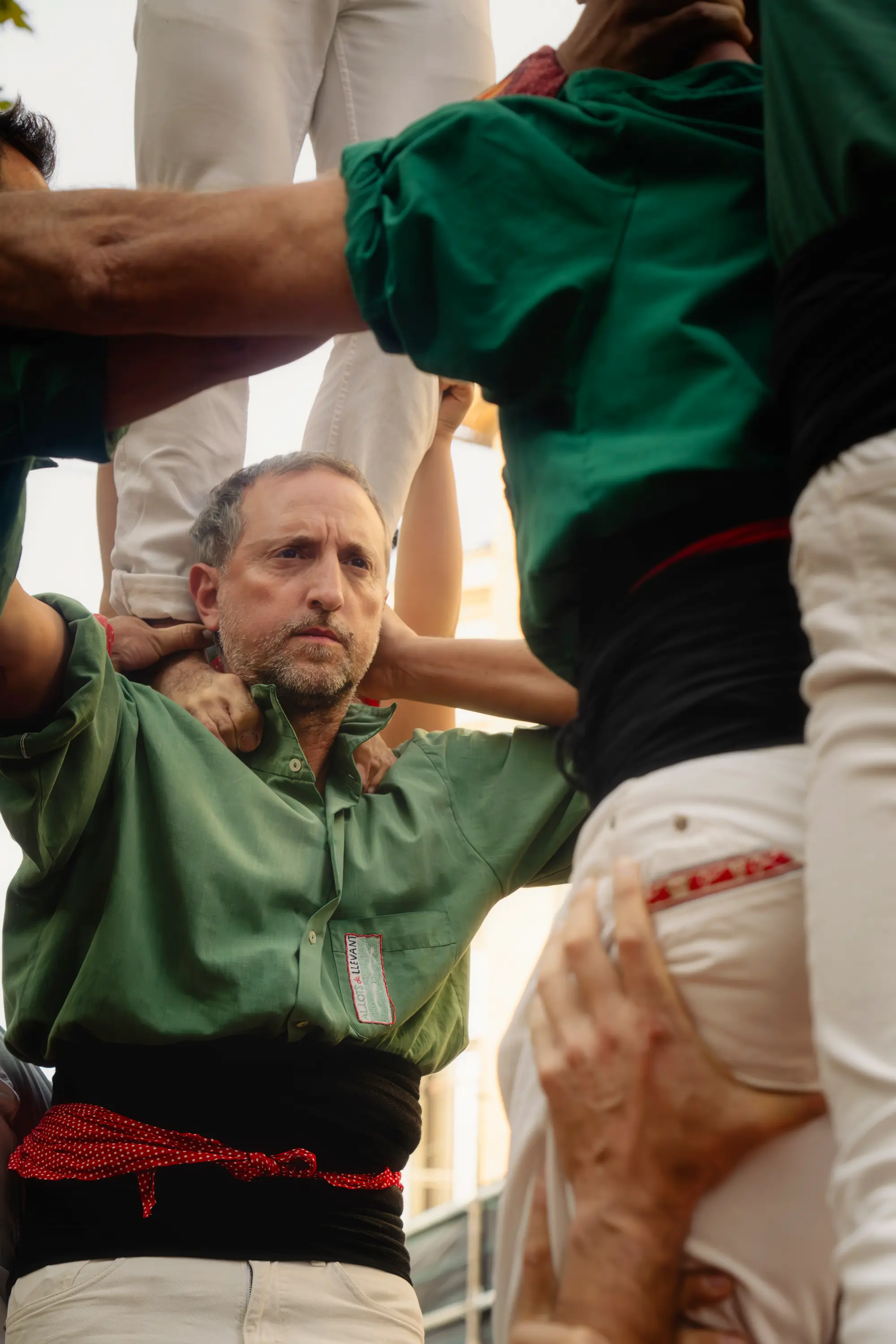
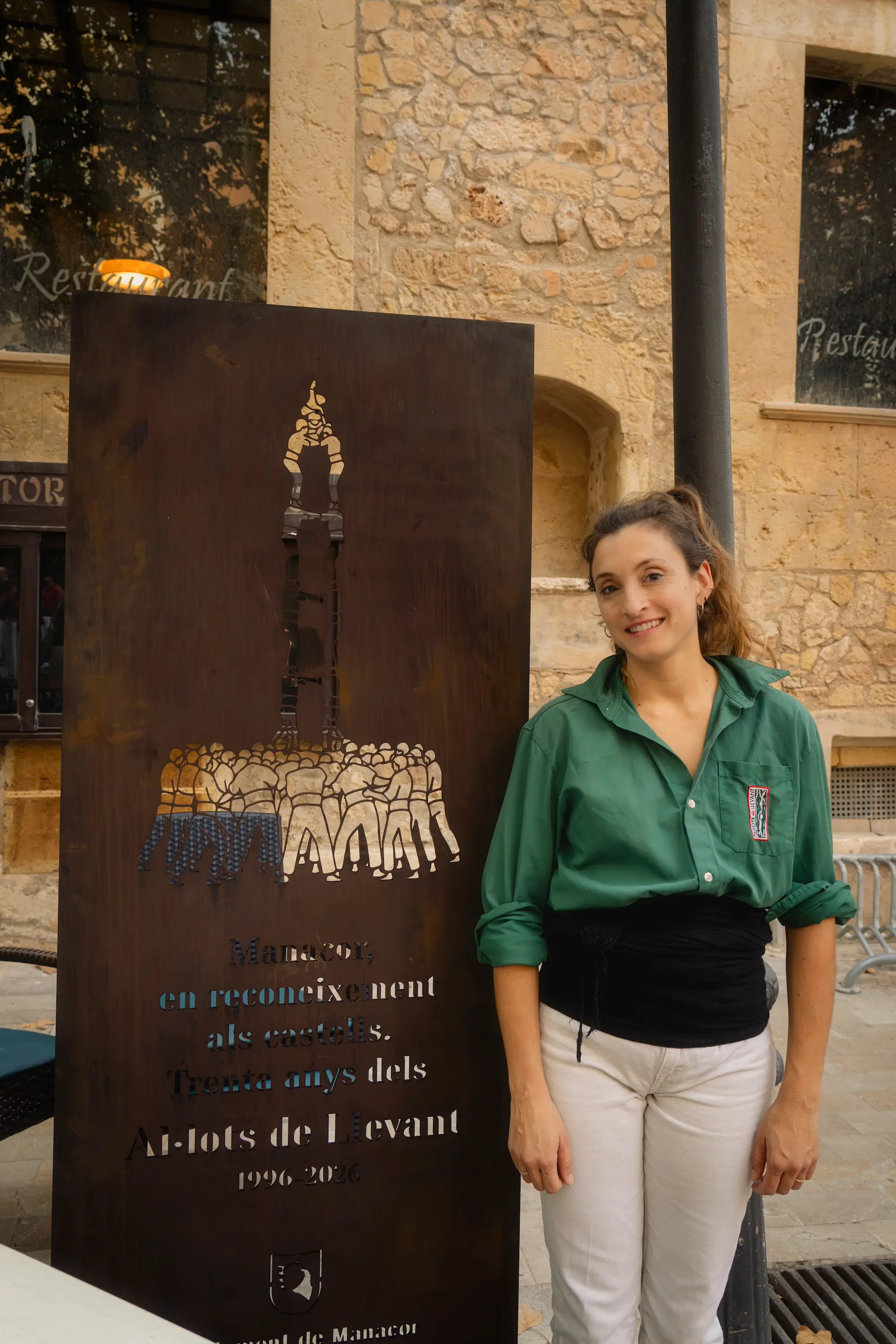
Photo: Duncan Kendall
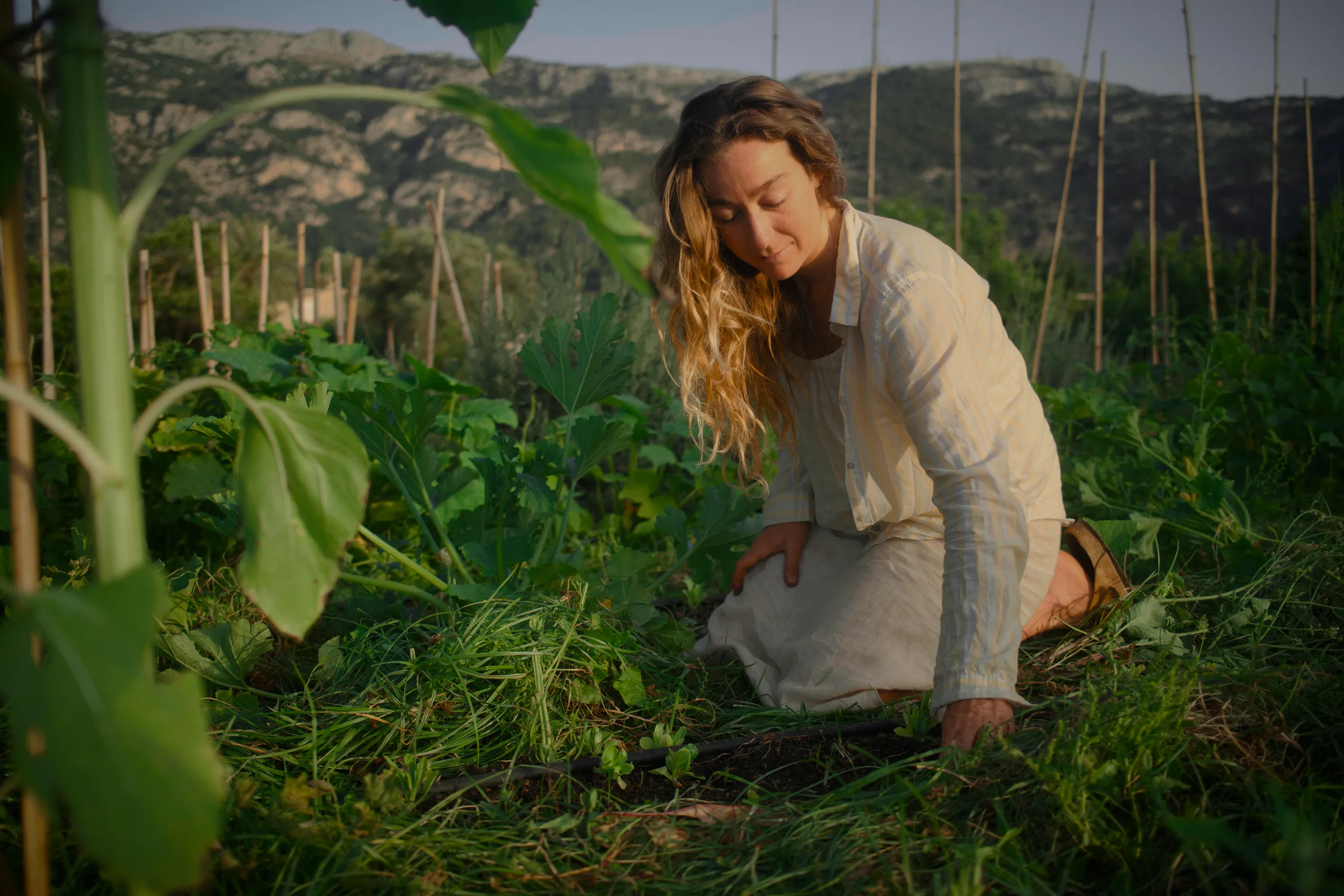
Lara Gelabert. Photo: Duncan Kendall
A

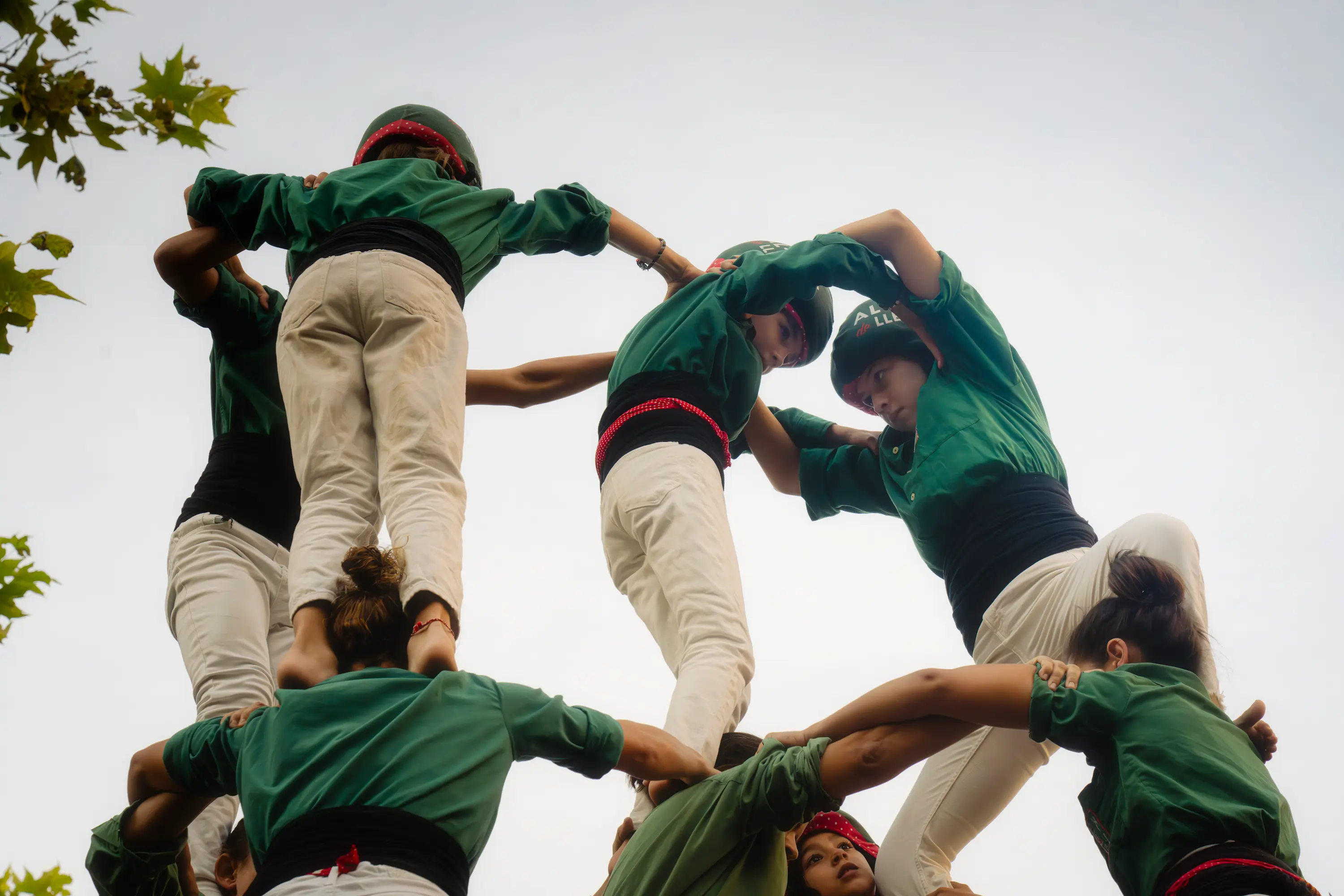
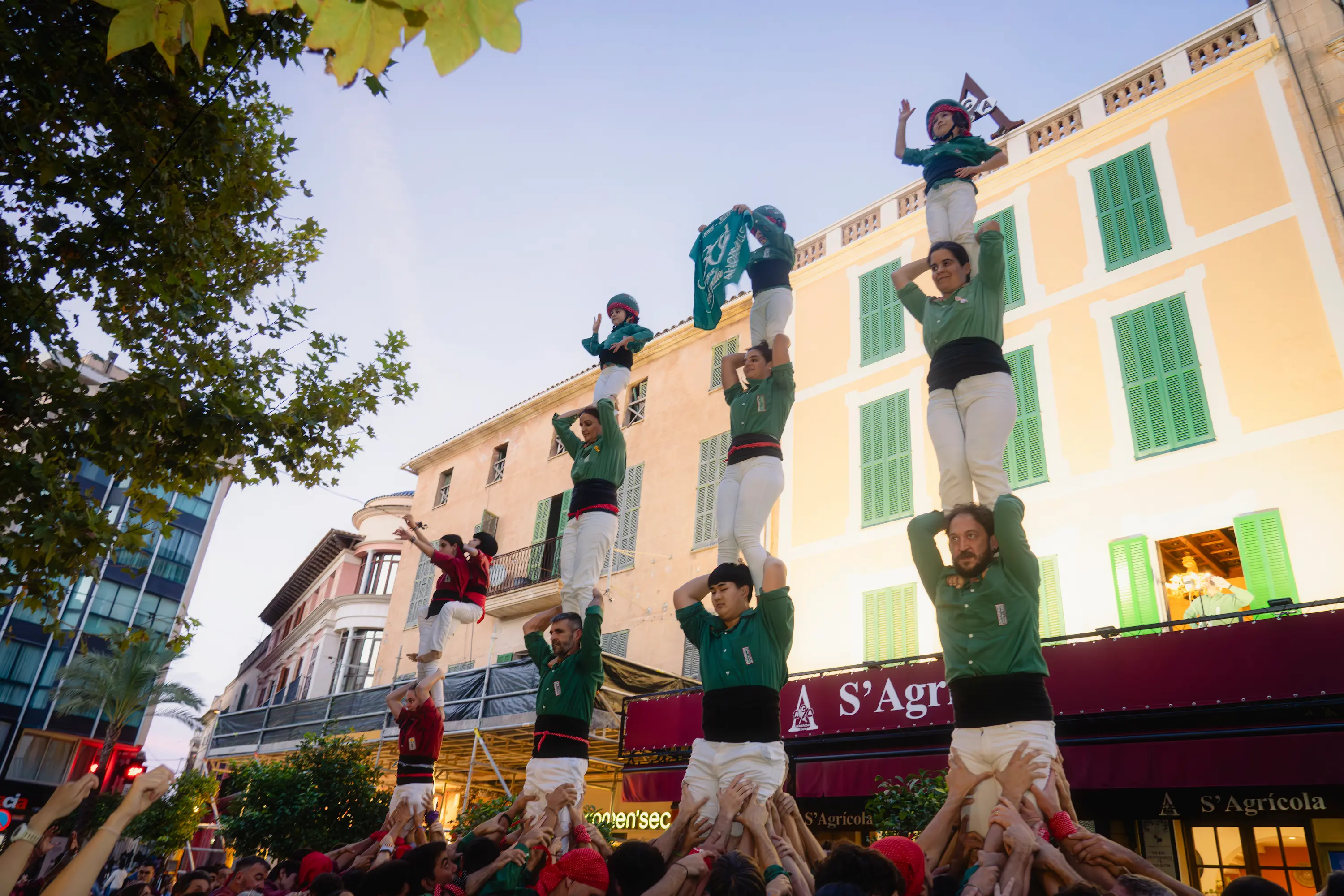
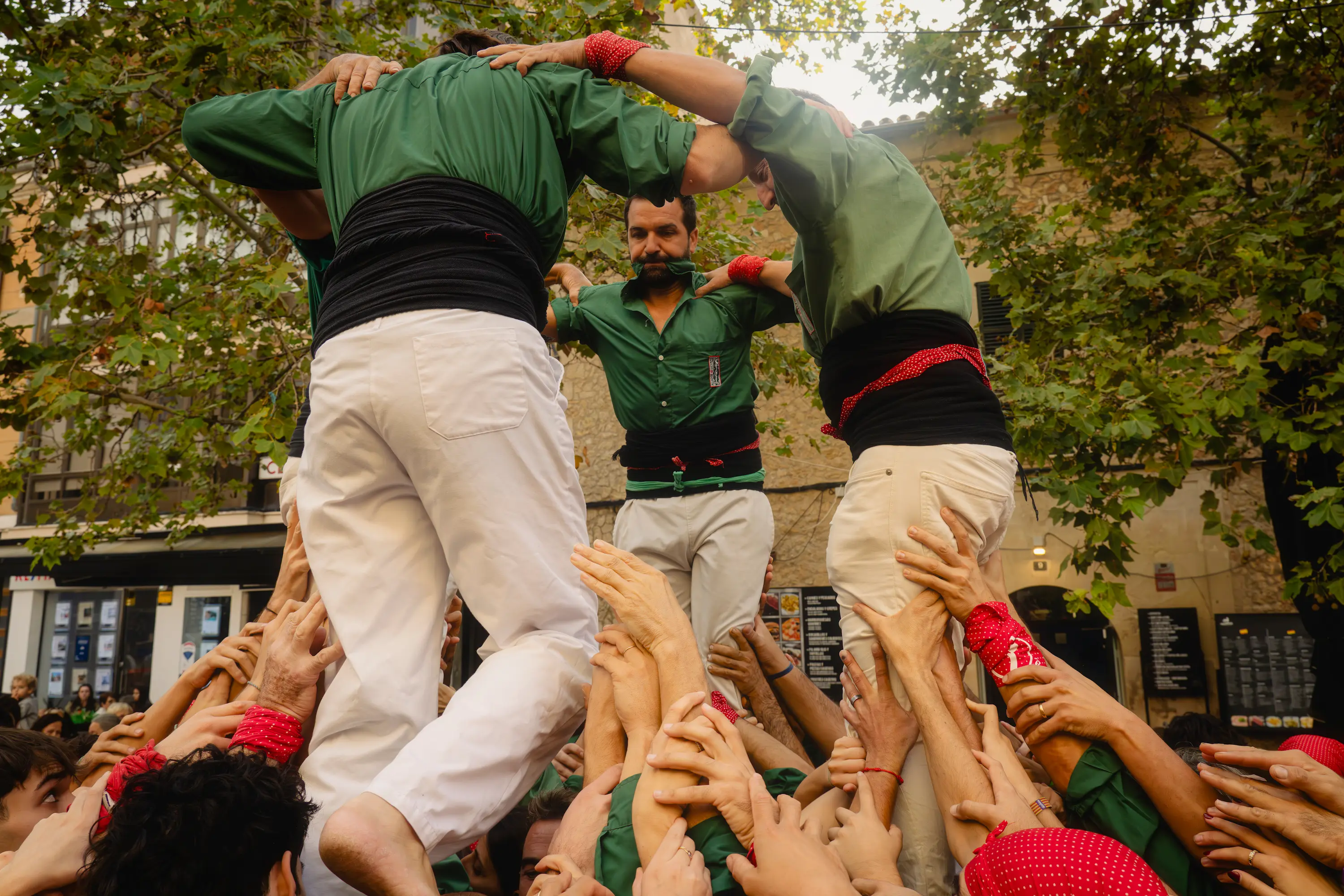
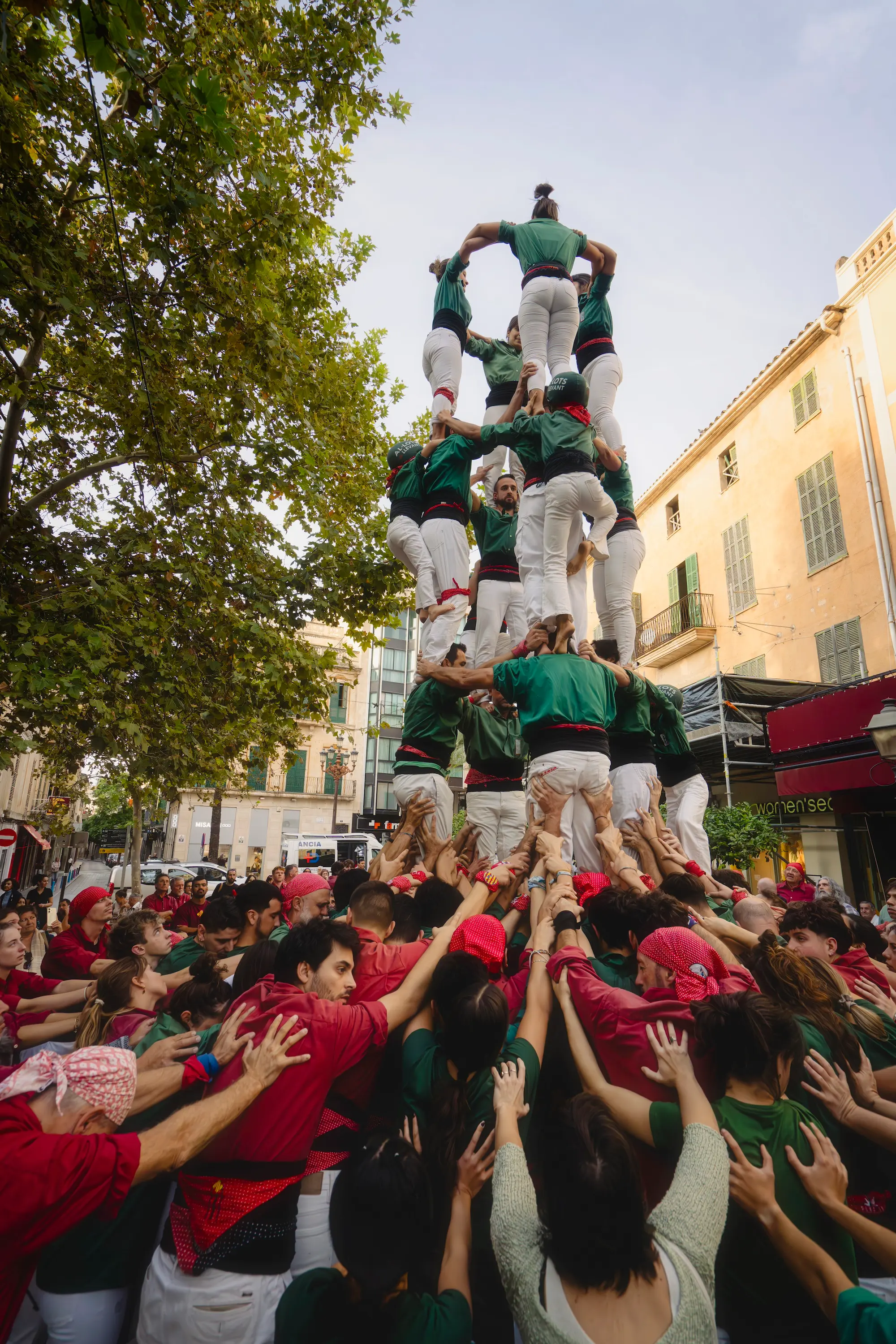
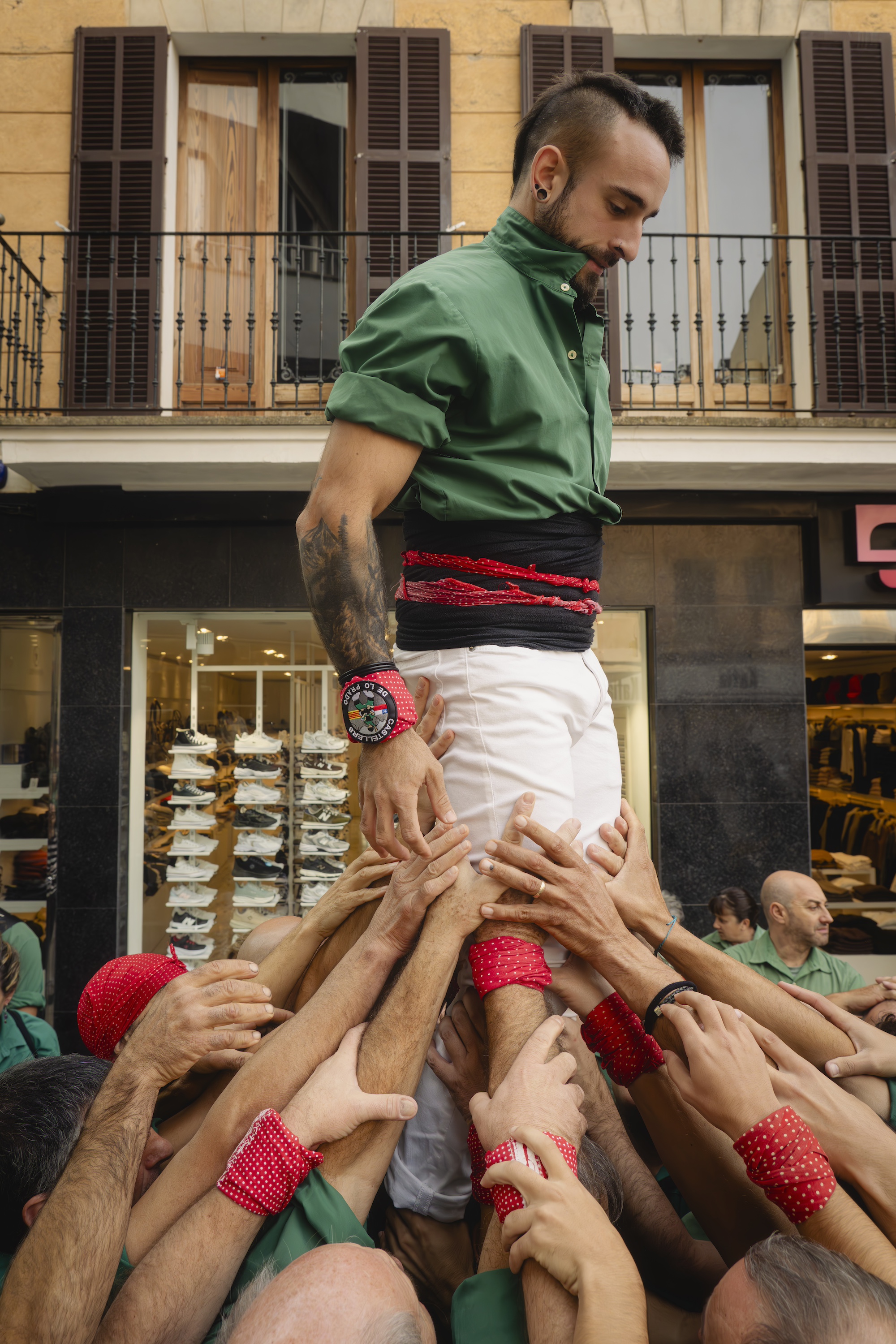
casteller tower is built according to a precise structure. At ground level, the pinya forms a dense base of people whose bodies support and stabilise the tower while helping cushion a potential fall. Above it rises the tronc, the main trunk of the structure. At the top, the smallest and lightest climbers form the pom de dalt, culminating in the enxaneta, who crowns the tower by reaching the summit and raising a hand.

‍

Choosing the right person for the highest position is about far more than size. The enxaneta is often between seven and eleven years old, but agility and physical condition are just as important. There is no strict upper age limit, either. The Al·lots de Llevant group includes castellers in their eighties, demonstrating that participation is not reserved for the young or particularly athletic. Most members are Mallorcans, but there is also a smaller, significant number from elsewhere in the world. What brings them together is less about where they come from than what they want to contribute.

‍

The clothing is practical as well as symbolic. The Al·lots de Llevant wear green shirts, white trousers and a black faixa, the long sash wrapped tightly around the waist. The faixa provides grip for climbers and support for the lower back. Children wear helmets when climbing. Rehearsals take place twice a week during the main season, which runs from February to November. Members practise the techniques required to build six- and seven-storey towers and, when conditions allow, the more demanding eight-storey structures. While certain positions require specific physical preparation, castells depend on more than athletic ability. Each person contributes different strengths and experience, and every role matters.

‍

The group’s highest achievement is the 4 de 8, an eight-storey human tower with four people across each level of its main trunk. In 2009, Al·lots de Llevant became the first group outside mainland Catalonia to load one. They completed it at Tarragona’s Concurs de Castells in 2016 and again in Manacor in 2017, achieving success on home ground.

‍

These were defining moments in the group’s history, but Gelabert’s most treasured memories are more personal. Among them are the first seven-storey tower she climbed, the first seven-storey castell after the pandemic, when she was unknowingly pregnant with her youngest child, and the occasion when she and her son shared a seven-storey structure. Such moments capture a different dimension of the tradition. Beyond the technical challenge of building a tower, castells create experiences that become part of the lives of those who take part.

‍

The Diada in Manacor offers a glimpse of how these shared experiences take shape. For Gelabert, the experience begins before the performance itself, in the anticipation and rituals that precede it. One of her favourite moments is arriving at the club with butterflies in her stomach. From there, the castellers make their way together towards Plaça de sa Bassa, accompanied by the music of gralles, traditional Catalan double-reed wind instruments and drums, while they move towards the square where the towers will rise.

‍

The trust within the group is what makes watching a live performance so captivating. The movement is both careful and urgent, a balance of technical precision and human vulnerability. The tower does not rise because one person is exceptionally strong, but because many people coordinate their movements and remain attentive to one another. There is risk, despite the safety precautions, and a fall can affect the group’s confidence. Gelabert acknowledges that rebuilding morale takes “patience and love”.

The anniversary motto, “30 anys fent pinya per tocar el cel amb la mà”, (thirty years of forming the base together to touch the sky with the hand), captures the spirit of the group.
Photo: Duncan Kendall
Join the conversation
Share your thoughts, tips, and local knowledge with our community
Discuss this story