“I
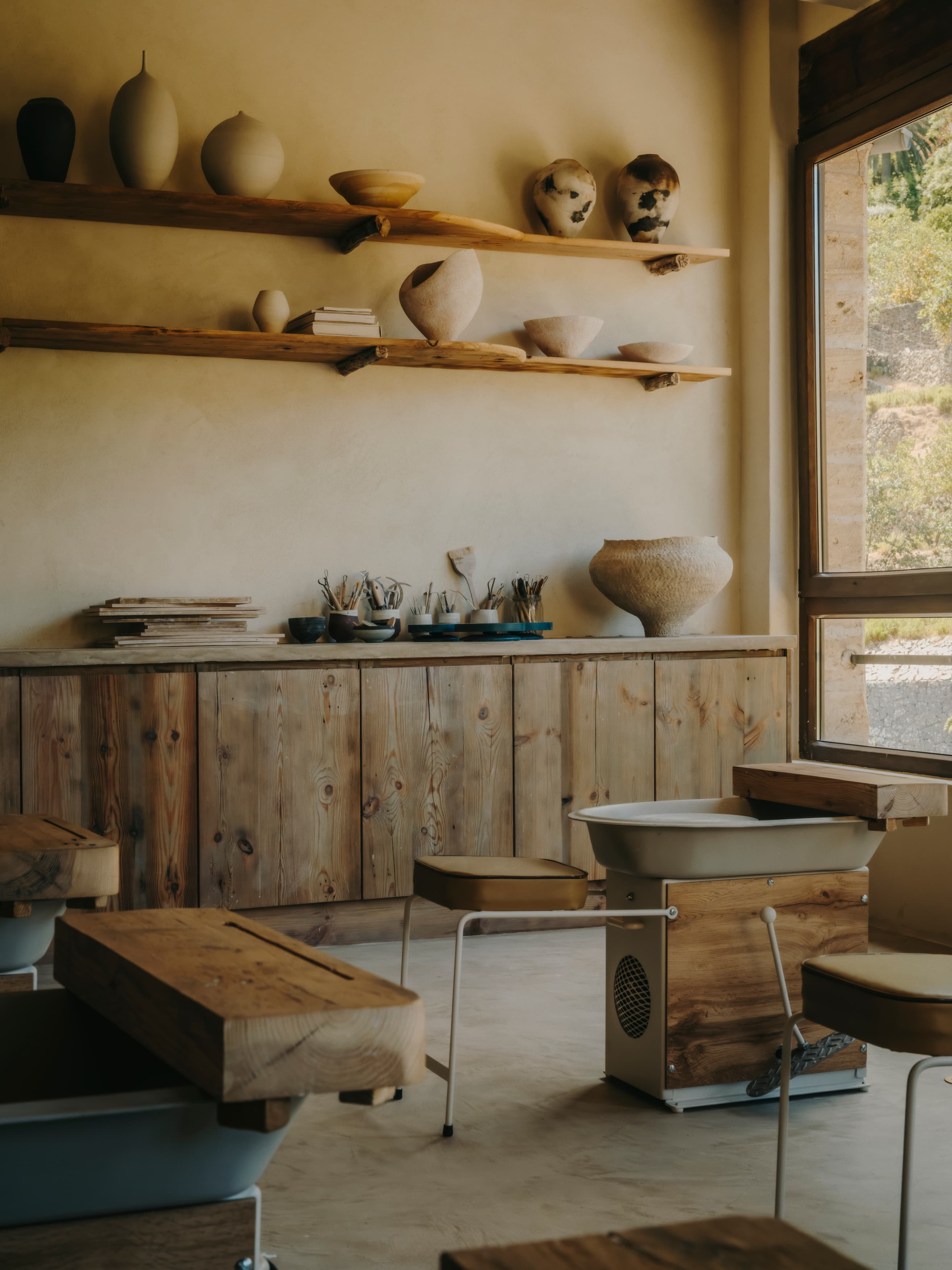
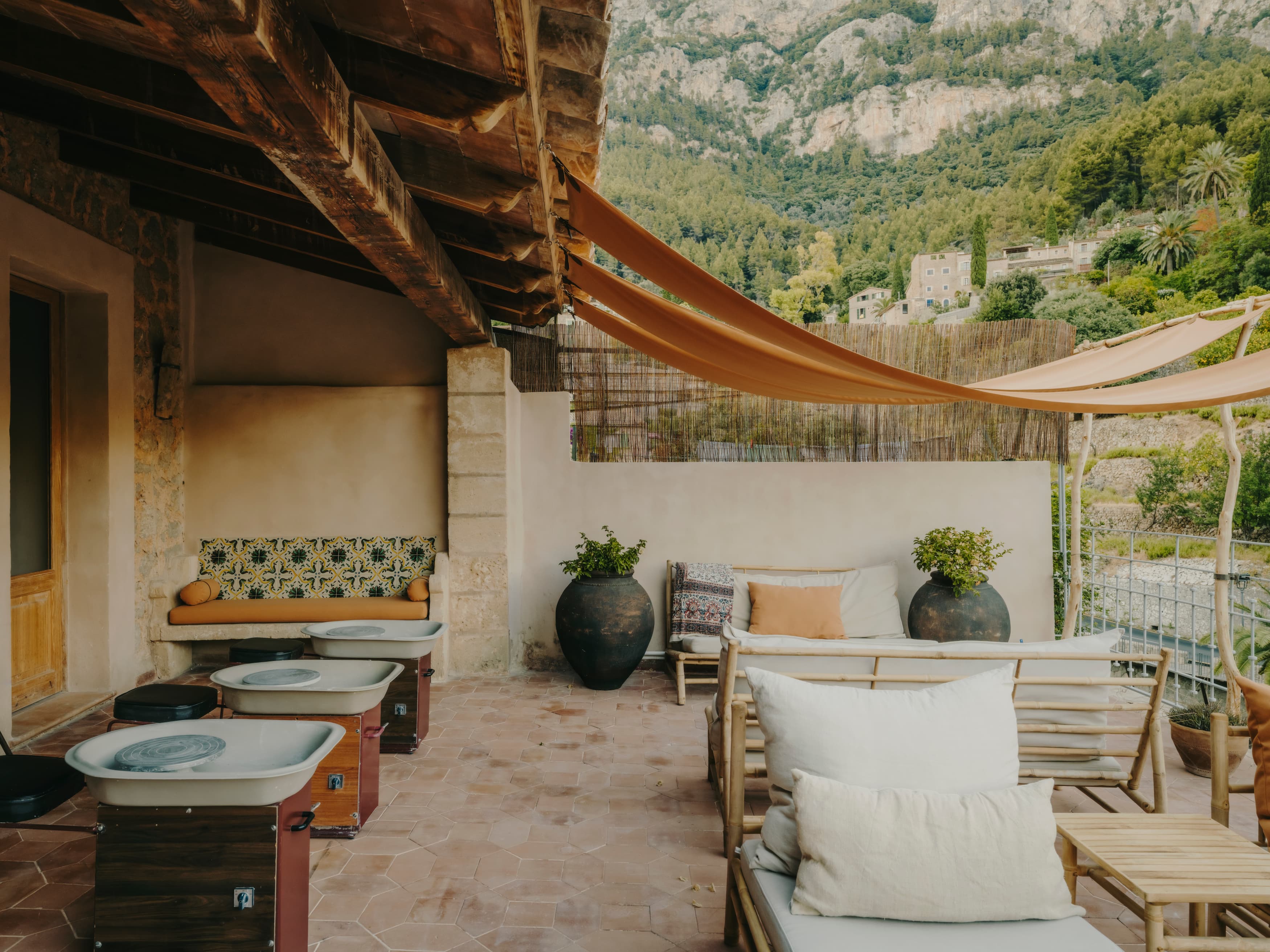
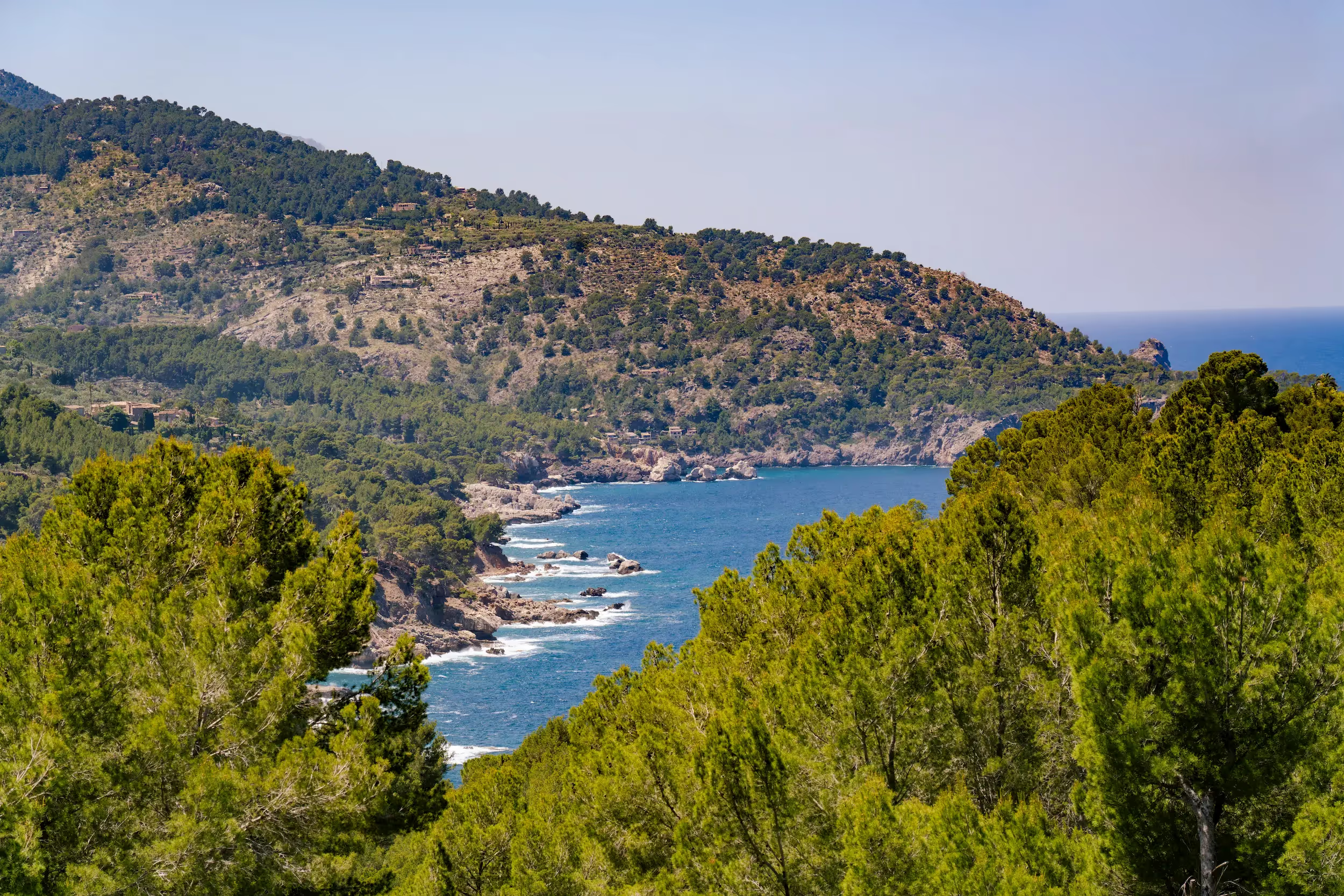
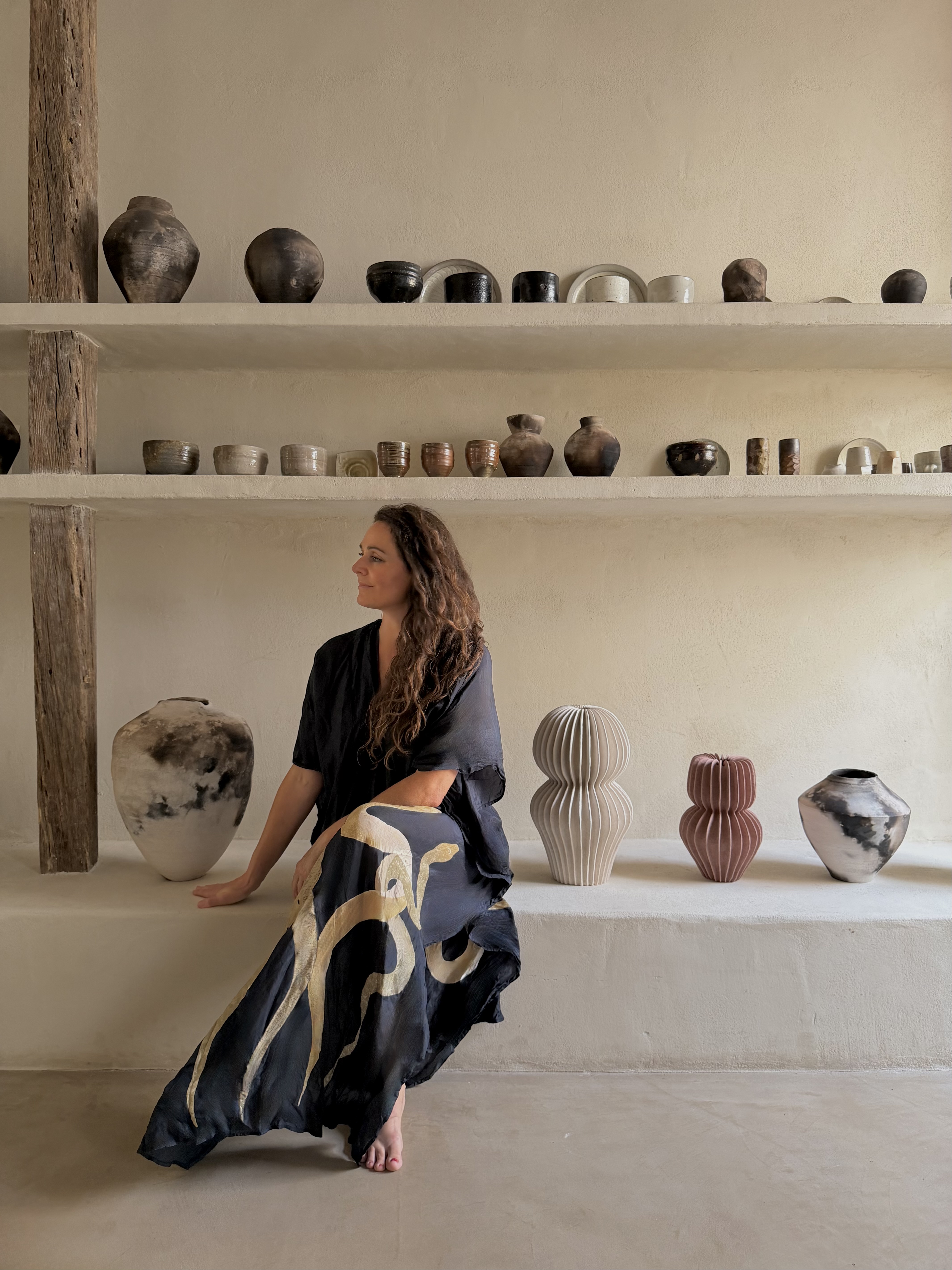
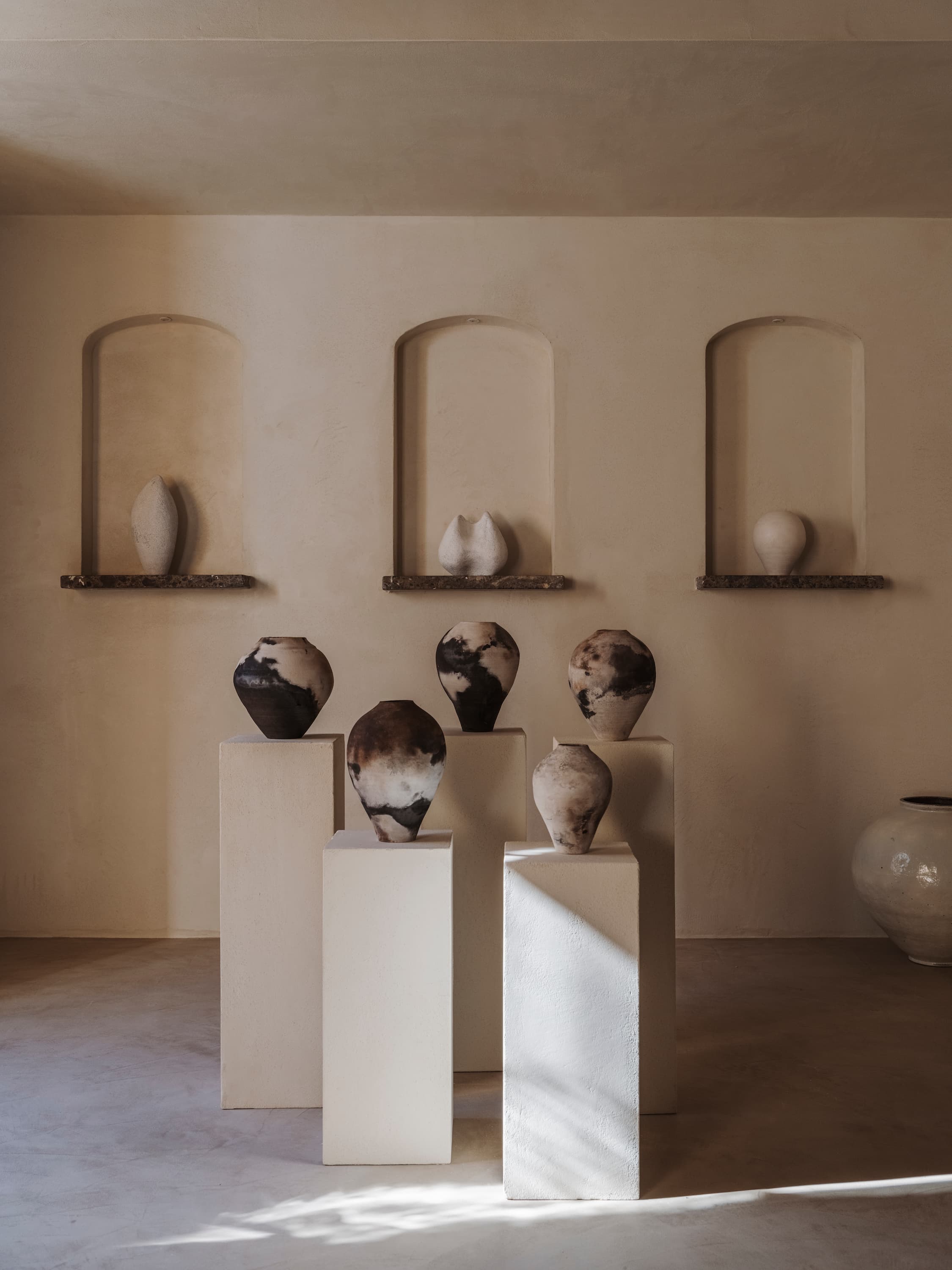
knew as soon as I started ceramics that it was something I wanted to pursue,” says ceramicist Maria De Haan, who is known internationally for her striking smoke-fired vessels, and more recently, as the owner of De Haan Gallery in Deia. From her studio in Deia, where she is surrounded by the terraced landscapes of the Tramuntana mountains, De Haan experiments with the natural elements, using different materials such as seaweed and olive branches, among many others, when firing her ceramics. Each sculptural piece seems to capture a moment in time, a fleeting breath or an imprint of the earth.
De Haan was creative as a child growing up in the English countryside. She worked as an educator and in human resources in London and overseas before taking a ceramics course in her twenties, an experience that sparked a passion that she has been honing now for over twenty years. As De Haan began to develop her craft, she did many internships and took courses. “I’d go around ceramic shows with my notebook and ask around if I could go and work with the artists for a period to learn. I am old-school in that way,” she says. One of those encounters was with the English potter Mike Goddard, who decades earlier had renovated an old sugar mill on the tiny Caribbean island of Bequia. He ran a studio and small ceramic shop on the island and offered a small studio for very little rent; De Haan quickly signed up. “I learned by watching him, and I would get a couple of my pots in his firings. It was an interesting experience,” she explains, that also led to a deep love of the island. “For ten years, I was working really hard – making pots non stop in London and then going back to Bequia for the winters. I just loved it there.”
Another important training was with Simon Leach, a famous English potter and the grandson of Bernard Leach, the legendary ceramic artist whose books are required reading for any ceramicist. For a week she was his only student. “It was an amazing experience. I had this wonderful potter to myself,” she recounts. “ His insight, and what he taught me, is more than what anyone ever taught me about how to train your eye, how to really see, how to stand back and look at the curve of the pot you're making. You have to train your eye to know the difference between a good or bad pot. It was so intense.”