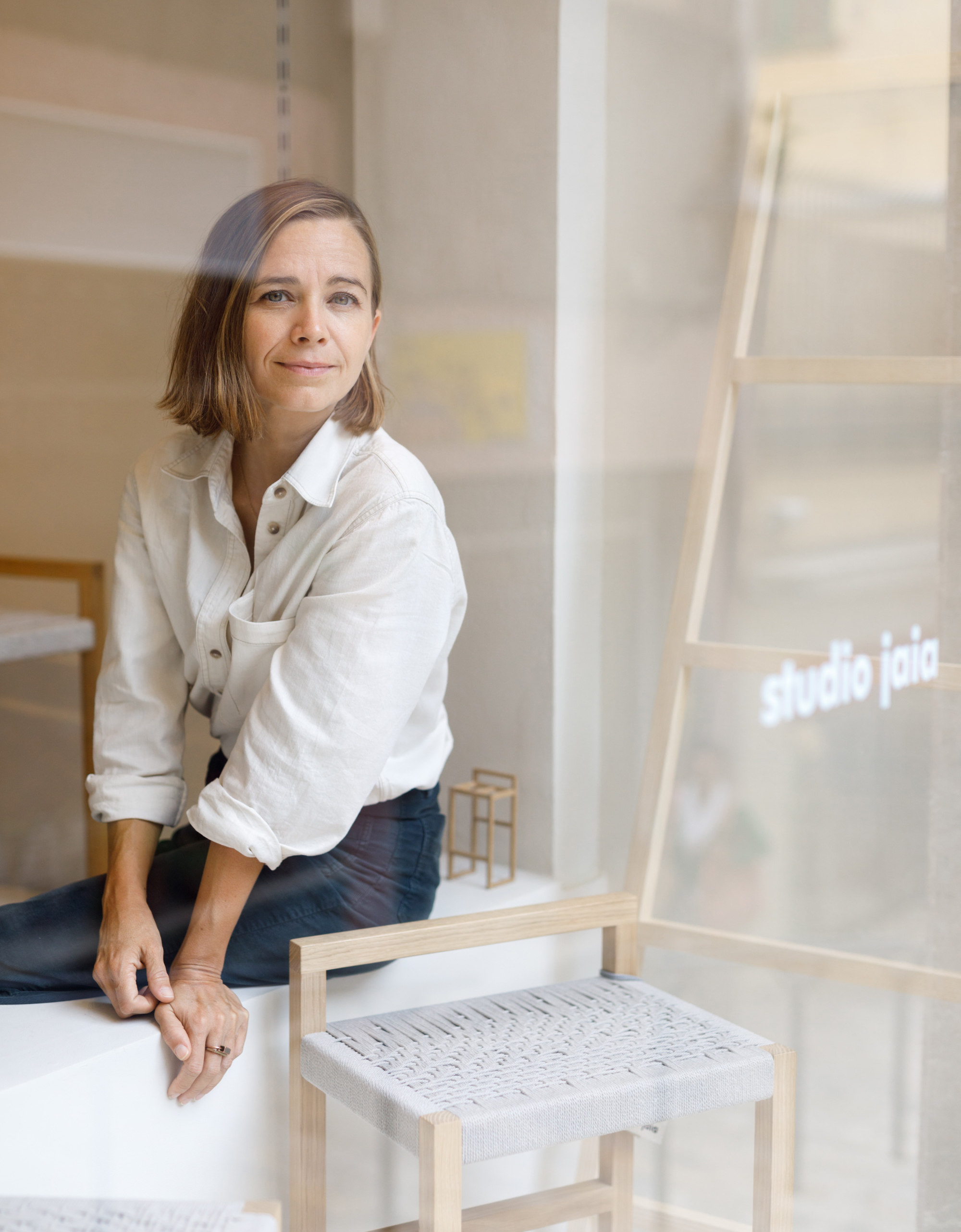
It began as personal curiosity: to work with my hands, understand the craft, and explore patterns and geometry. That curiosity grew into a passion, and I realized I wanted to move away from computer-based work to something fully hands-on, from the first sketches to the finished piece. Studio Jaia was born as a way to honour this craft while exploring it through my own design language. The name comes from the Catalan word iaia, meaning grandmother—a homage to the craftswomen who came before.
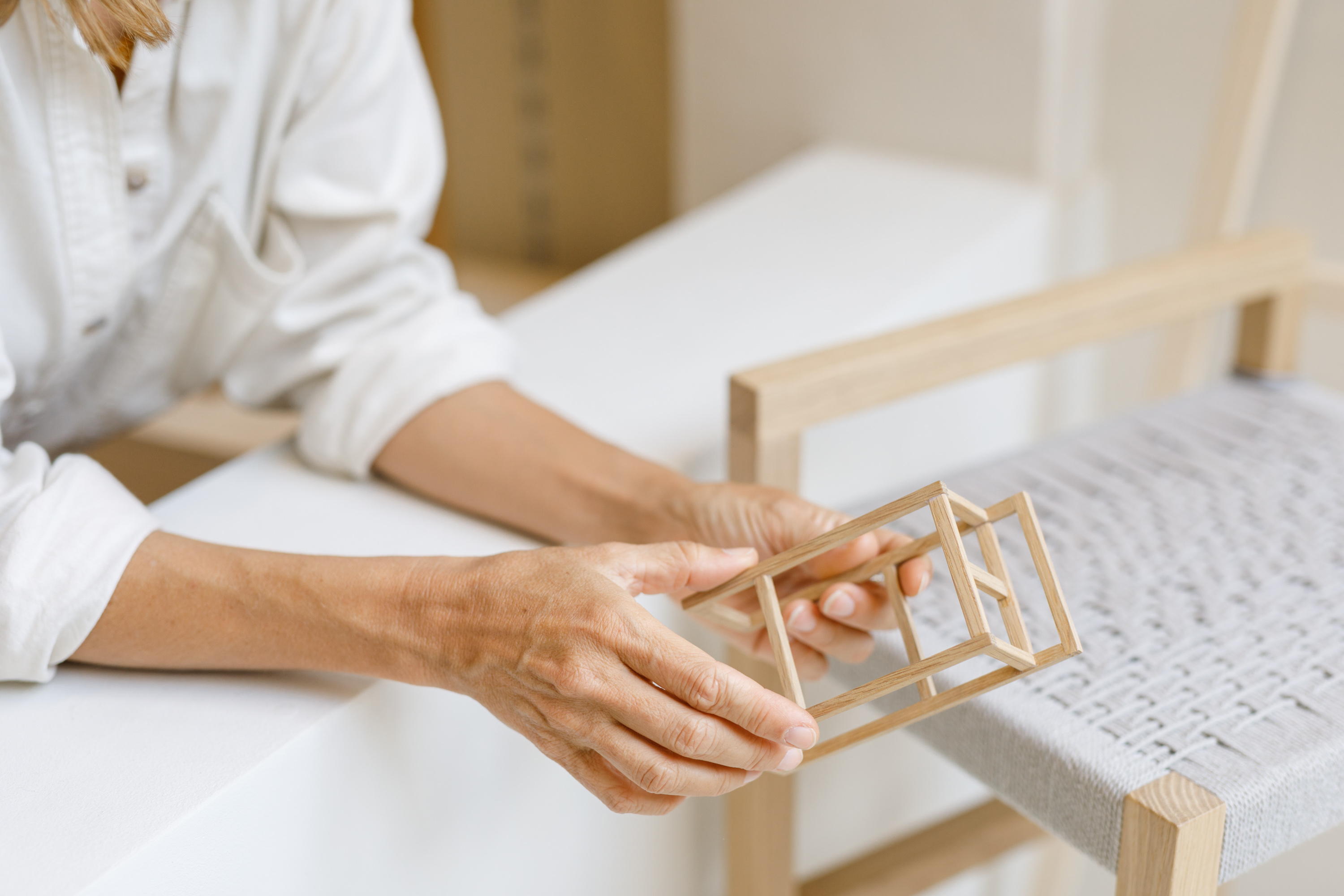
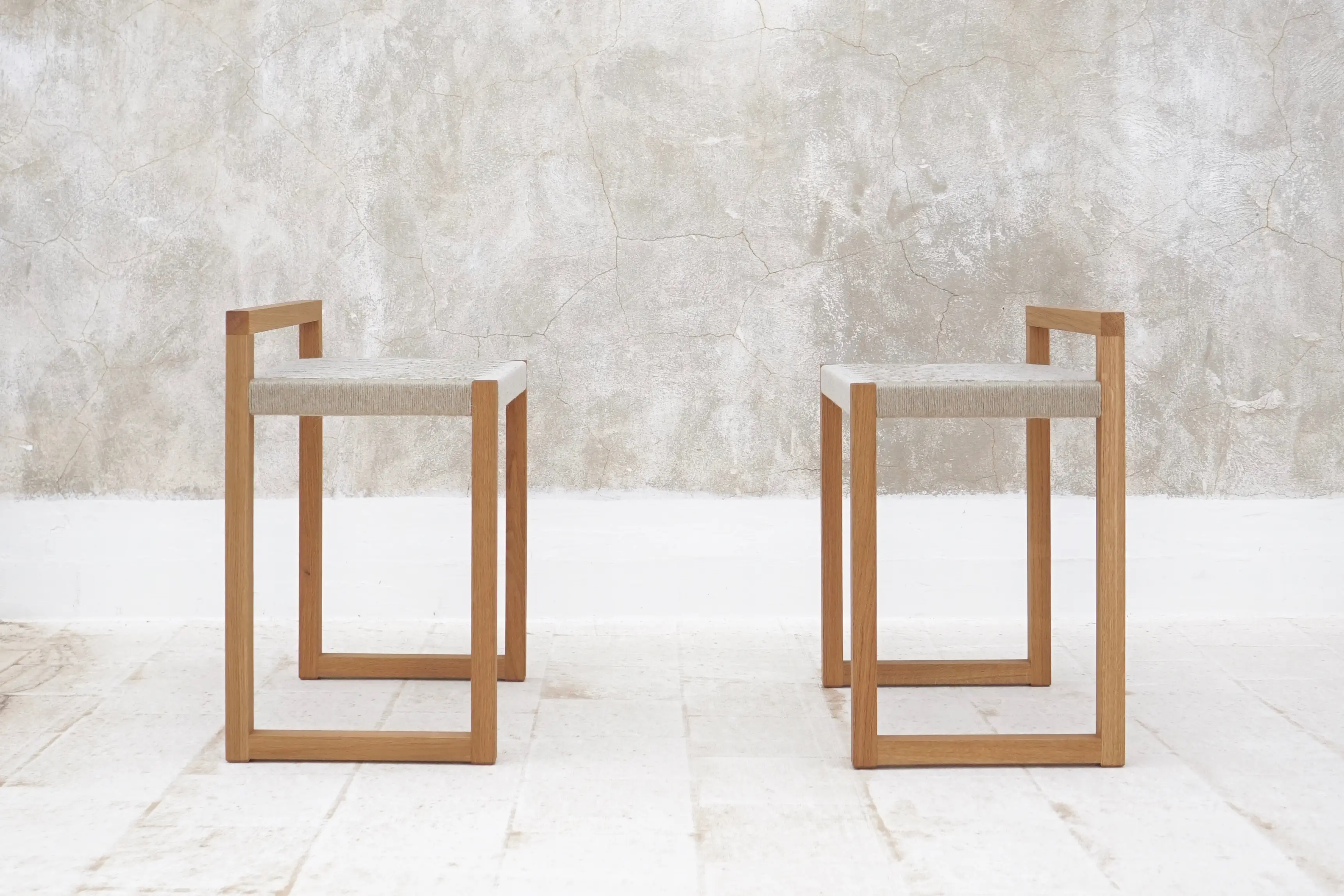
Living and working in different countries keeps the eye curious and open. It shapes how you see materials, spaces, and the relationship people have with objects and tradition. Some ideas and habits become part of your own way of making, helping you stay open to new perspectives while remaining true to your core design values.
Working in craft brings me freedom—I can work independently, solve problems, and realize ideas on the spot. It gives me great joy to make things in the studio, constantly learn, and feel connected to the results.
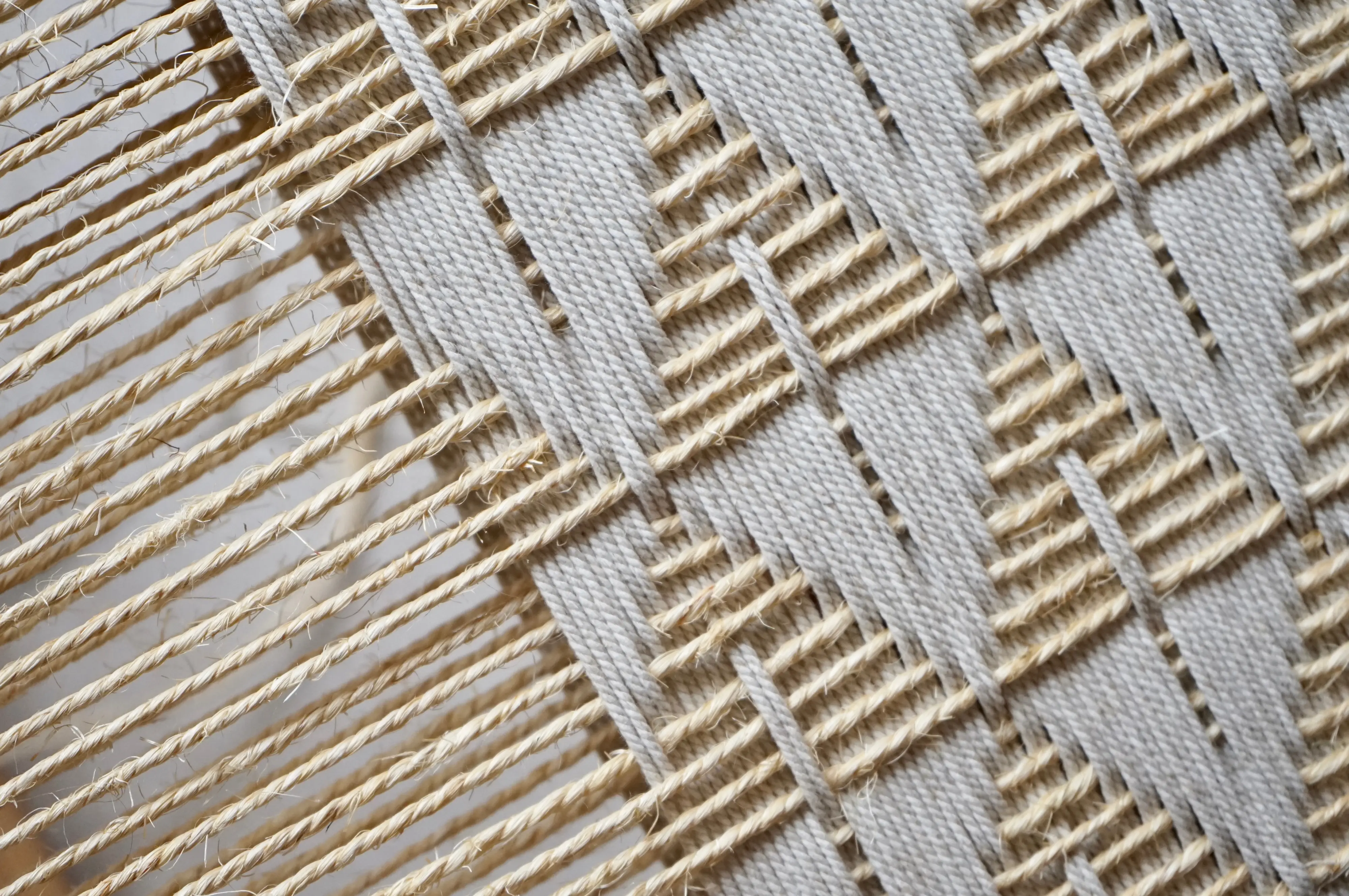
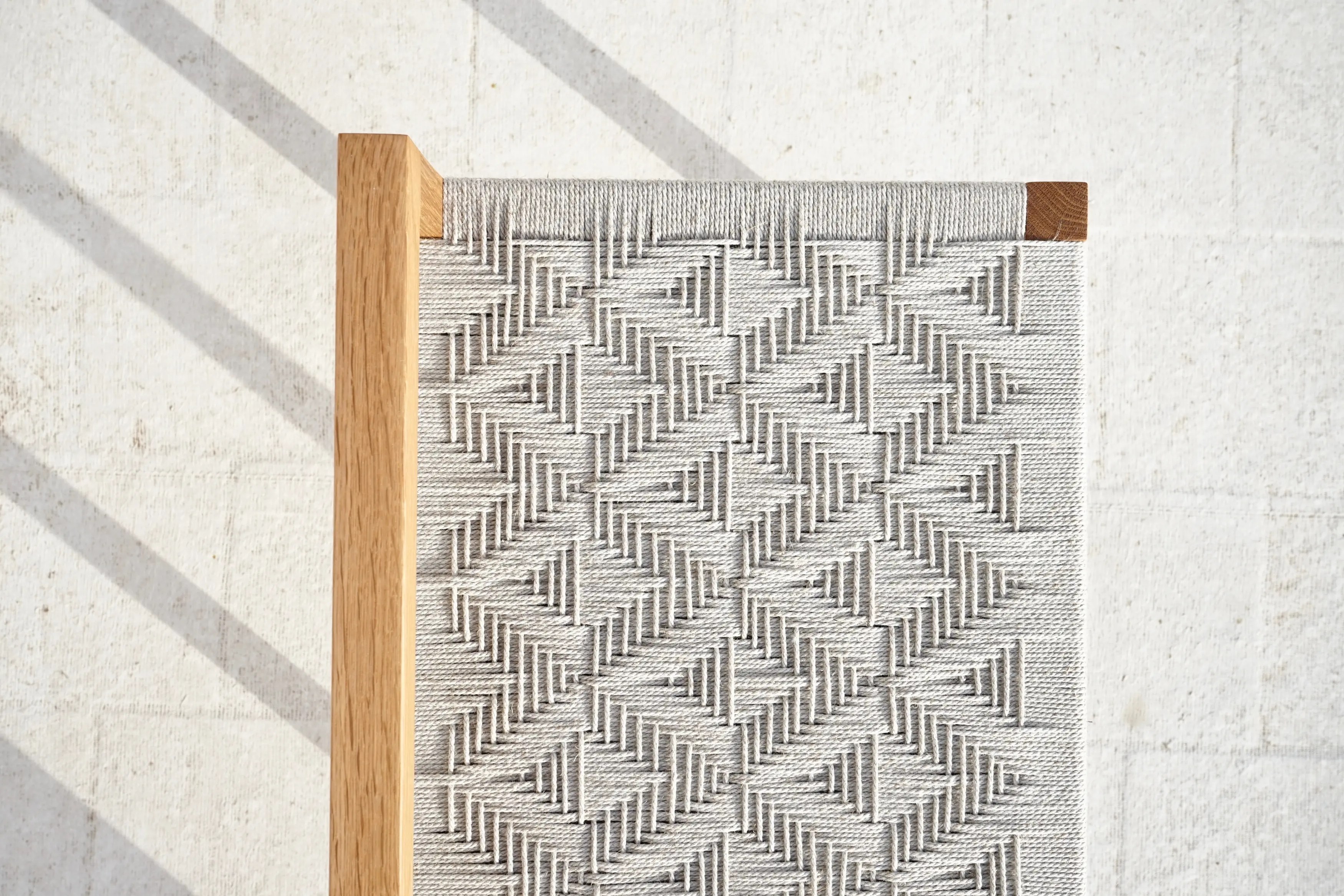
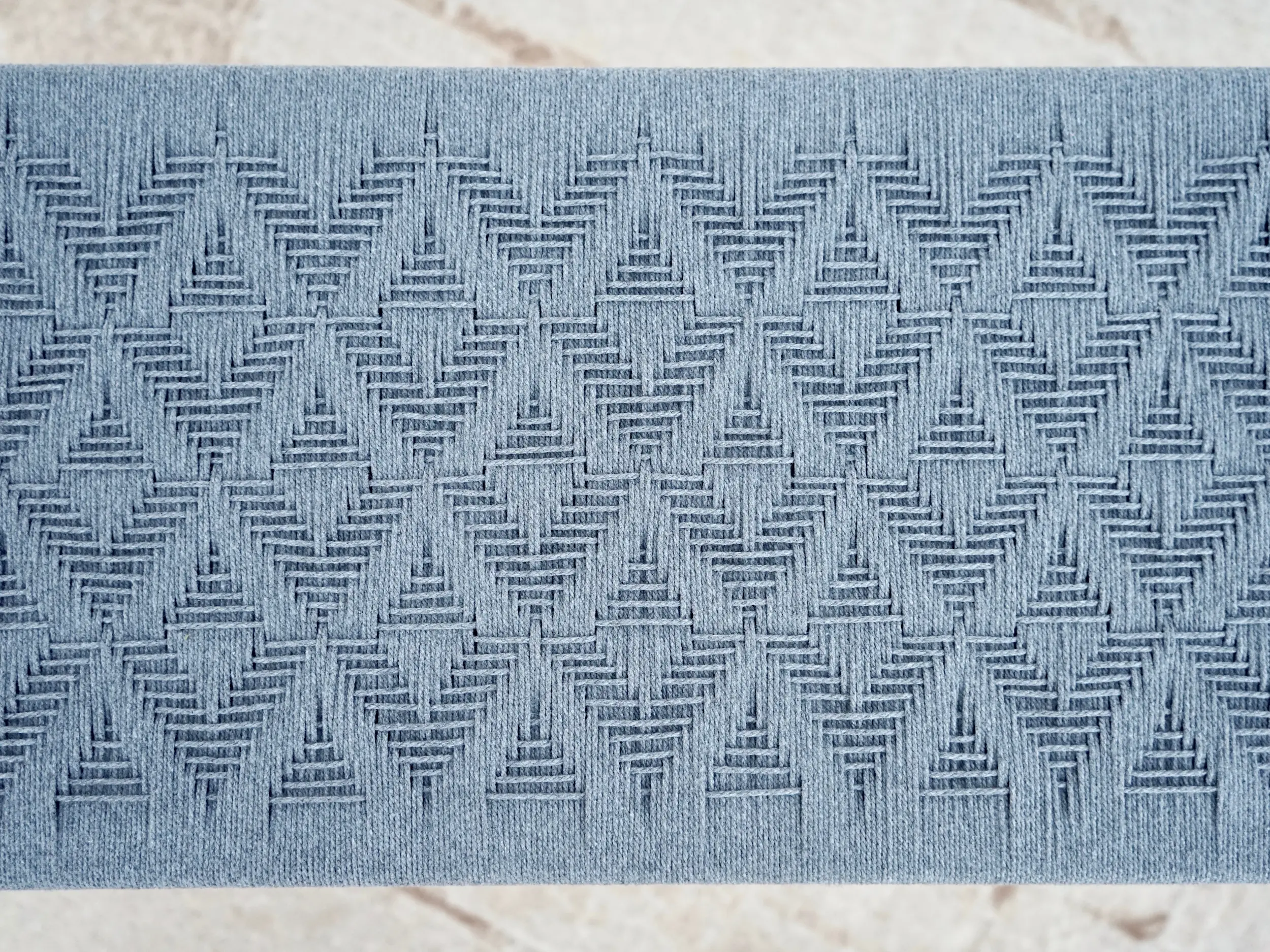
Sustainability, local sourcing and tactility guide my choices. The recycled cotton cord comes from the peninsula, and the European oak we use is treated with hardwax oil—materials that are environmentally responsible, pleasant to work with, and meet high aesthetic and functional standards. In woven patterns, geometry and shape usually come first, guiding texture, light, and shadow. colour is typically added later as a second layer, transforming the pattern and creating contrast or a new focal point. Occasionally, colour sparks the design itself; I’m currently working on a piece in Electric Blue, a shade that immediately captured my attention and evokes certain people and places.
Competing with larger, industrial companies on pricing is always a challenge. While bigger brands often lack personalized, made-to-order options, some clients still expect comparable prices—something impossible when producing locally, ethically, sustainably, and to high standards. Operating from an island adds logistical challenges, with higher shipping costs and a more limited selection of craft-people and wood. That said, running a small design business is easier than 20 years ago thanks to social media and digital connectivity, which make it simpler to reach clients and showcase work. There is also a growing appreciation for locally produced, handcrafted pieces: many clients consciously choose Studio Jaia for its uniqueness, quality, and the opportunity to support a small, local business.
I’ve discovered that I have a lot of patience—at least when it comes to weaving! More importantly, I’ve learned how satisfying it is to create something from scratch and to truly value the process of making, not just in my own work but in anything that is produced and consumed. I’ve also been reminded that you can always start fresh and learn something new, and how rewarding it is to dedicate yourself intensely to a craft, experiencing a steep learning curve for both your mind and your hands.
I would love to see Studio Jaia grow gradually; currently I have one employee helping with production and all other studio tasks. It would be fantastic to build a small, steady team and explore opportunities for teaching.
We are working on some larger-scale pieces as well as items that focus on woodwork without weaving. Stay tuned.