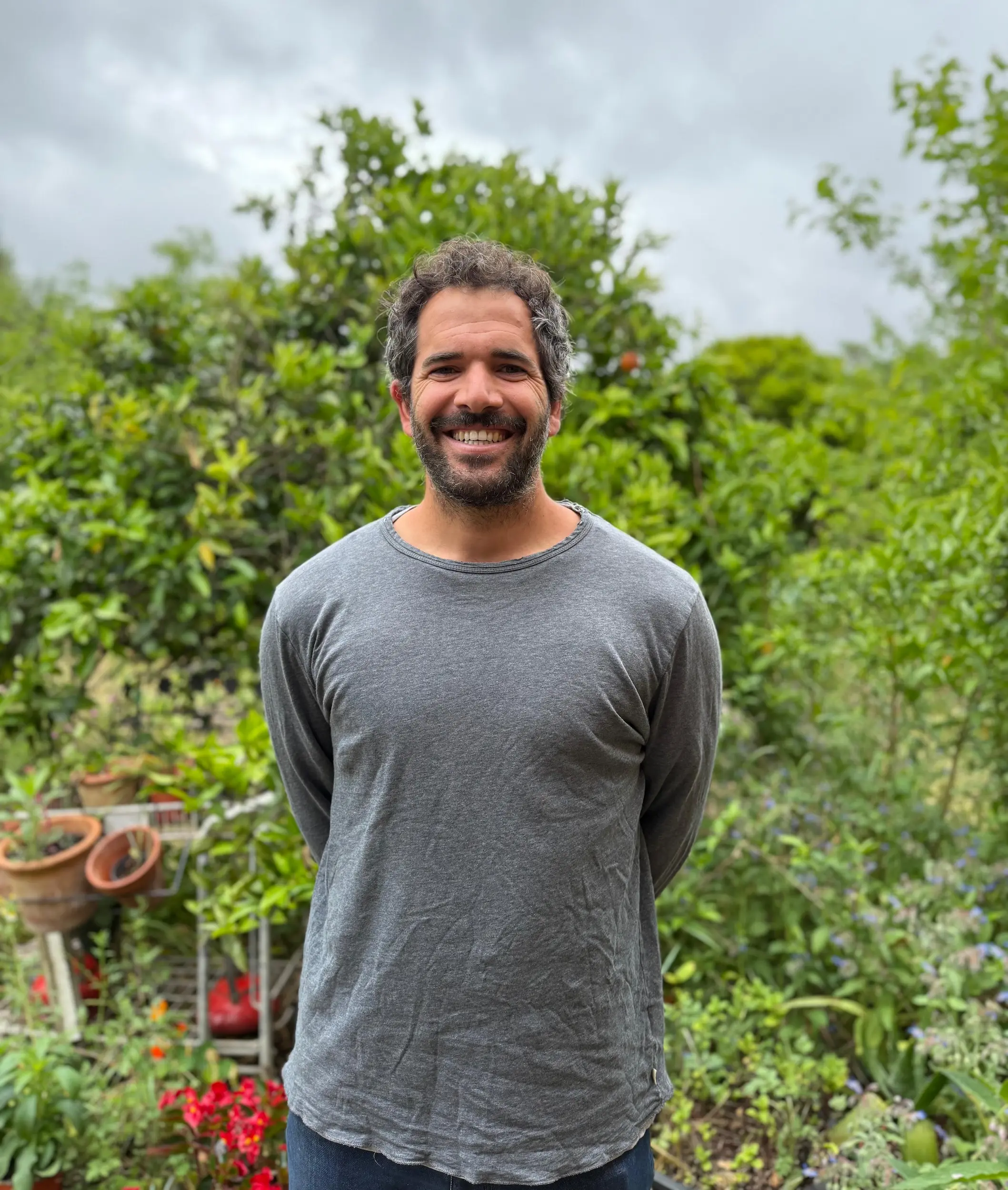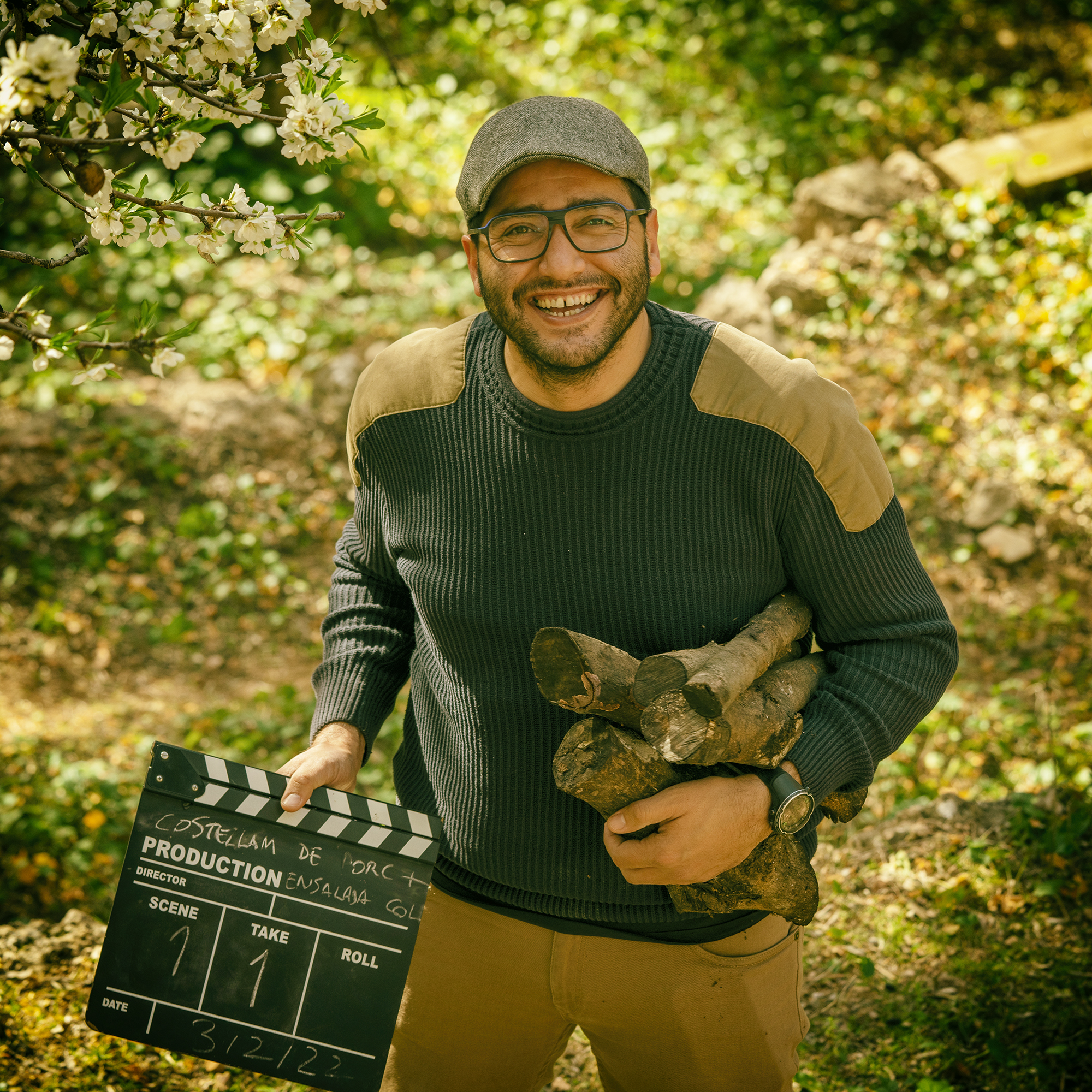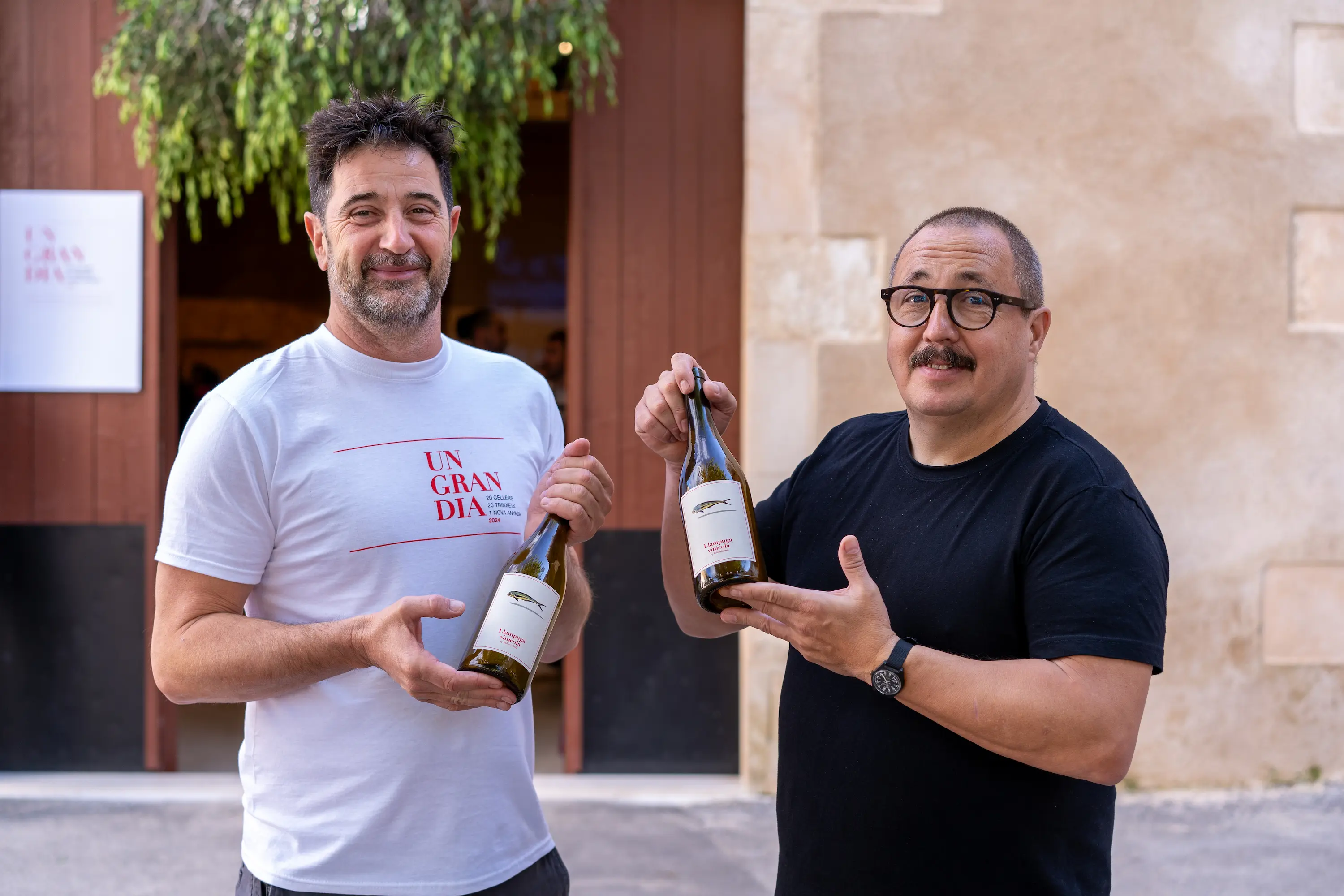
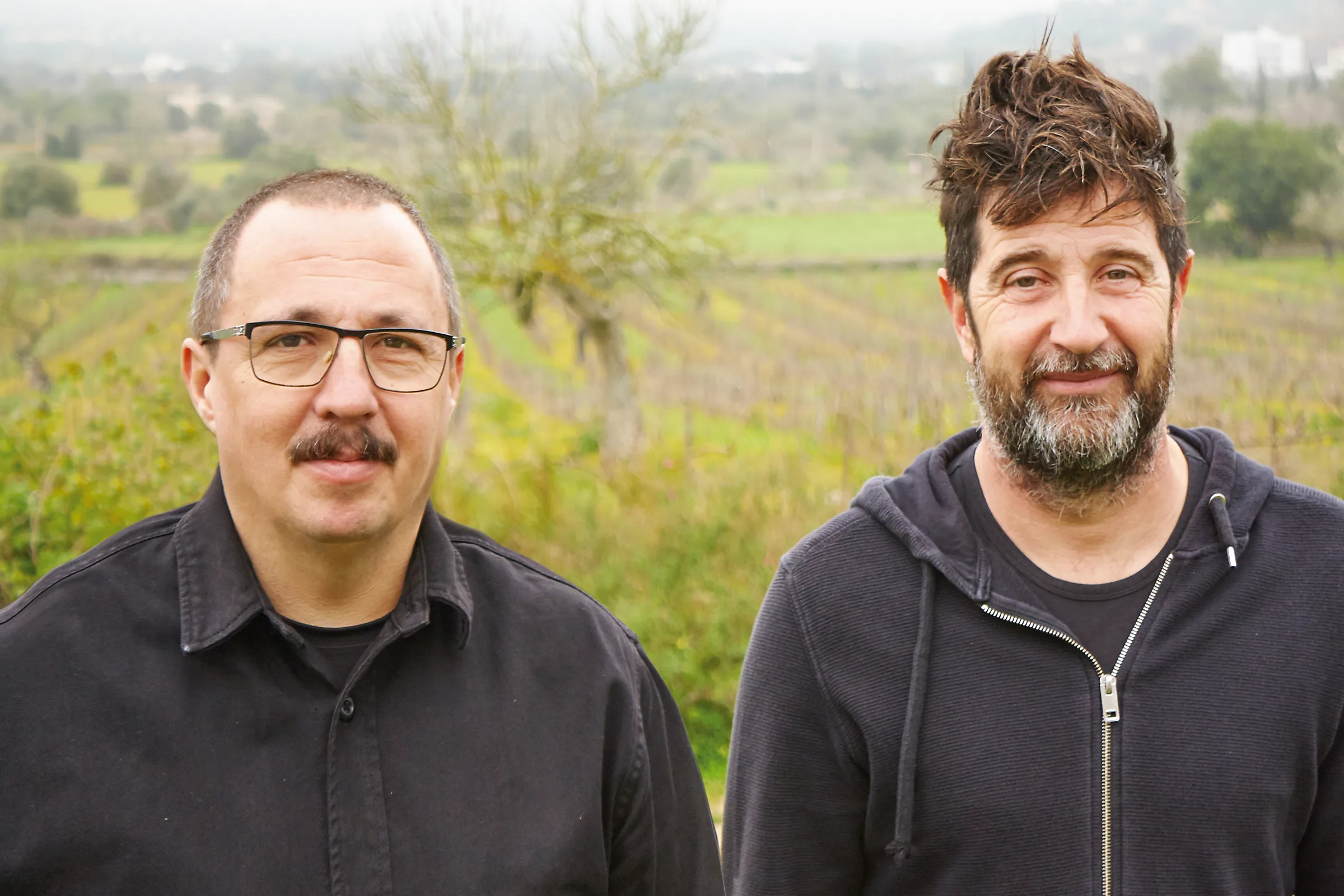
Together with Sergio, director and co-owner of the Sónar electronic music festival, we wanted to bring a ‘gambera’ – offbeat and daring – vision to the world of wine. For us, the most important thing is the vineyard. Our vision of terroir was heavily inspired by France and northern Italy. The name of the bodega refers to the amount we invested: 4 ‘kilos’ – that is, two million pesetas each (around 24,000 euros in total). We wanted to show that with a small investment and a lot of passion, we could launch a project. We set up the bodega in an old sheepfold. It was a bit of a mad idea at the time. We started with Cabernet, then moved on to Callet. We favour local varieties for their originality and how well they’re suited to the terroir, and we seek to understand our environment – the soils, the fauna and the flora – to remain as organic as possible. And finally, my role is also to create a wine that stands out from its neighbours and asserts its own style.
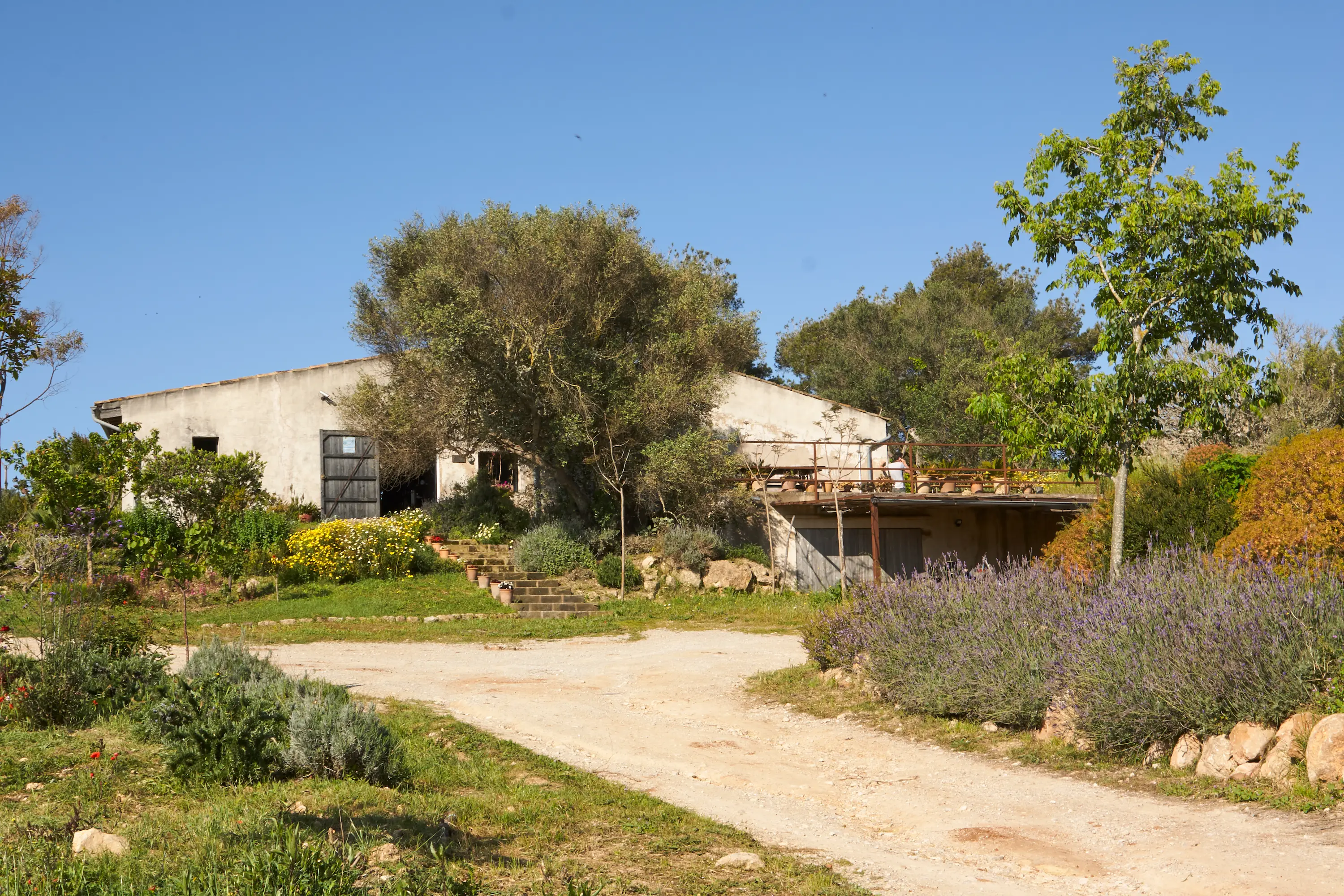
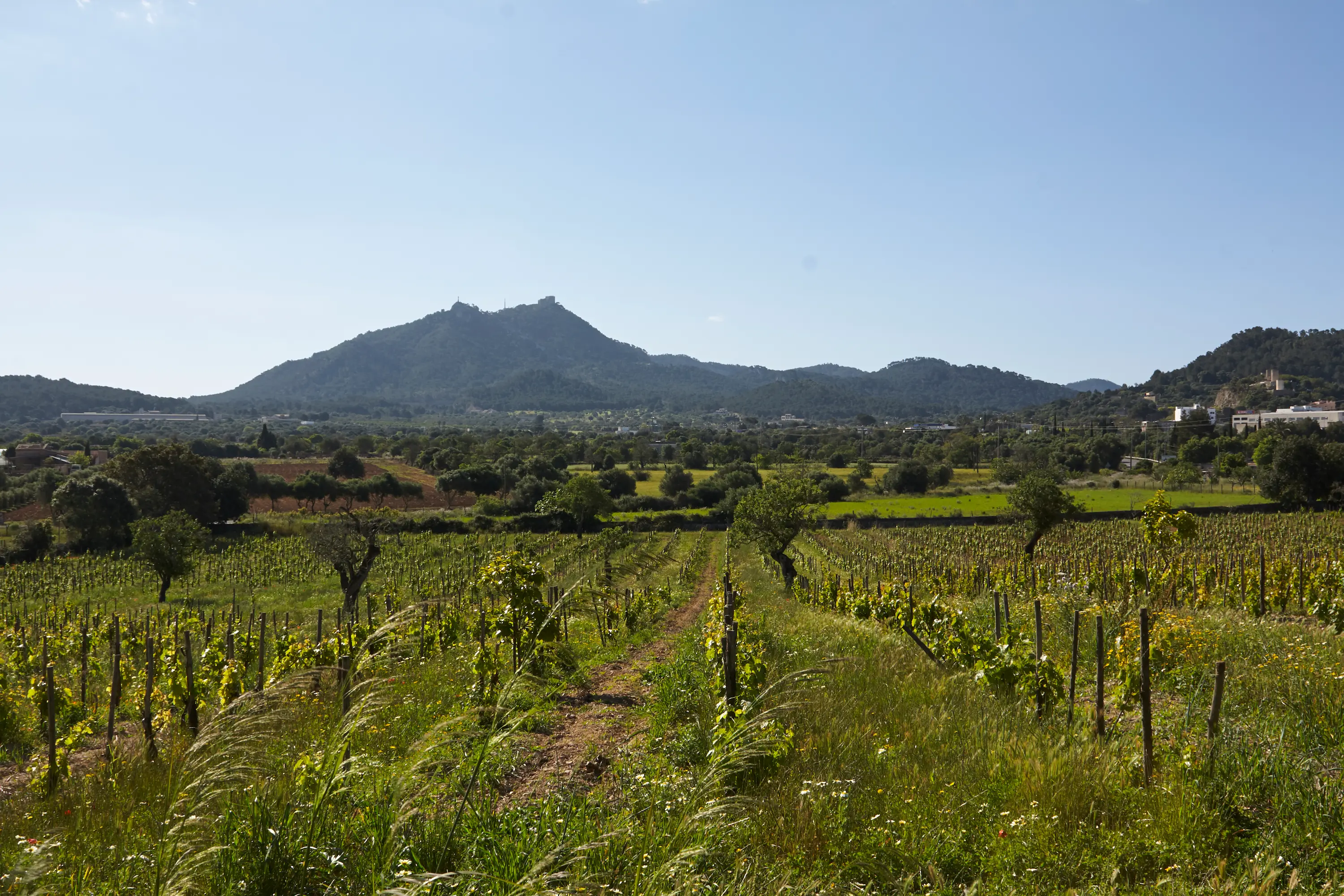
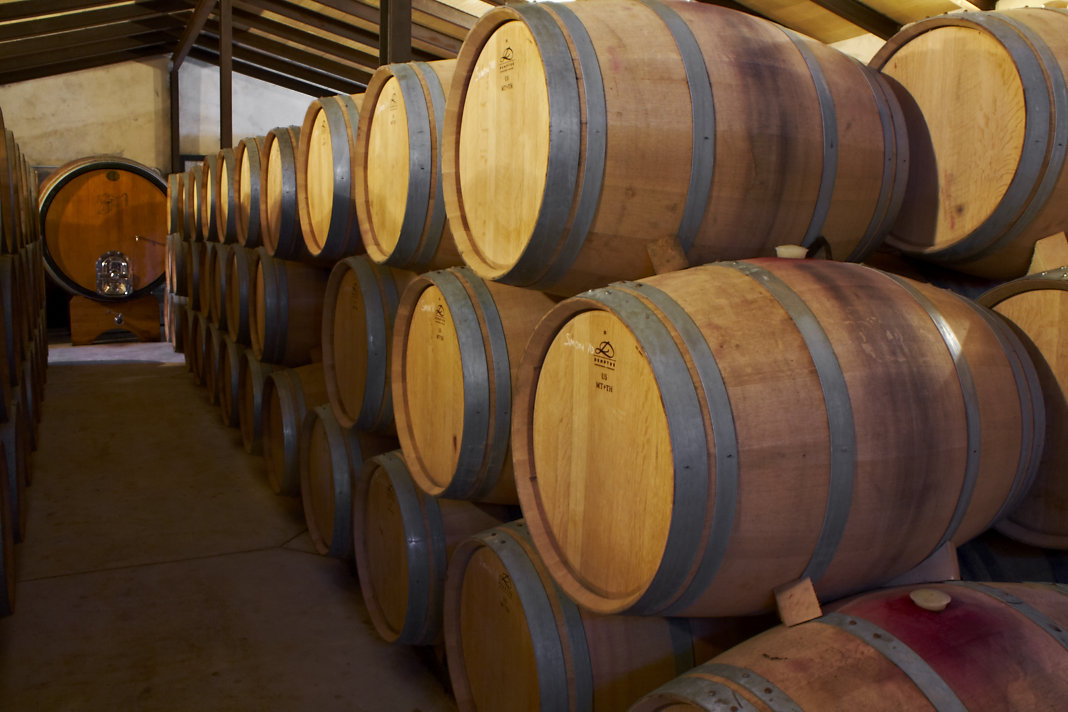
Wine has always been my passion. The wonderful thing about wine is watching the seasons pass: observing autumn, winter, spring and summer, and really feeling it all. Being able to experience nature in general – I find that quite simply incredible. Farming fascinates me: seeing life come into being and fade away… In fact, my whole life revolves around wine. Absolutely everything. The barrels are named after bands because I’m terrible at remembering dates. I can’t even remember the day my daughter was born – whether it was the 26th or the 28th. But thanks to wine, I remember perfectly everything that’s happened to me. Every vintage reminds me precisely of a particular year and what I experienced then. Wine, at its heart, is always an emotion. A form of poetry.
My parents were farmers. They mainly kept sheep, pigs and grew cereals… a bit of everything, including vines. When we went grape-picking, my grandmother would teach me to recognise the different grape varieties. And later on, the local farmers taught me to tell them apart even more quickly. When school finished, I’d work on the farm. First came the apricot and cereal harvests, then the almonds and carob, and finally the grape harvest. And of all these tasks, the grape harvest was my favourite: people would come to lend a hand, there was a festive atmosphere – it was really great fun. And then there was the Felanitx cooperative. When I was a child, it was like Harry Potter’s castle. There was a real sense of magic there, with the fermentation vats and all the stories we’d hear…
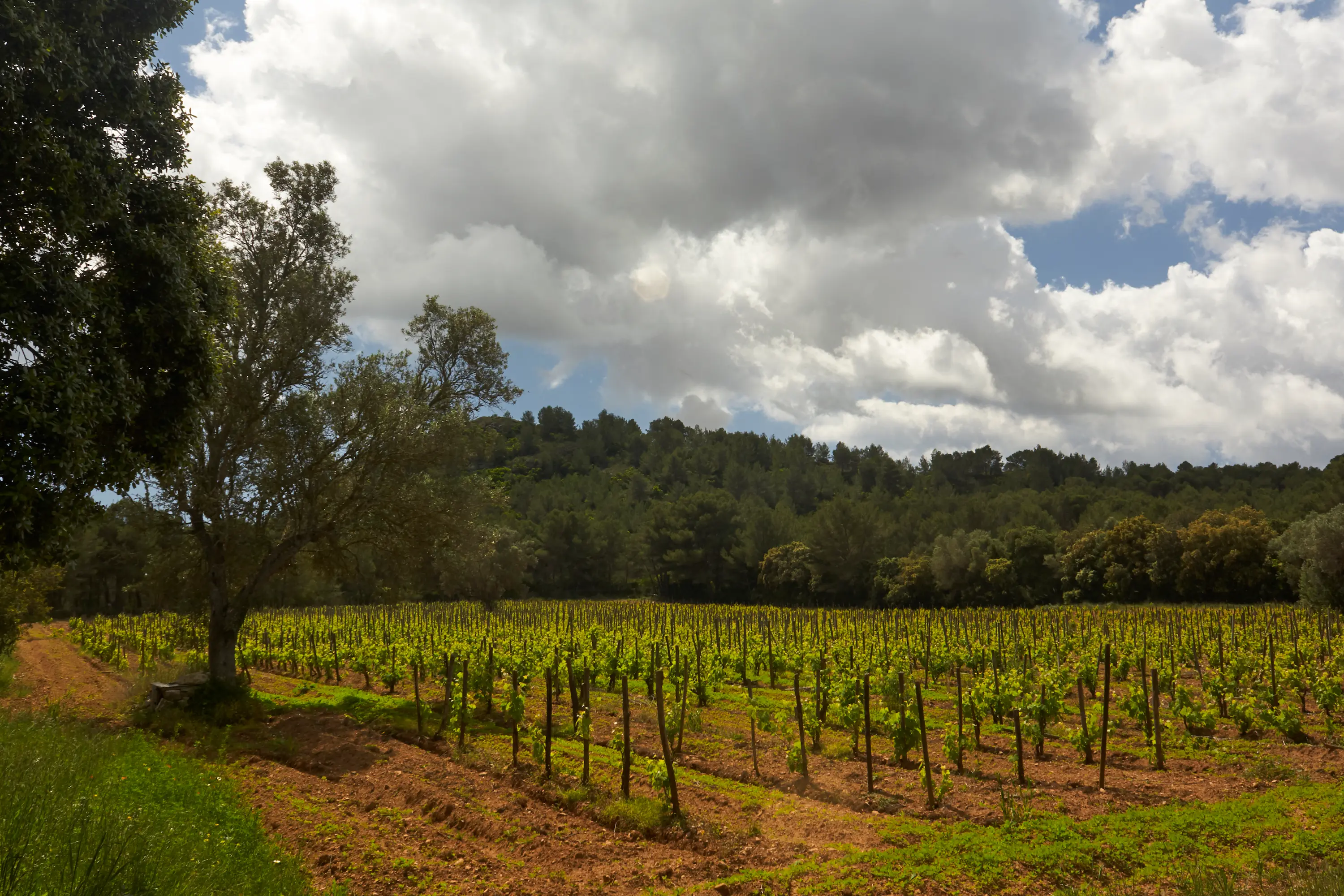
The cooperative closed around 1989 or 1990, just as I was starting my studies. At the time, there was a massive crisis in the wine industry. Consumption had plummeted dramatically. In Spain, the government was offering subsidies to grub up vines. My own parents grubbed up their vineyard. The whole landscape I used to see as a child, which was covered in vineyards, was now all grubbed up. It wasn’t bringing in any money anymore; it wasn’t profitable.
Choosing to study viticulture at that time was really quite bizarre. It’s exactly as if, today, your child were to say to you: ‘I’m going to open a CD shop.’ You’d reply: ‘A CD shop? But these days?! Nobody listens to CDs anymore!’ It was exactly the same.
I’ve always worked in the wine industry. I began my studies in Madrid in 1988, when I was 16 or 17. After that, I went to study in the Priorat, where I witnessed the birth of the appellation and saw the early days of projects such as Álvaro Palacios’s; I also worked at Artadi in the Basque Country and in the Penedès at Masía Bach, and undertook training in Bordeaux. In 1991, I was working at the Santa Catarina estate. And in 1994, together with Miquel Àngel Cerdà and Pere Obrador, we founded Ànima Negra.
Back then, people wanted Cabernet Sauvignon and wines from elsewhere. The Mallorcan public were used to different standards — they appreciated Riojas and, as far as they were concerned, our local wine wasn’t on a par. I started out with Callet because that’s what we had. But in Spain, there was one unforgivable sin: a lack of colour. If the wine lacked colour, it was a problem. Our local grape varieties do not produce very colourful wines, nor are they particularly high in alcohol; they have fresher, more fragrant profiles, a far cry from the power of a Cabernet. People mistakenly thought that Mallorcan wines were very powerful. The German public began drinking our local wines before the Mallorcans themselves started doing so.
Today, even though tourism remains far more profitable than wine-growing, attitudes have changed: before, people didn’t really believe in Mallorcan wines, but now they do. I believe we are currently experiencing the finest period in the history of wine in Mallorca.
The standard is very high. On the one hand, there are producers making millions of bottles using a more technical and industrial approach. On the other, there are small-scale winegrowers – sometimes young enthusiasts – who produce as few as 500 bottles, and what they create is absolutely extraordinary. Everything has changed because we’ve finally developed our own model, with wines that have real personality. Almost everyone now bases their work on indigenous grape varieties, and with good reason: we have an incredible heritage, with no fewer than 80 local varieties.
Climate change is disrupting the wine industry. For example, this year, everything happened much earlier – a bit like in 2003, but with higher humidity. In Ribera del Duero or Rioja, where the harvest traditionally took place in October, grapes are now being picked as early as 1 September, and the upheaval has been even more dramatic in Burgundy. In Mallorca, the change is certainly there, but it is less radical: our vineyards have always experienced heat, unlike regions historically accustomed to cooler conditions, which are bearing the brunt of these new temperatures. There is no magic solution for adapting. Viticulture is too complex: everything hinges on a combination of small details. For example, we are increasing the organic matter in the soil — that is, humus — to improve water retention and help the vines defend themselves better. Added to this is a shift in consumer expectations: today, the market demands wines that are lower in alcohol and lighter in style. For us, this is excellent news, as it’s exactly what we’ve always done!
Without agriculture, there is no landscape. If, tomorrow, people stopped buying wine, I’d shut the whole lot down and open a small hotel. But the truth is that this agriculture is precisely what saves our landscape. If Mallorca is so beautiful, it is thanks to it. If there were no more vineyards or fields, houses and hotels would be built in their place, or worse still, this land would be left abandoned and vulnerable to fires, as we have seen on the mainland where vineyards have sometimes been the only firebreaks. If there are no more vineyards, certain insects will disappear; without these insects, certain birds will disappear, and so on. Everything is interconnected; it’s a cycle. The abandonment of agriculture is quite simply a human failure. Wine is history, it is gastronomy, it is celebration, and above all, it is the defence of a landscape and an ecosystem.
We need to create a different model. I hope people will realise one thing: when you buy a local product, you’re helping to revive the local economy. I’m not saying we should stop eating bananas or anything else – I’m not against anything. But I’m deeply committed to a local model. Without agriculture, everything goes haywire. That’s why we’re involved in projects at Pla de Boucs, in Santa María. There are five of us winegrowers who share the grapes from this vineyard. Each of us makes wine in our own style. But it’s also about protecting this place, preventing the vineyard from being abandoned. Protecting this land means safeguarding our future.