Close Search
The Great Epic Tale of the Llampuga
- By
Hélène Huret
sustainability 2030
off the island
The Great Epic Tale of the Llampuga
Dec 12, 2025
by
Hélène Huret
The Great Epic Tale of the Llampuga
sustainability 2030
off the island
The Great Epic Tale of the Llampuga
Dec 12, 2025
- By
Hélène Huret
The Great Epic Tale of the Llampuga
off the island
sustainability
The Great Epic Tale of the Llampuga
Dec 12, 2025
- By
Hélène Huret
Photo: Tarek Serraj / Opening photo: Pere Andreo, Photo: Tarek Serraj
E

very year, the llampuga returns in the fall, like an old friend you can always count on. In Mallorca, this migratory fish has its aficionados, its recipes, its secrets... and now its song. An unexpected tribute to one of the island's most modest — but most iconic — symbols. As Pere Andreo sings, “the llampuga never deceives anyone”: it allows itself to be caught without resistance, and this is undoubtedly what has made it so popular on the island. It carries with it the memory of a time when fishing was done without great means, when people lived off what the sea had to offer. No lobsters, almost no prawns, nor any of the fish that we now take for granted on the market stalls. 

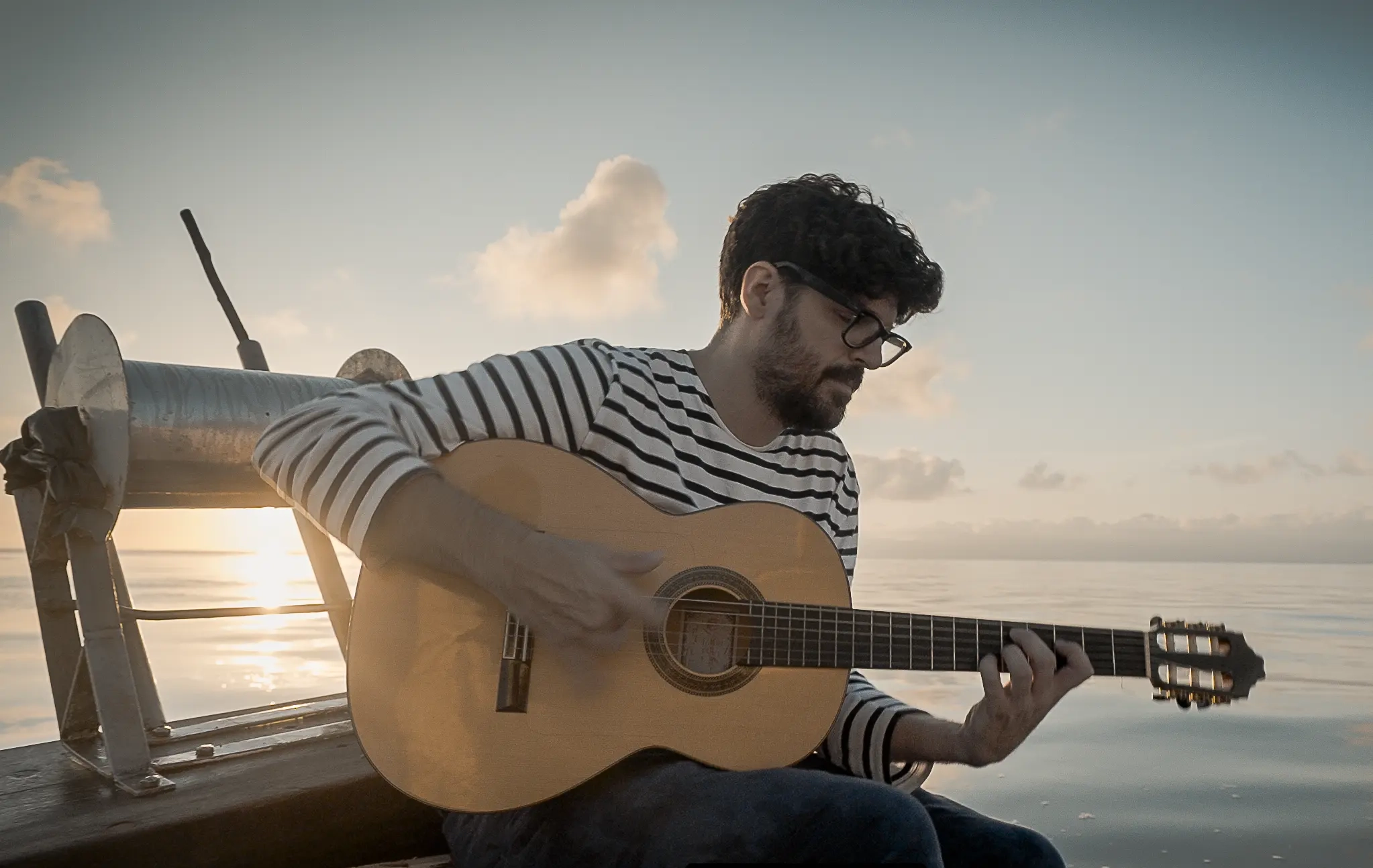
Since childhood, like all Mallorcans, Pere Andreo has heard people say “Es tempio de llampuga” as soon as September arrives. “There was a kind of mystery surrounding the llampuga, something magical,” he says. “Where do the llampugas come from? Why do they come?” His curiosity led him to investigate the annual event for the column he writes in “El Setmanari Sóller,” one of the oldest newspapers in Europe. “I'm interested,” he explains, “in everything that escapes the pages of the news: popular culture, ethnography, ethnology, in short, stories that newspapers hardly ever tell anymore,” he explains. “One day, I was riding my motorbike and I came across this stone sculpture of a llampuga in the port of Sóller, and the lyrics to the song just came to me spontaneously during the very short journey to Sóller. I started thinking about it, I thought of a melody, and everything just fell into place," explains the young architect, who has just released his first album.

The descriptive and poetic text follows the fish's migration from the Mediterranean to the Caribbean. An ode to an age-old cycle, sung from the animal's point of view — always on the move, elusive, “never disturbing anyone.”

T

he fish's journey is epic. “The animal,” explains Andreo, "comes to lay its eggs in the eastern Mediterranean. Once the eggs hatch, the young llampugas begin a journey of thousands of kilometres.” Carried by the currents, they cross the Mediterranean and then the Atlantic, their passage off the coast of Mallorca, between September and the end of the year, is just one stage in a circular migration that then takes them back to the coasts of South and Central America. There, Mallorcan llampugas weigh up to 25 kilos or more and are called dorado in Cuba, mahi-mahi in Hawaii, or comemuertos in Mexico (because this fish always stays under something floating in the sea). The name changes, but the appearance remains the same: a streamlined body, a head that changes shape with age, and almost fluorescent green hues that seem to capture the light.

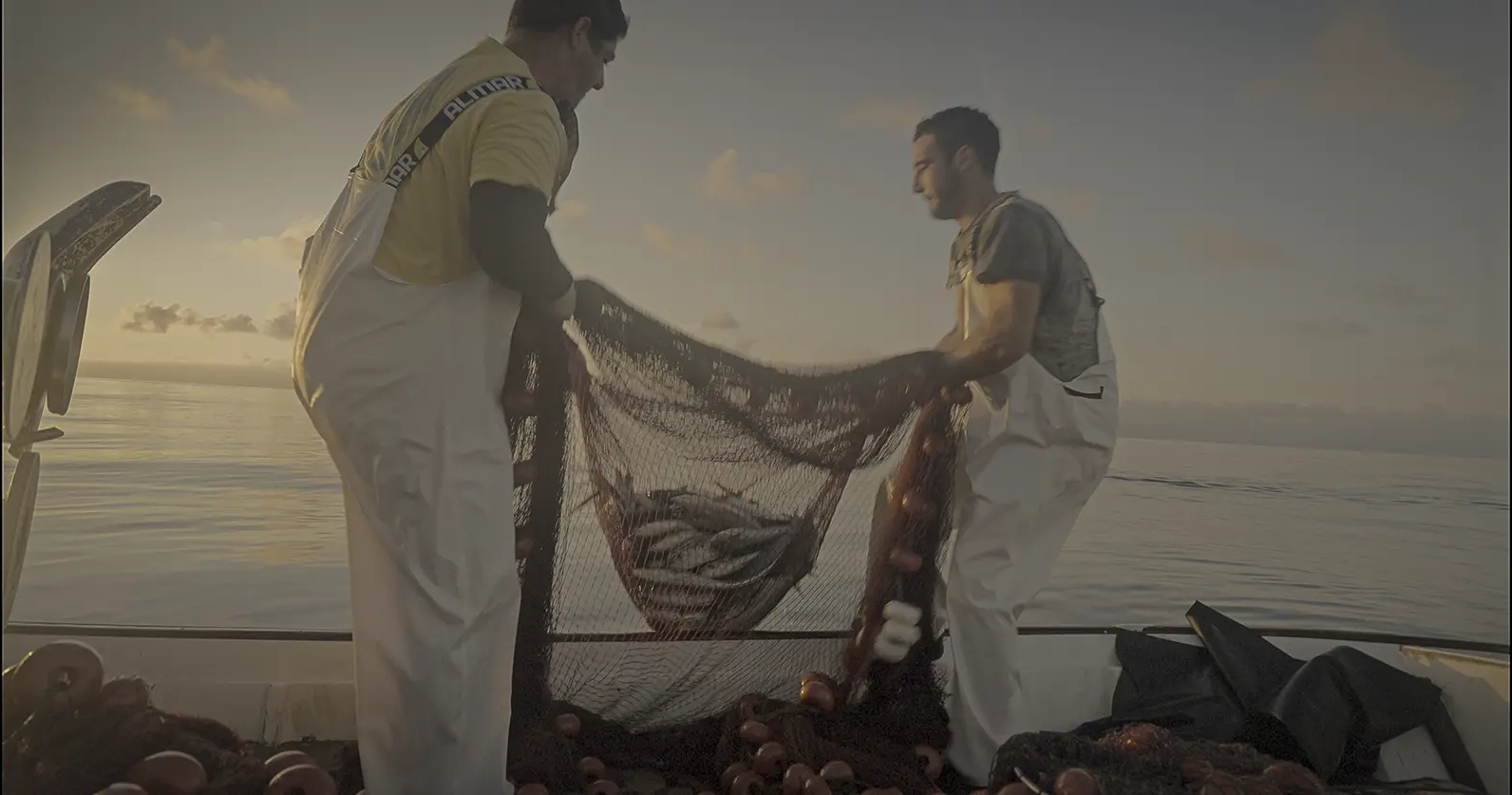
“In reality, there are two stories,” continues Pere Andreo. "That of the llampuga, which travels around the world and returns to lay its eggs in the Mediterranean, and that of the fishermen.” Every year, on 29 June — the feast day of Sant Pere, patron saint of fishermen — the sailors draw lots to decide where each of them can place their capsers, the large floating buoys under which the llampugas gather... Ten or twelve per skipper, no more. The capsers are made from pond stones covered with coloured plastic like buoys. In the past, they were made from a mixture of pieces of wood and fishing nets. The fishermen regulate their own quotas so that there is roughly the same volume of fish for sale every day.

To shoot the music video for the song, Pere set off with photographer and director Tarek Serraj on Gori Mayol's boat. They met at 4 a.m. at the Port of Soller under a sky still dark with night. The boat glided out to sea: a pelagic fish, the llampuga loves deep waters. “It was magnificent,” enthuses Pere Andreo. "In the early morning, we approached silently, turned on the lights and suddenly we saw them “dancing under the capser,” as Pere sings. The fishermen cast their nets and pulled them up with a sure hand. “Under the first capser,” says Pere, “there were only about thirty llampugas, but under the second, it was madness, we caught almost 400 kg! Gori called the other fishermen: “Stop fishing, we've reached the two-day quota!”’

On the palate, llampuga is not particularly appealing: “It's a fairly tough fish, not very delicate, with firm flesh and lots of bones,” admits Andreo. All of which makes it difficult to sell. And perhaps that is what has preserved it from commercialisation, touristification and trivialisation. Remaining off the tourist trail, llampuga remains a local fish, cooked in the traditional way as it always has been.

It is typically cut into pieces, fried and served with peppers, potatoes or a Mallorcan tumbet. The llampuga is part of the Mallorcans' mental landscape, concludes Andreo. “It comes back, like a season, like a memory.” And now, thanks to him, like an iconic Mallorcan refrain.

See the full video!

Photo: Tarek Serraj
Related Stories.