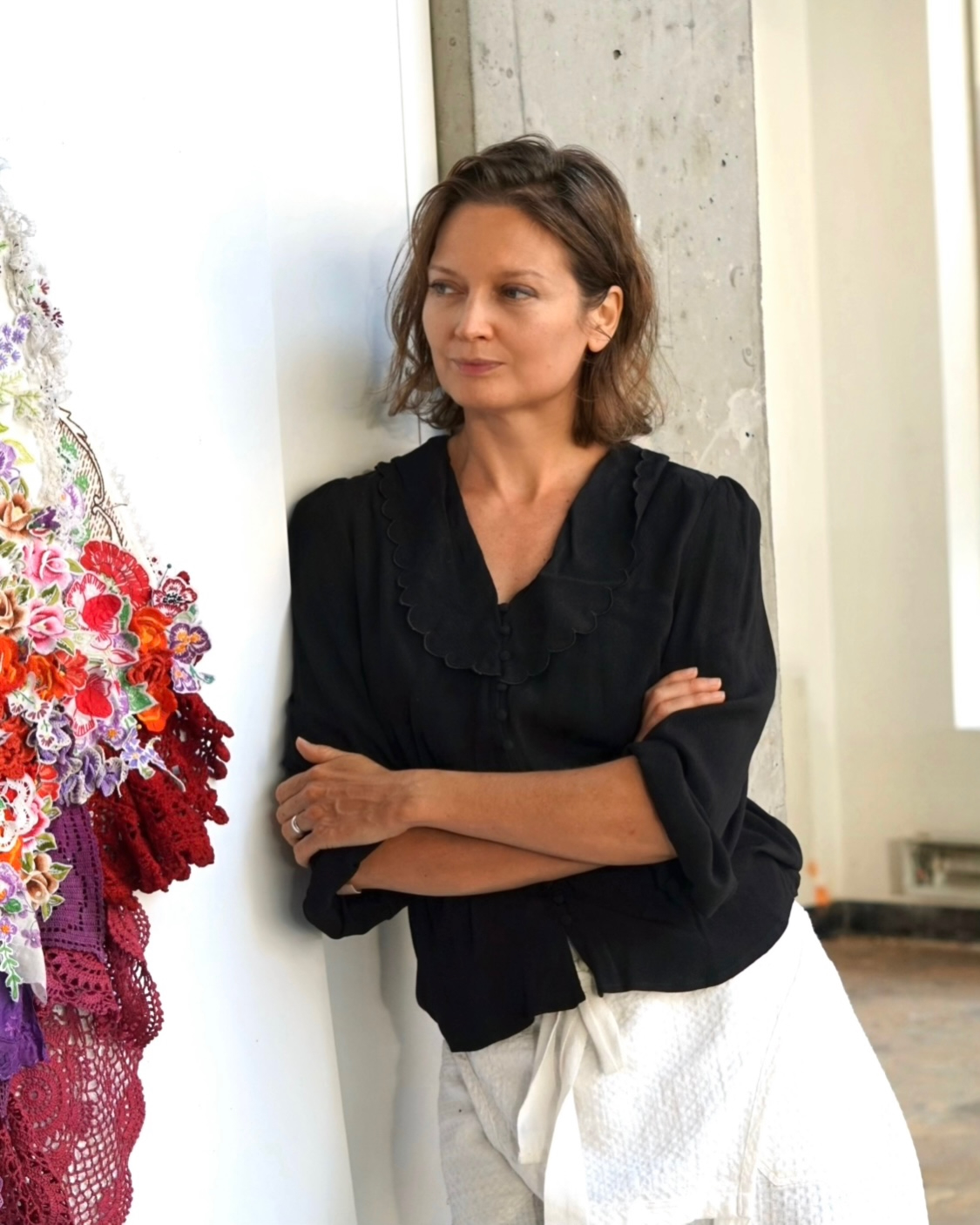
After receiving my IB -Diploma in Oslo, Norway (where I lived for 3 years then, and then again for two years as an adult), I had come across somewhere that St. Martins was “the Best Art School in the World” so that’s where I was determined to go! I had some friends in London, so I was already a little familiar with the city. Finland had joined the EU just before which made it easier to study abroad. I started with a Foundation Diploma at CSM originally thinking I’d continue into illustration but then went for Critical Fine Art Practice / Conceptual Art, a more theory-based degree instead. St. Martins was still on Charing Cross Road in London’s Soho at that time. Our CFAP department was above the legendary Fashion Department so it was a very cool and creative time all around…
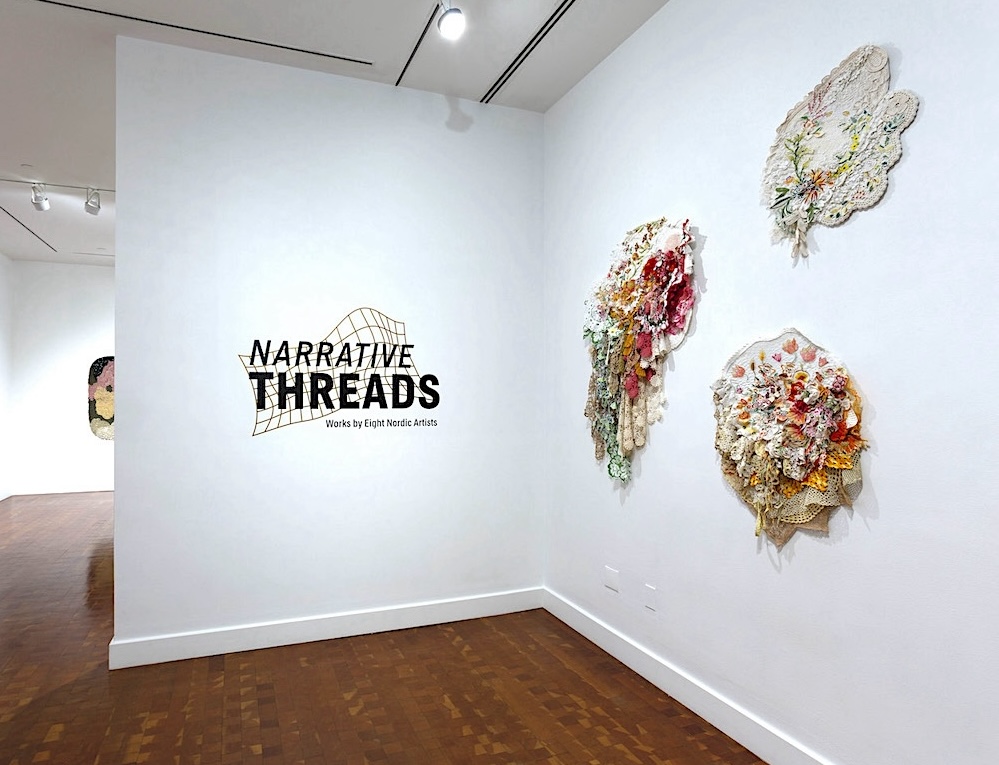
Although I’m fuelled by a more conceptual approach to art I’m truly a maker at heart. There was a real appreciation for the handmade growing up. My grandmothers and mom sewed and knitted, and I’ve done it myself since I was very young. I always made things on the side, most people around me have a scarf or quilt from me but I didn’t combine textile-work with my Fine Art practice until later on. I had an illustration commission for a wonderful Swedish-Norwegian magazine Fjords for which I backstitched some subway-maps; to use such an intimate slow technique to describe a massive transport system felt fascinating and opened my eyes to the “magic of the stitch.” The history of textiles is so layered, interesting and important to us as humans; we were weaving long before we were writing. I love the physical, the tactile and the meditativeness of working with textiles. The idea that handmade objects have a physical memory and carry stories of their makers within them is essential to my work today.
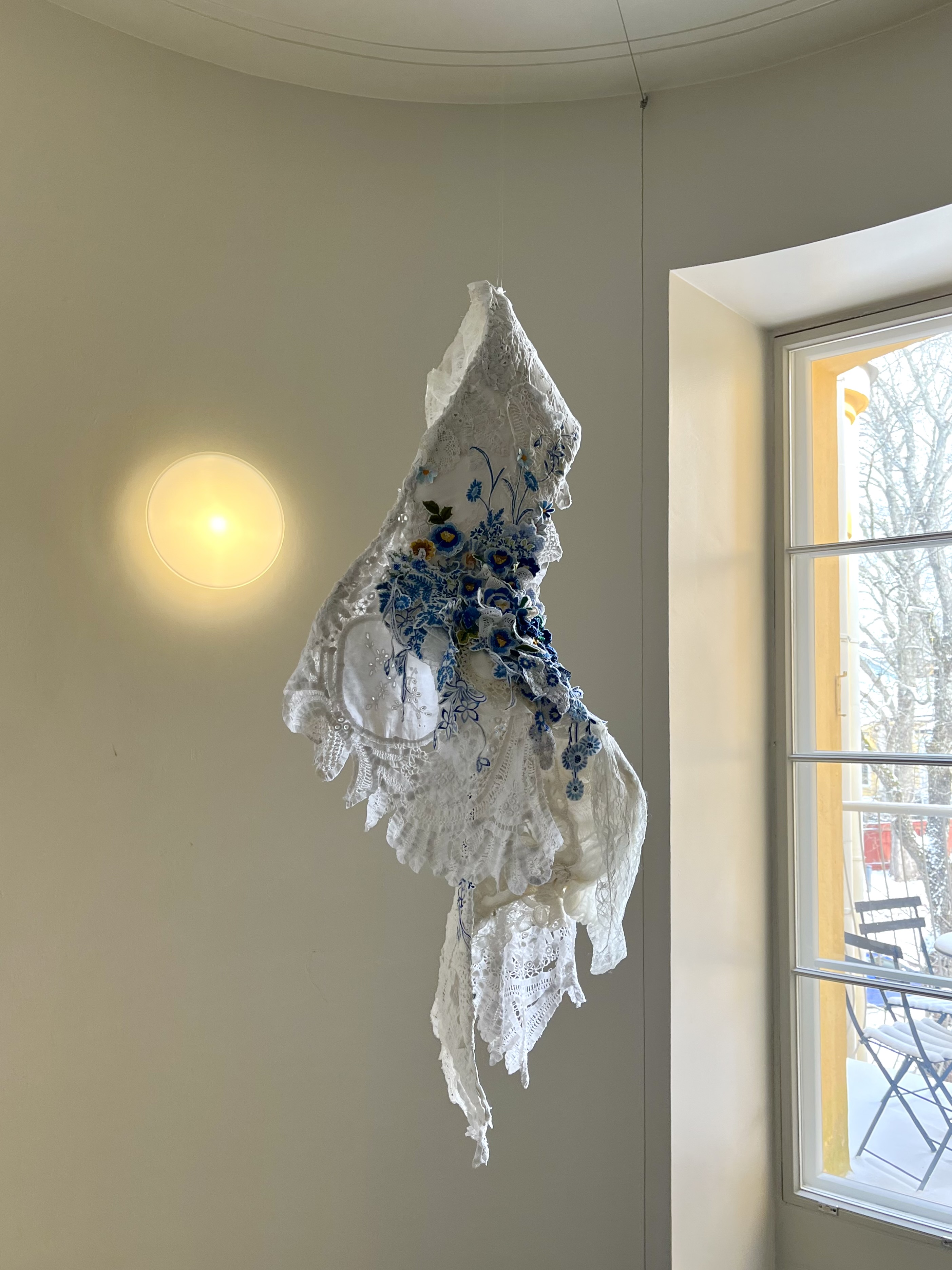
This project goes back to the idea that handmade things absorb “something” from their creators. So I like to join these women/makers through their handiworks and give them a place to flourish together. Nowadays about 90% of the materials [I use] come to me as donations, handiworks made by grandmothers and aunties that have left behind in a box in the attic. I genuinely feel that it is an honour to give them a new “existence” and try to do it in a beautiful way.
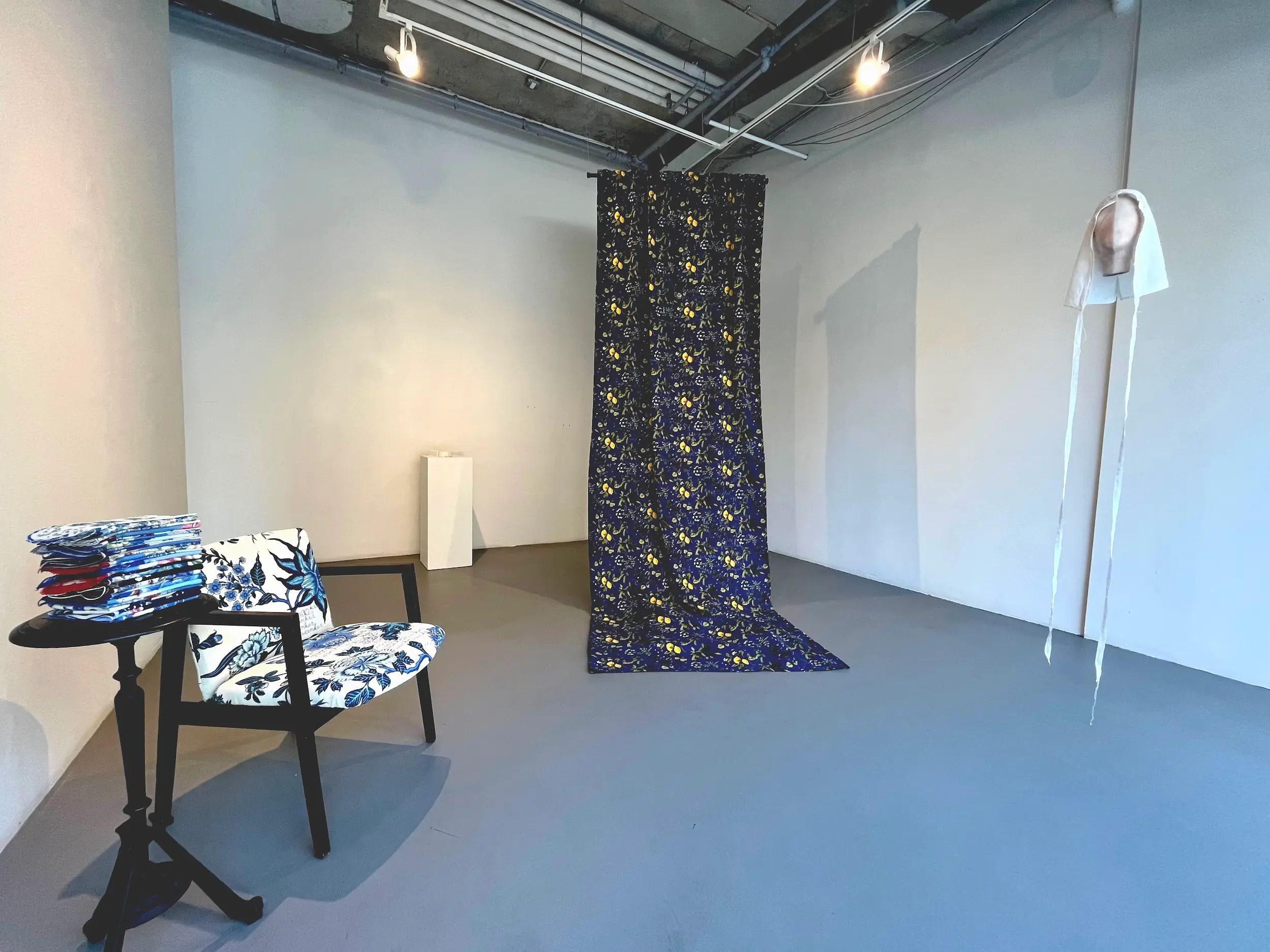

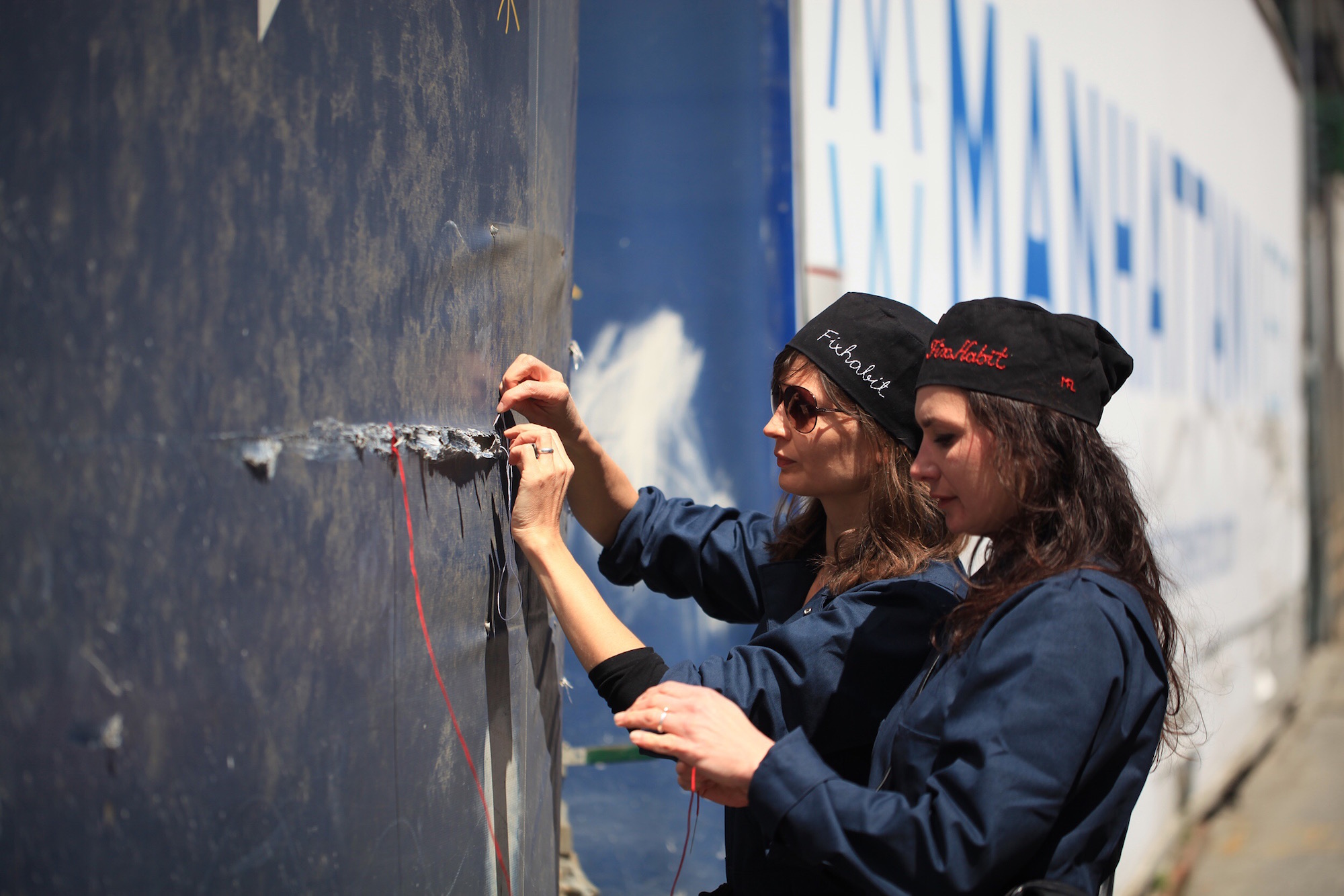
The work is often more about the actual process of creating something, such as a Mending Action, or as a demonstration of women’s work. For example, Fix-Habit is a Mending action project enacted by myself and Maria Flavia. In Toronto, we went out on mending-excursions dressed in workmen’s overalls with sewing kits and fixed things that need fixing around the city, such as broken fences, scaffolds. In my Sour Words stitching performance, I dress like a housewife in a robe and slippers but embroider naughty words instead of pretty samplers. There is a rich history of textile work being used as a form of resistance under the illusion of it being a gentle “women’s craft;” Mary Queen of Scots’ prison embroideries in the 1500s, women knitting coded messages in scarves for their husbands in war, the Gee’s Bend quilts, etc. I like playing with this idea - that things appear one way but when you look closer they reveal something much more significant. Kasityolainen, which means ‘craft worker’ in Finnish, is a performance in which I dress up as a Finnish craftswoman and I mend sweaters in a holistic way.
There was a Fluxus exhibition at the Ateneum Museum in Helsinki in the 90s, when I was in my early teens and I was blown away by that art, which could be funny and humorous! My experience up until then had been more that art-making was a serious practice where you spent hours honing your skills. … Like did these artists even draw, at all…? I think seeing that exhibition pushed me further away from traditional art-making, such as painting. I went to see it many times on my own. I loved especially the Instructions works. That art could also be about creating a moment/ an action rather than a physical square object felt really exciting.
The best art is always accessible in New York City. We lived in Chelsea for the first 10 years, a short walk from the gallery district. I really tried to take advantage and go to as many events and openings as I could. There is a constant flow of art and interesting people. The same goes with materials and educational resources: talks, seminars, classes, you can learn anything and find any material or an expert for anything you might need. Having so many different influences definitely makes you more open to experiment. Over the year, New York has loosened up my art-making and taught me that anything goes, if you do it well enough.
Yes! And I am excited to return. This year I’ll exhibit some larger size white-on-white rectangular pieces. Vintage fabrics layered white and cream laces, hand-sewn. I started working on them about 10 years ago and they have been changing and growing ever since.
People are welcome to just stop by! Please send me a message on Instagram in advance if you come from far away. I’m currently working on a new piece for a New York Textile Month exhibition in the fall. I also have some Bloom pieces on display, some smaller framed works etc. It’s a great spot for me to experiment and test smaller ideas.
That there are so many celebrations for various thingswith music and people dancing in the streets :)!

.avif)


