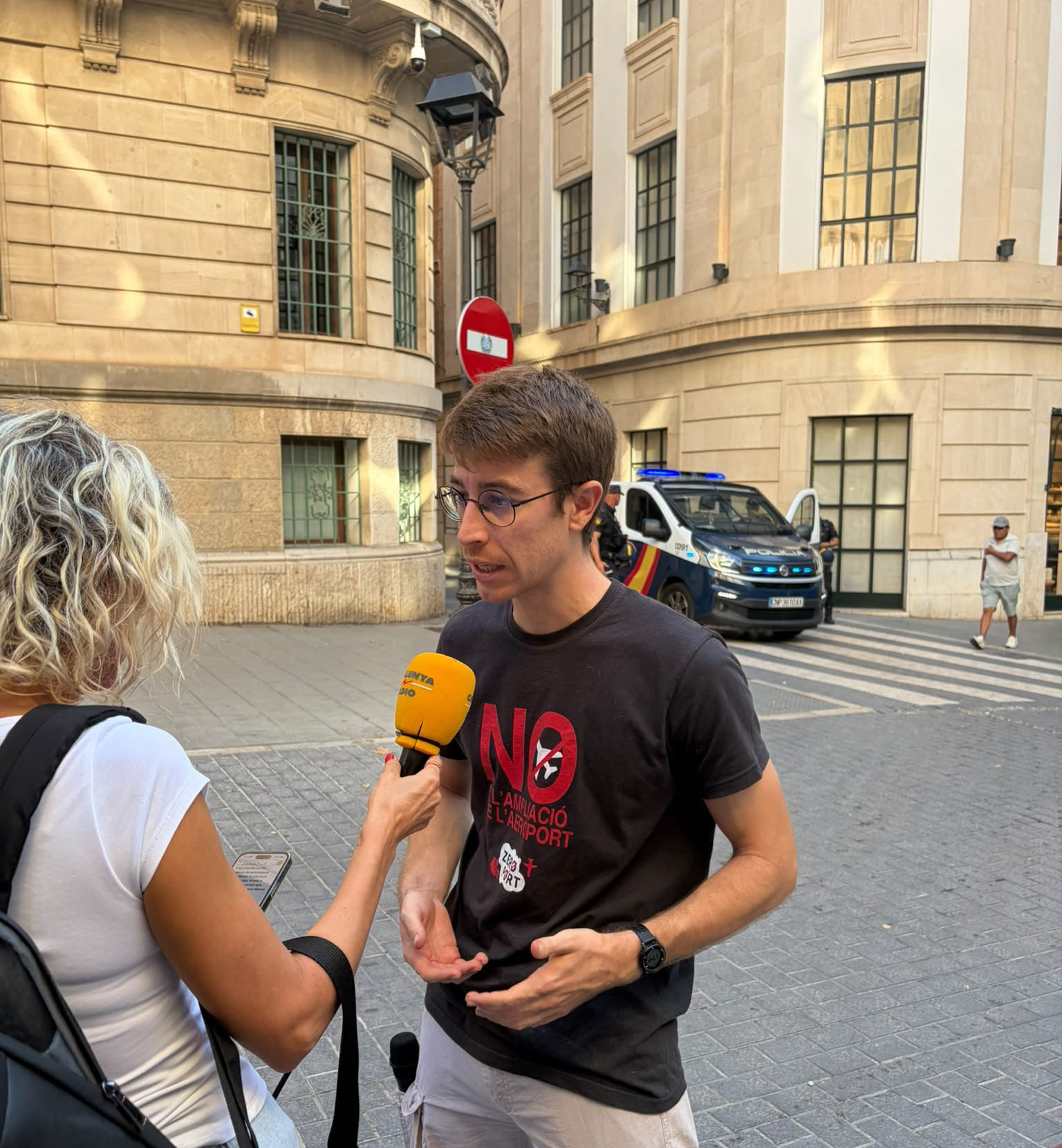
There is a general sense of unease about tourist overcrowding. As tourism touches on all these issues — the environment, housing, culture, quality of life — our platform seeks to bring together all social movements. At our demonstrations, you’ll find citizens concerned about access to housing or the loss of our cultural identity, as well as people exasperated by overcrowding or worried about climate change.
The first targeted protests emerged as early as 2017. Then, in the autumn of 2023, after civil society had been excluded from the European ministerial summit on ‘sustainable’ tourism held in Mallorca, we organised a counter-summit which gave rise to Menys Turisme, Més Vida. Following a demonstration in October 2023, the momentum gathered pace. Today, we are all interconnected via the Red SET network, which unites southern Europe in the face of overtourism: the Balearic Islands, the Canary Islands, Barcelona, Donostia, Málaga, Granada, Valencia, Alicante, Venice, Genoa, Sicily and Sardinia.
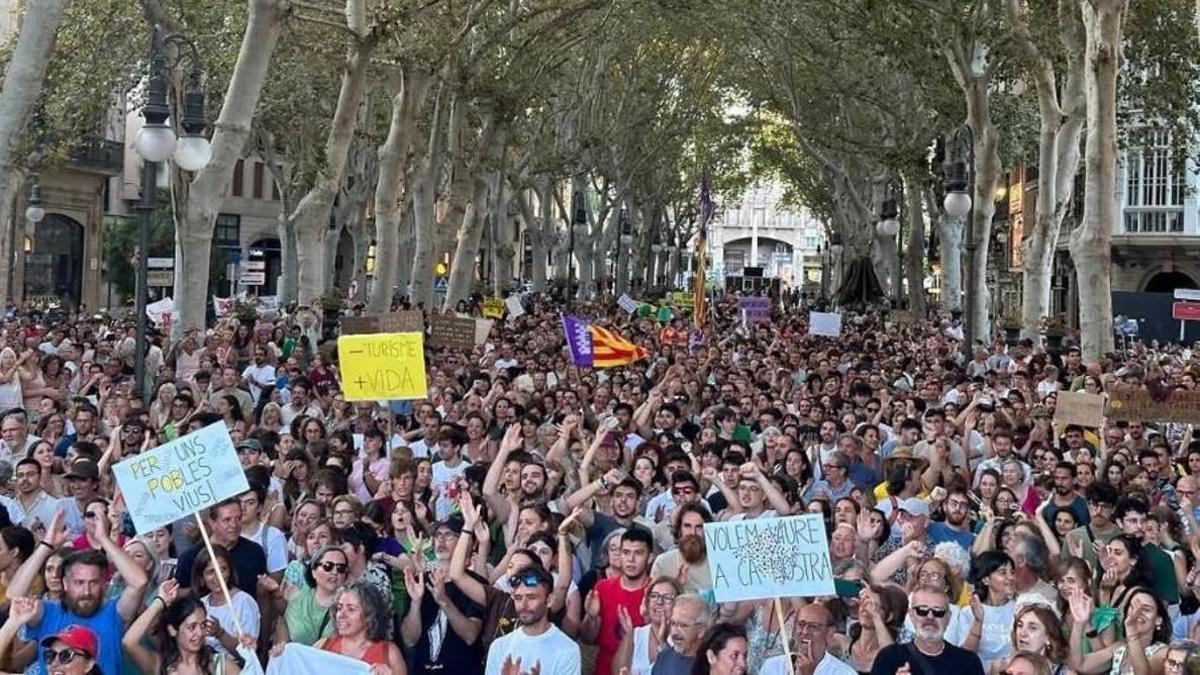
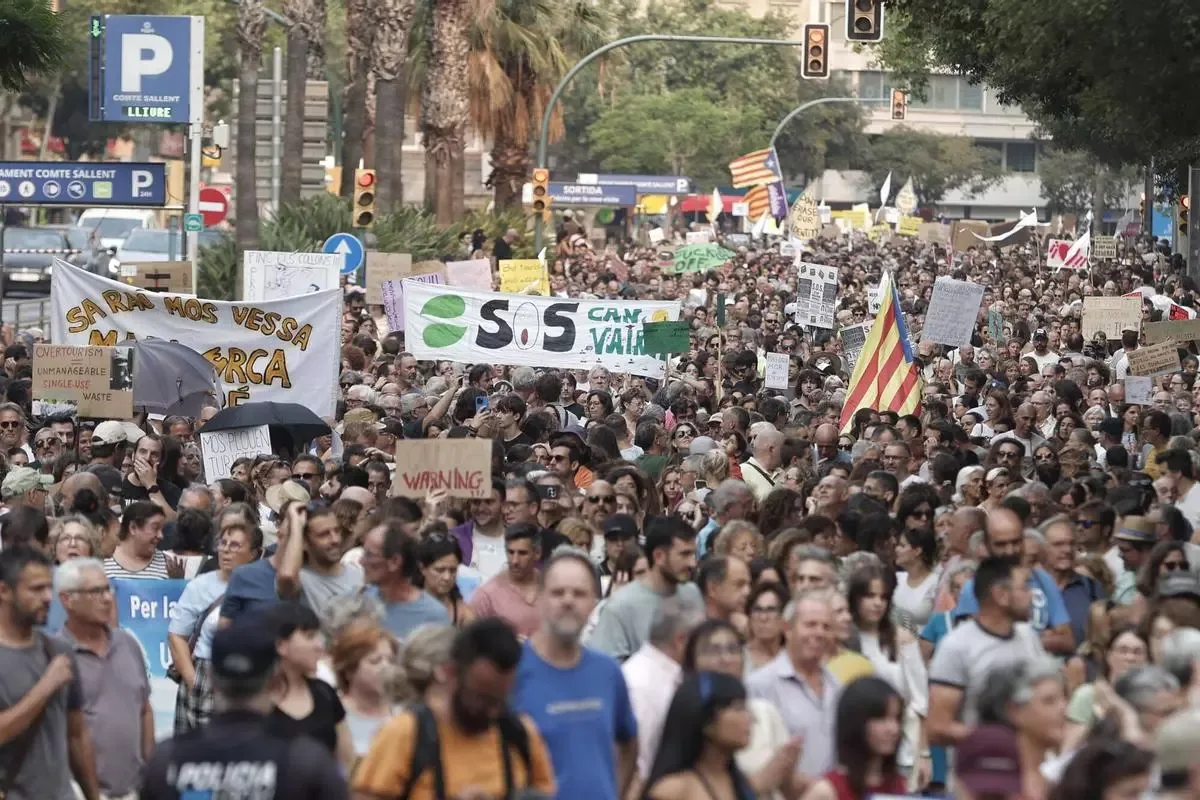
Our demands are based on degrowth. As regards air travel, we are calling for a cap on traffic at Palma airport and an immediate halt to the opening of new routes, whilst the government is, on the contrary, increasing the number of flights to Dubai, New York, Germany, England, Malta and Turkey. As regards accommodation, illegal providers must be cracked down on through deterrent fines and systematic closures, whilst at the same time gradually reducing the existing legal stock. For cruises, we are calling for a moratorium. The current agreement limiting visitor numbers in Palma is continually flouted, with three or more cruise ships arriving simultaneously. Given their enormous impact on pollution, water consumption and the over-touristification of the city, we call for arrivals to be limited to a maximum of one cruise ship per day. Finally, to tackle the property crisis, we demand regulation of purchases by non-resident foreigners: a property in Mallorca must be a main residence for those who live there, not a second home or a source of tourism speculation.
Luxury tourism is a mantra we’ve been fed for years to sidestep the real problem, without the total number of visitors ever actually falling. The arrival of a clientele with high purchasing power does not benefit the local population – quite the opposite, in fact. On the one hand, the environmental impact is magnified: these tourists consume three to eight times more water and energy than a local resident, whilst engaging in highly energy-intensive activities such as sailing, jet-skiing, golf, and so on. On the other hand, this concentration of capital fuels property speculation and drives up the cost of living. When a coffee costs €4 because an establishment is targeting a wealthy clientele, it is the local residents who find themselves excluded. This type of tourism ultimately impoverishes us and drives us from our homes, a situation aptly summed up by the slogan ‘Your luxury, our misery’. Finally, the much-vaunted economic benefits do not remain on the island: it is mainly multinationals or foreign funds that reap these profits, with no benefit to the local population.
The idea that we all live off tourism needs to be taken with a grain of salt. Whilst it is true that the sector generates colossal revenues, we must ask ourselves where this money is going. Twenty years ago, Mallorca was amongst the hundred regions in Europe with the highest GDP per capita. Today, whilst we welcome two to three times as many tourists and the gross wealth produced is higher, the island has fallen by more than a hundred places in this European ranking. If this wealth were truly benefiting society, we would have a very prosperous population, which is far from being the case.
As a small island territory, we are dependent on the outside world. When it comes to food, we have to import almost everything we consume to feed residents and visitors, which generates a huge carbon footprint due to transport. As for energy, as the island does not have enough renewable sources or solar panels, we have to run combined-cycle gas-fired power stations and rely on electricity cables running from Valencia.
But the most acute problem remains water. In the Sierra de Tramuntana, villages without access to desalination plants are facing restrictions: Banyalbufar is experiencing water cuts of up to ten hours a day, Estellencs has had to cap consumption at 100 litres per person per day, and Sóller has banned watering gardens or washing cars. What is most outrageous is that these restrictions do not apply to neighbouring hotels, which are protected by their own reservoirs or exempt from watering regulations. In the south of the island, over-extraction is causing groundwater to become saline, forcing residents to buy bottled water. To make matters worse, recycled water infrastructure, such as that in Calvià, is funded by municipal or European public money to reduce the water bills of large private hotels which, despite generating substantial profits, could easily cover these costs themselves.
Seasonal adjustment is a double-edged sword. On the one hand, it’s positive because it allows some employees in the sector to have a contract lasting seven or eight months instead of five or six. But on the other hand, deseasonalisation has become a political pretext for imposing year-round tourism. The problems of overcrowding and over-tourism that we used to experience only in summer are now beginning to be felt in spring and autumn, and we are seeing the number of tourists increase even in the depths of winter.
We protest primarily to force politicians to take action, because the responsibility lies not with tourists but with those in power. That said, it is just as important to educate tourists so that they become aware of their impact. Perhaps people should stop coming to Mallorca and choose other destinations instead. Moreover, this overcrowding ultimately affects the tourist’s experience. When a visitor finds themselves stuck in traffic jams, cannot get on a packed bus, or faces overburdened health services in the event of a medical emergency, their own experience is ruined. If you come to enjoy your holiday and cannot do so because of overcrowding, disproportionate price rises or a decline in services, this becomes a shared problem: it affects Mallorcans in their daily lives, but also has a direct impact on foreign visitors.
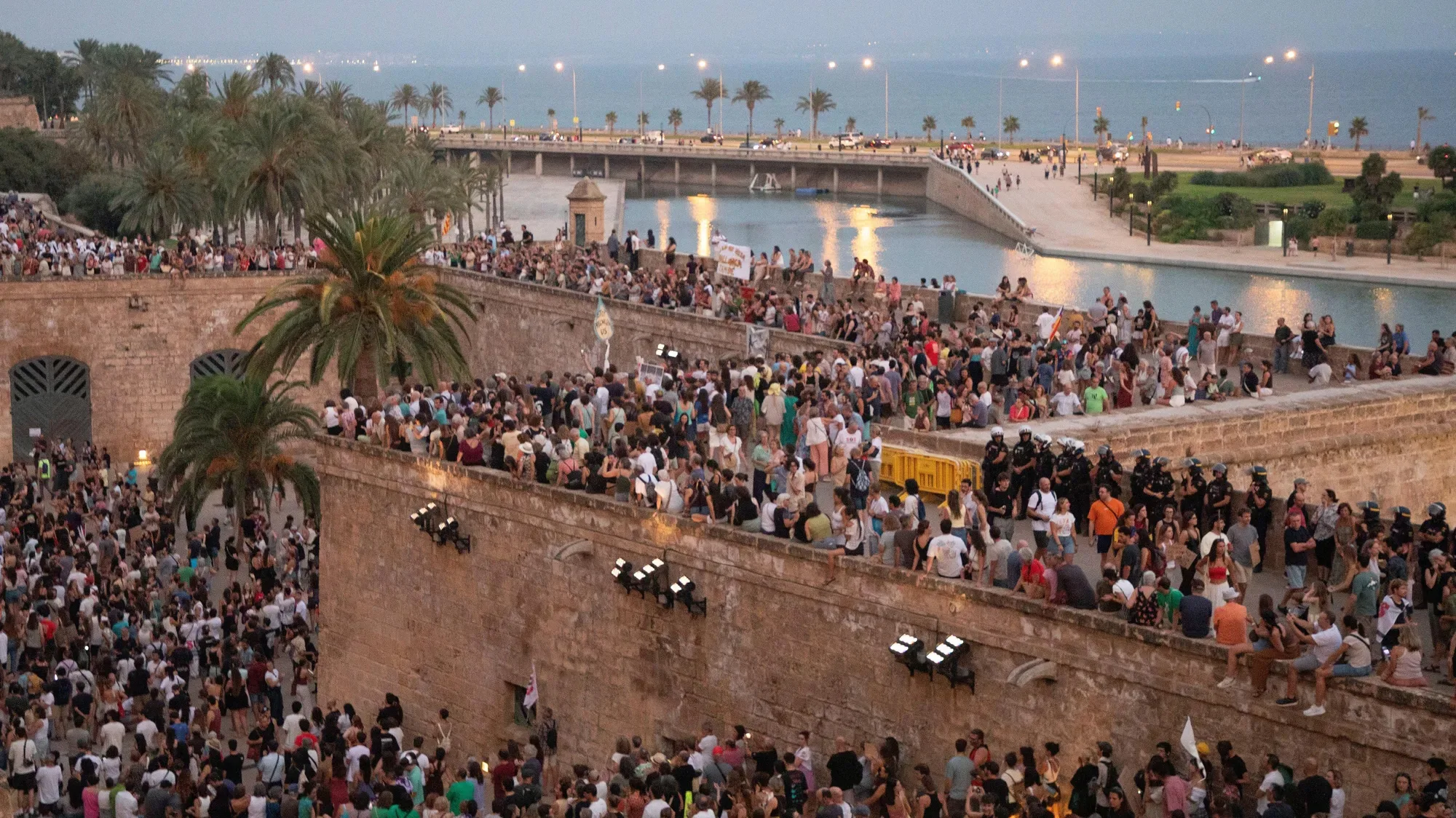
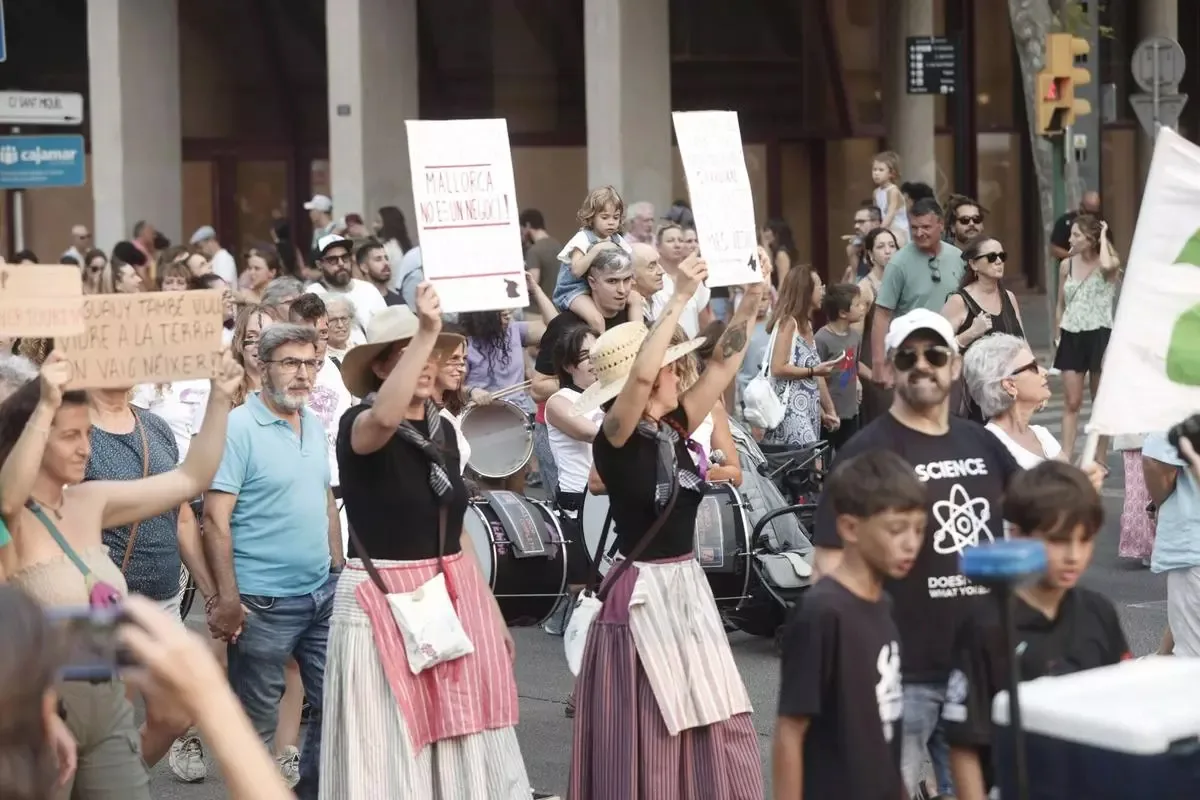
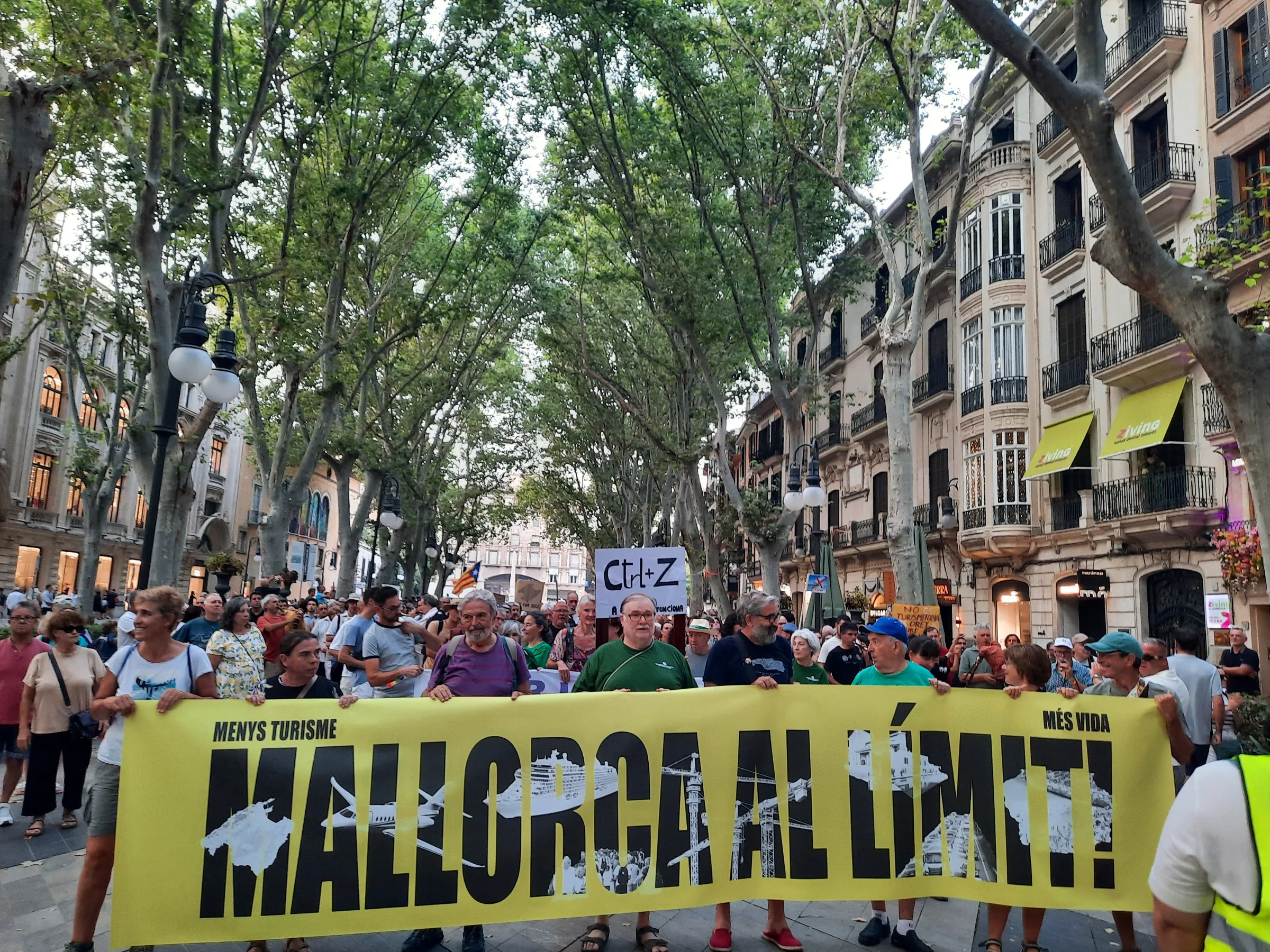
The main responsibility lies with the political establishment, which refuses to pass legislation to protect the public. The government rejects dialogue and seeks to criminalise us, even though our actions are peaceful. Yet the anger is immense: we gathered 25,000 people in June 2024, 50,000 in July, then more than 30,000 the following year and 70,000 this summer (a figure I have added to bring our interview up to date). For their part, the major hotel chains are blackmailing the authorities by threatening to make staff redundant if regulations are enforced. They profit from a highly vulnerable immigrant workforce, forced to cram into overcrowded flats, substandard accommodation or caravans.
Since the 1970s, the island has become overdeveloped to the point where it now hosts twelve to thirteen times its local population each year, making it one of the first places to challenge this model. What we are experiencing here foreshadows what lies ahead for other destinations. Indeed, we can see that the shift towards luxury tourism – often touted as an alternative – only serves to exacerbate the housing crisis and the pressure on water resources. Yet the major hotel chains in the Balearic Islands, such as Meliá, Iberostar and Riu, are now exporting this model to Latin America, the Caribbean, Mexico and Costa Rica. We are thus replicating abroad the excesses we are suffering here, increasing the pressure on regions that are already facing their own difficulties.
The future offers us little hope of living with dignity here. Most of my friends cannot become self-sufficient: with wages of €1,300 to €1,400 and rents rising to €1,200, they have to share a flat or stay with their parents. Some are leaving; those who stay watch with bitter nostalgia as our island deteriorates, its beaches become overcrowded and its public services collapse. Without bold political measures to halt mass tourism and the systematic buying up of homes by foreigners, our generation is condemned to exile or permanent precariousness.