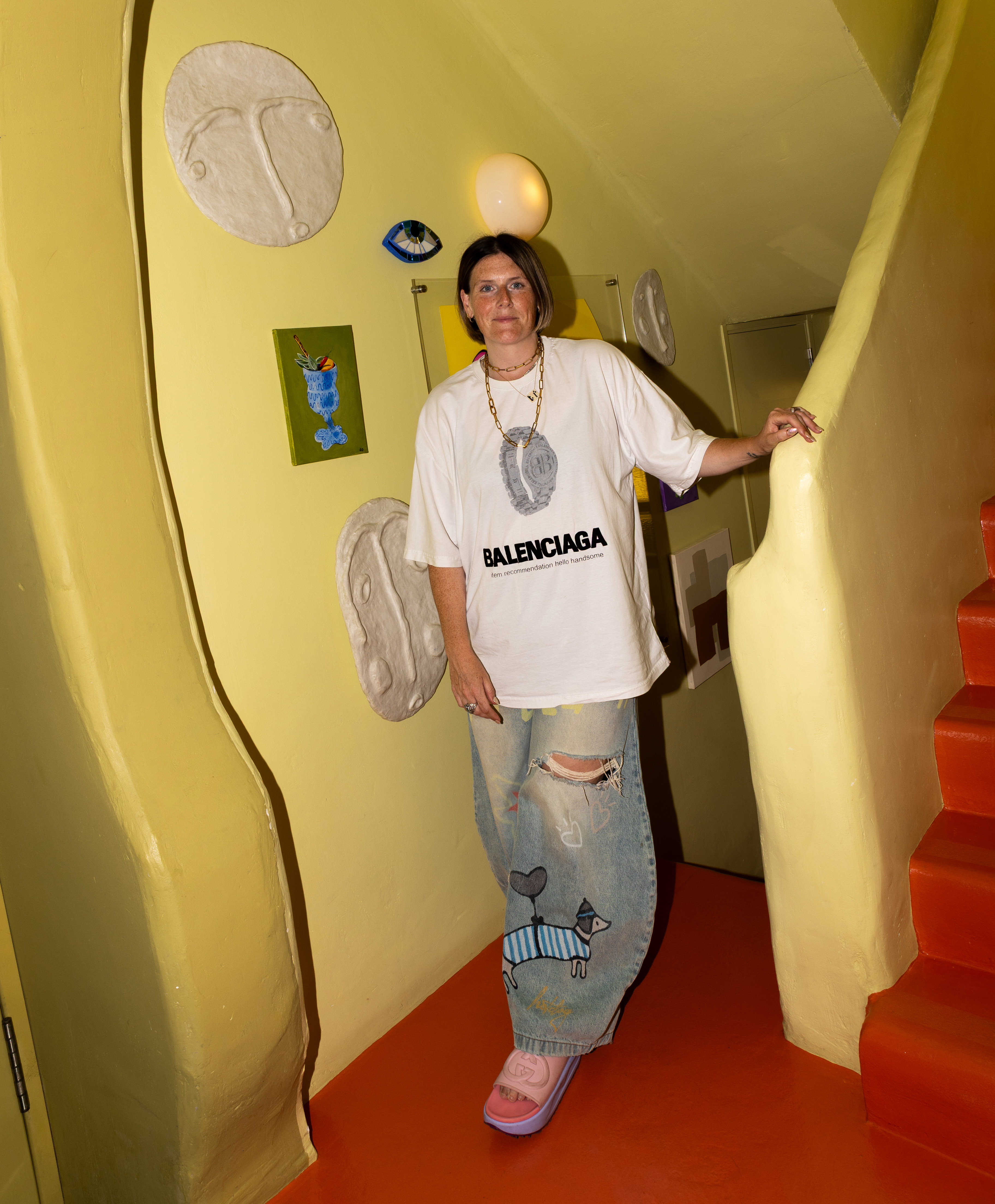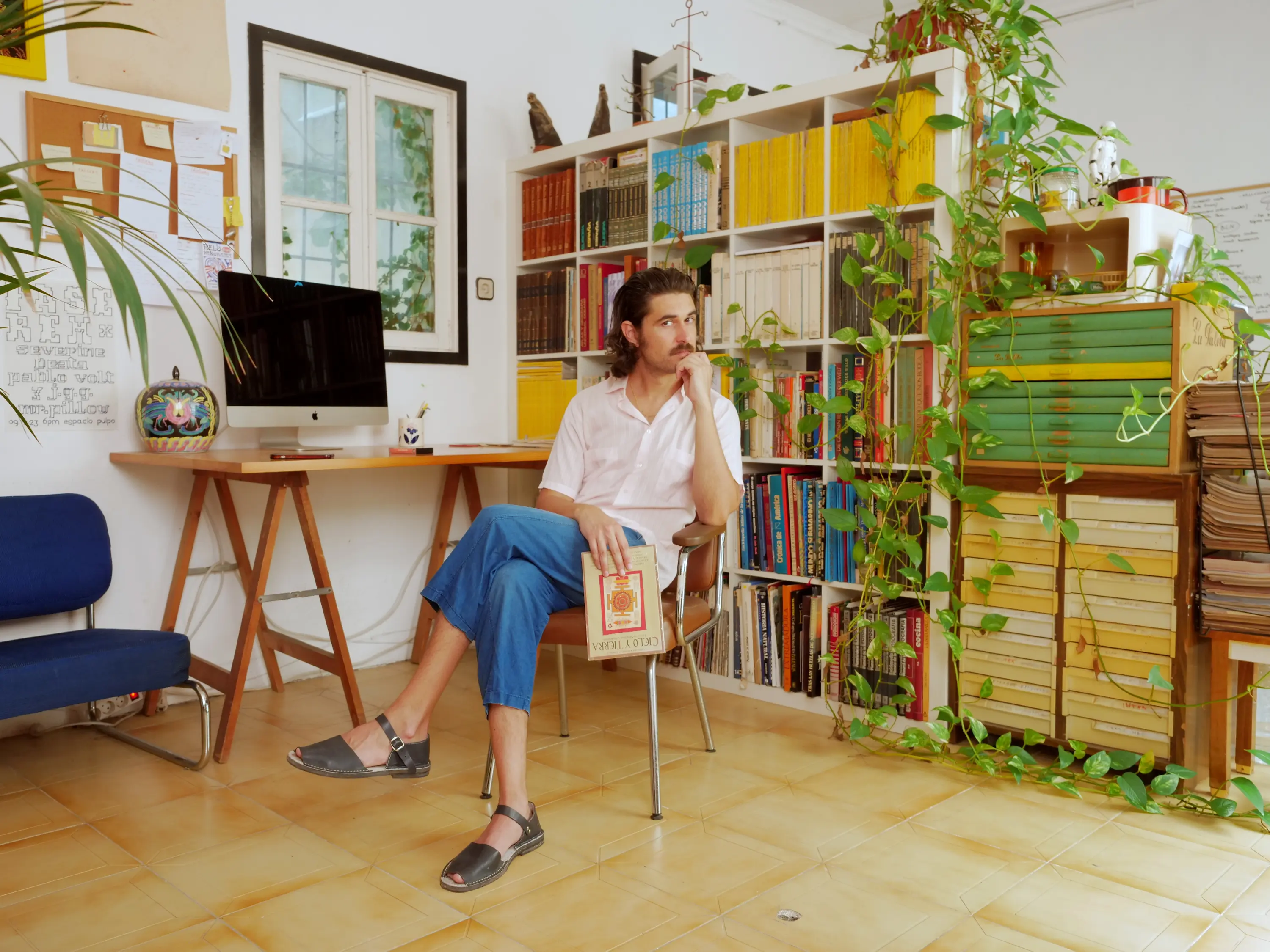
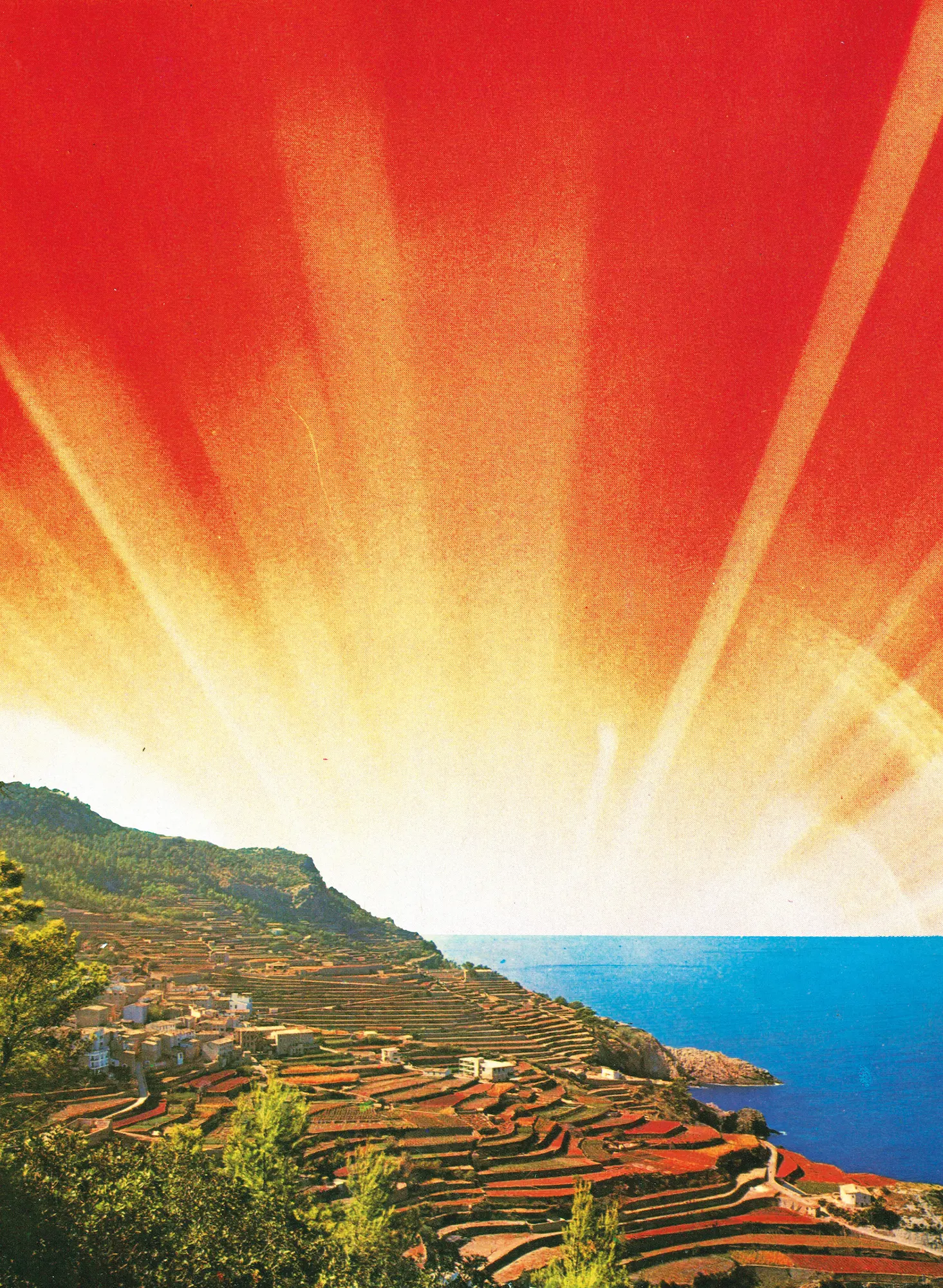
Collage is a fairly simple technique. I combine backgrounds and figures. I cut out the elements I like and keep them in folders; I’ve got drawers full of them. And when I find something to pair them with, I stick them down. Some elements might stay in a drawer indefinitely. At first, my aim was to reuse and recycle images. What do we do with our cultural heritage, with all these images we produce? I’ve always reflected on the relationship we have with our environment – not just the physical one, but also the symbolic and unconscious aspects. Humour is a part of my life; it permeates my work. Humour is closely linked to the absurd.
The first collages I made were greeting cards using images of bands. I started in 2012, just for fun. I was living in Granada and would send them to friends to wish them a Merry Christmas or a happy birthday. It was a sort of creative exercise. When I returned to Mallorca after art school, I found some old books and encyclopaedias that people were throwing away. I started posting my creations on Tumblr. Back then, social media was more open; my work went viral quickly and that led to my first international commissions. I carried on with collage to explore the aesthetic.
I was born in Palma. My whole family is originally from Mallorca. My father put together a family tree and it turns out that I have a great-grandmother who used to tend goats in Formentera and a great-grandfather who was originally from Ibiza. I studied fine art in Barcelona and then returned to Palma. I, too, don’t stray too far from where I was born!
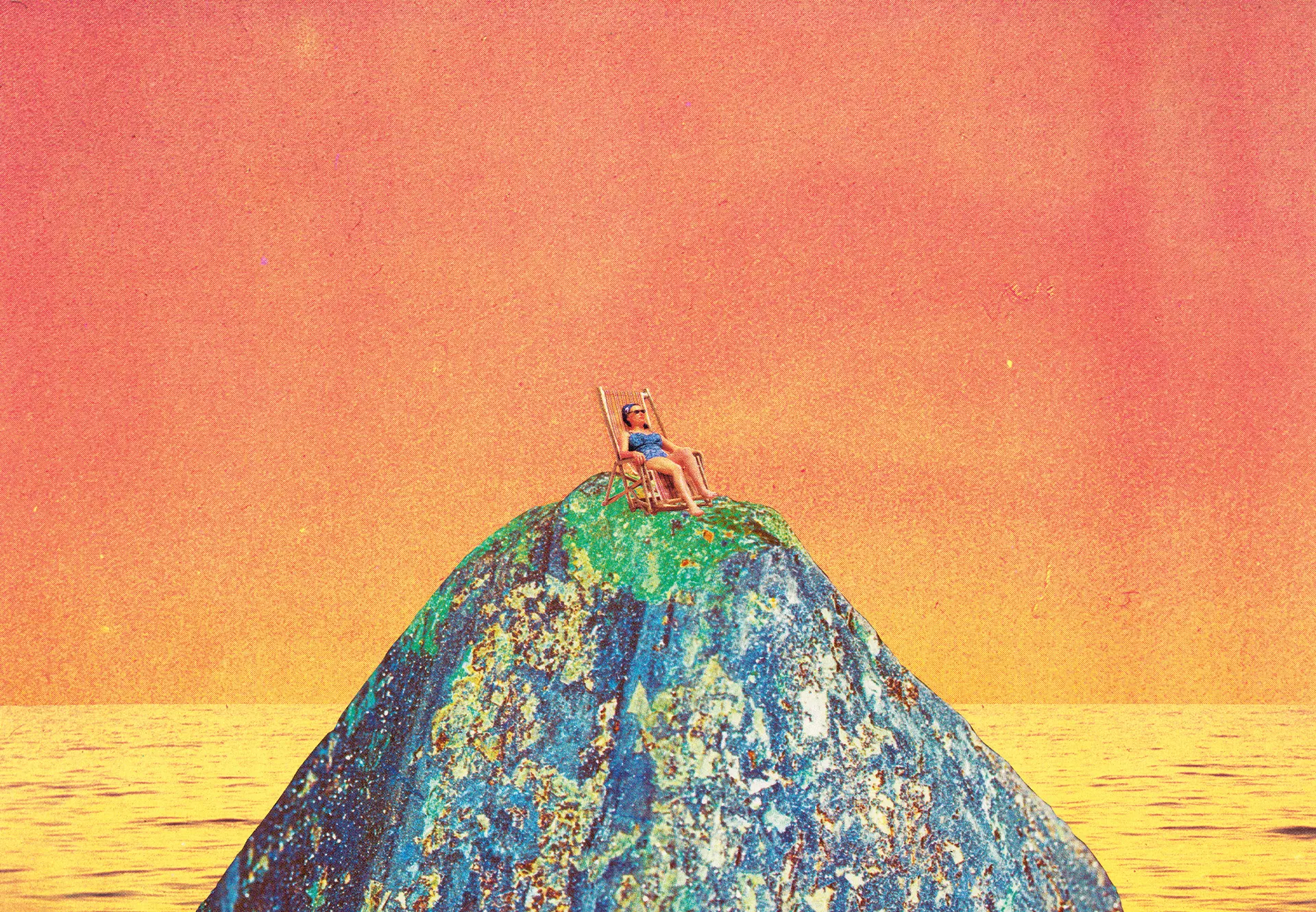
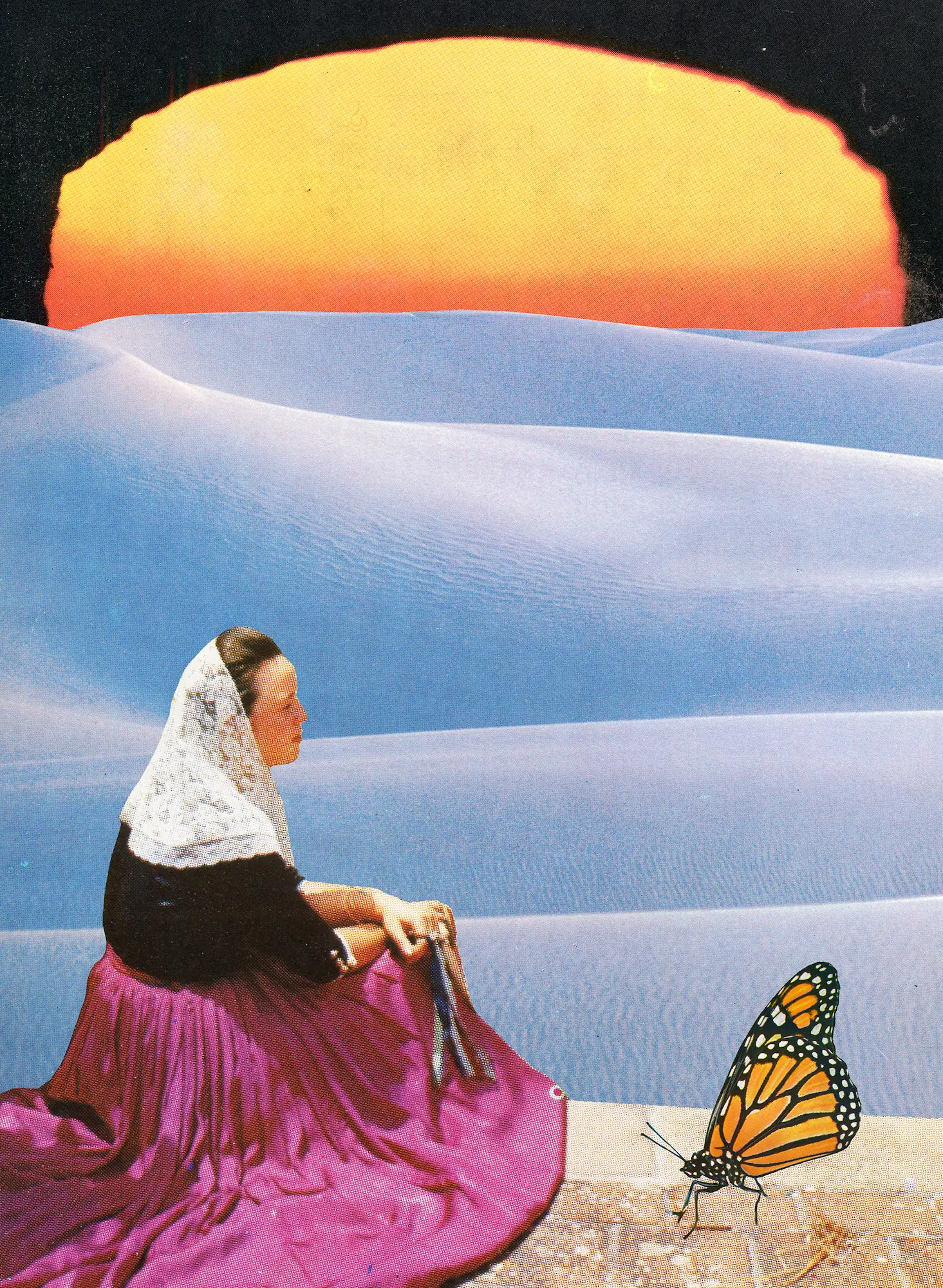
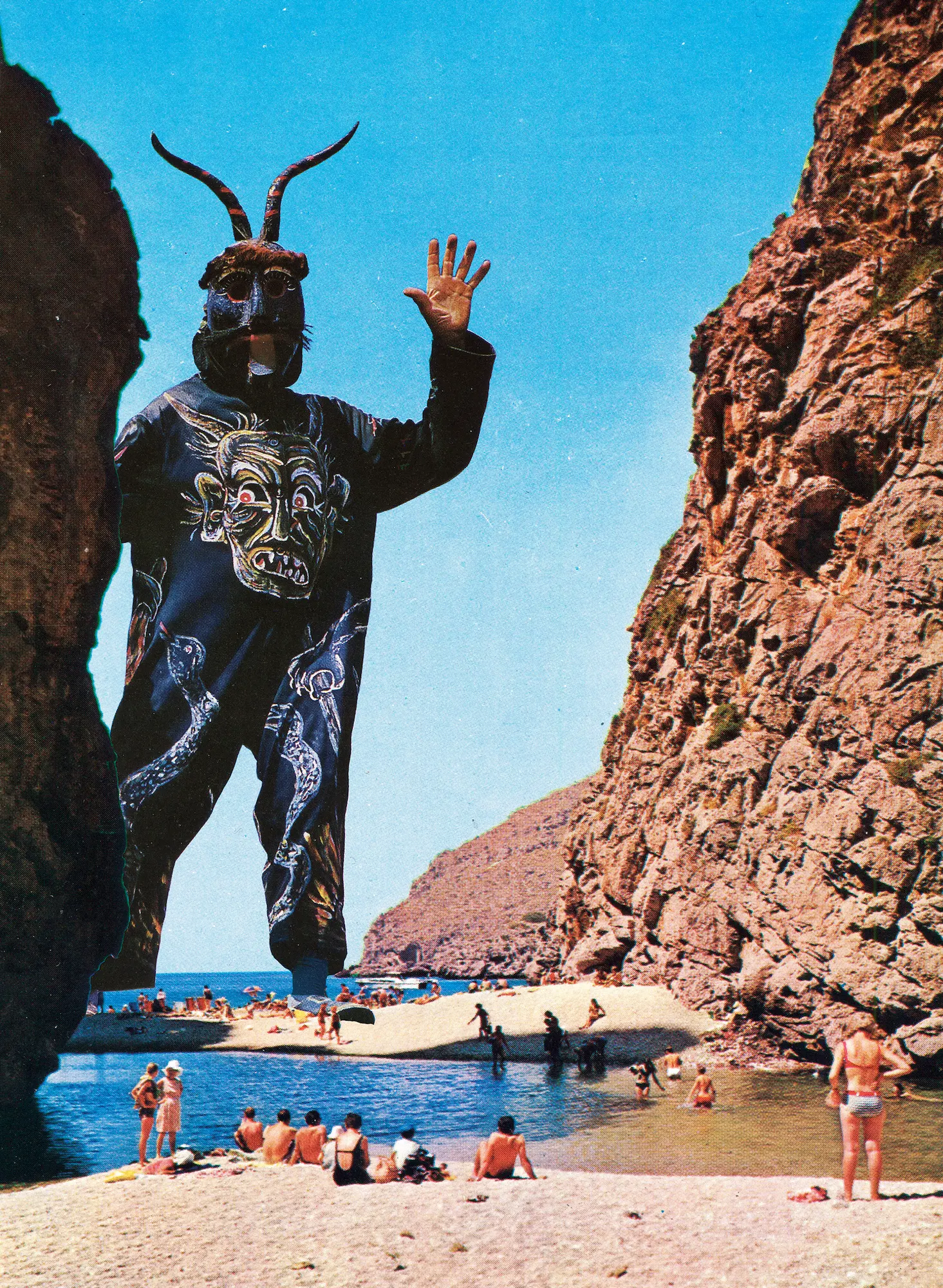
I try to convey the Mallorca I have in my mind – the one from my childhood, the one that no longer exists. We mustn’t forget that these images from the 1960s were the showcase of a dictatorship promoting an economic model which, with hindsight, we can describe as colonial. When I take hold of this image, this fiction, this staged scene, I reinterpret it; I give it a new meaning. I use folklore in a surrealist way. I take a peasant woman, remove her from her context, and explore the burlesque, dreamlike and magical qualities that this image might possess. I take a demon and reposition it in a more absurd way, as if it were waiting for us behind Sa Calobra.
For me, going to the seaside or out into nature in Mallorca has always been a quest for solitude, a way of escaping civilisation. Nowadays, people come looking for an illusion: they queue up to take a photo, pretending they’re alone in the world in a cove. In my landscapes, I try to capture an atmosphere, an emotion or a memory of the island of my childhood.
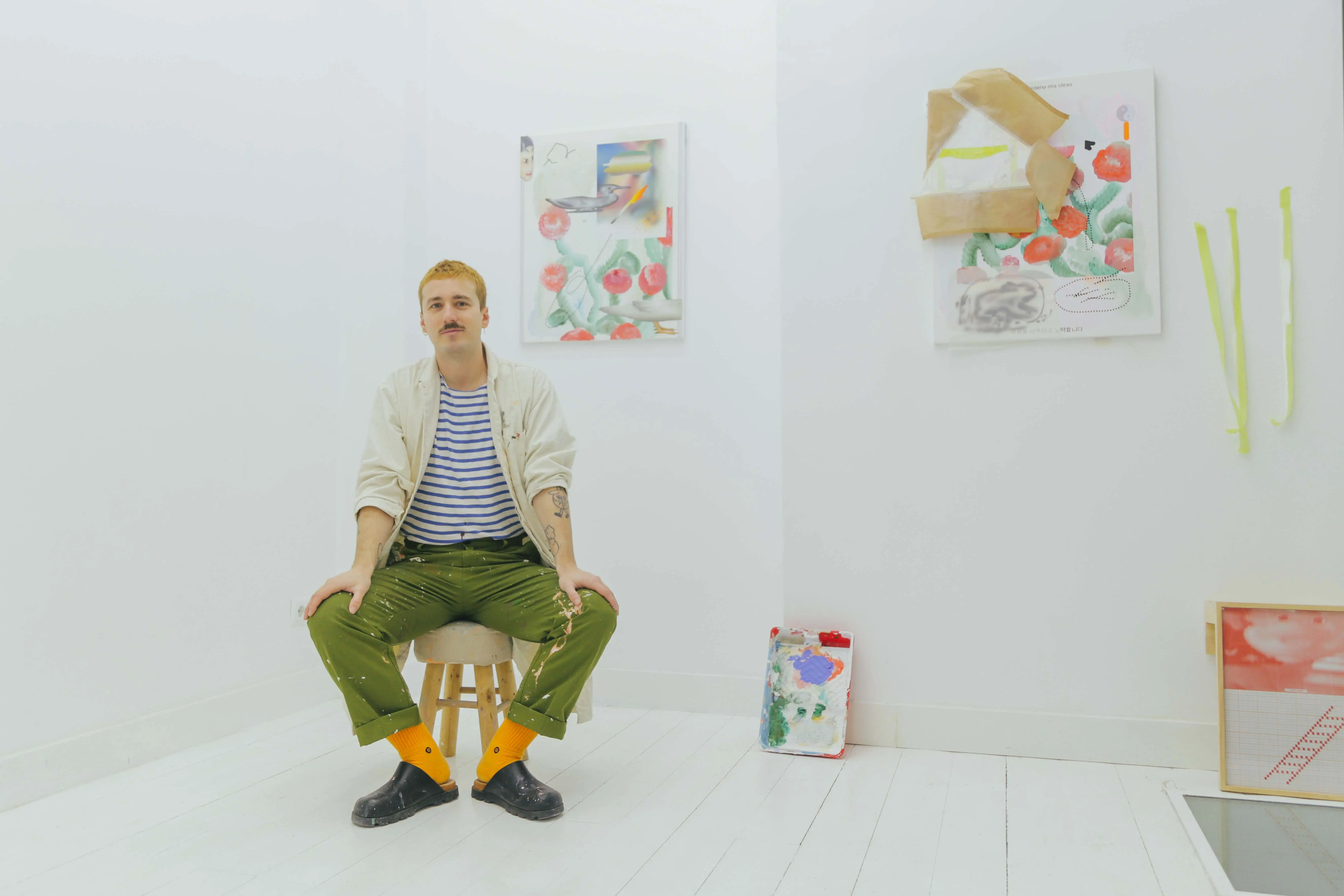
I left art school convinced that I wasn’t an artist. I didn’t recognise myself in what had been presented to me as art. What held me back was this obligation to theorise before creating. It’s a very institutional approach, typical of conceptual art: the text legitimises, describes and gives value to the object. As a result, many students would write their explanations after the fact. I felt as though I was cheating. I wanted to make things, not write essays. That was the minor trauma of my student days. It was only by rediscovering the raw playfulness of collage – without having to justify anything – that I reconnected with creativity.
I am aware that we live in a world where copyright exists. Do I agree with the way it is enforced? No. I think there is a difference between using an entire image and using an extract from it. The very nature of collage is that the exact provenance of the images is lost in the cutting process. No one can recognise a background. They are never what they appear to be. For me, collage is not just about recycling materials; it is a deconstruction of the image. I do not steal someone else’s work to redistribute it as it is: I take a fragment to create another reality. I worked with material from Casa Planas; we discussed this because I wanted to make reproductions. We formalised the arrangement by placing the Casa Planas stamp next to my own seal.
When I first started out, whilst I was focused on reusing materials, it seemed contradictory to me to produce prints. In my practice, the original isn’t sold; it has no value. And I asked myself: what is the cultural value of my work? What best reflects my values? The fact that there is a work of art – that it is this particular work – and that someone has it in their home? Or that a thousand people share the same image? I like the idea of a child growing up with one of my images hanging on the wall at home and that this shapes their imagination. Personally, I remember very clearly the objects that made an impression on me when I was little. They were my visual reference points, and they’re still present in my imagination.
I’ve always been caught between two worlds. To my punk friends, I was the hippie; to the hippies, I was the bourgeois… To the contemporary art scene, I’m the guy who makes tourist souvenirs, and to the souvenir trade, I’m an artist! Humour and the absurd are essential in my work for playing with these labels and mental categorisations.
I’m completing a Master’s degree in Cognition and Human Evolution at the University of the Balearic Islands (UIB), focusing on neuroaesthetics. It’s a scientific discipline that studies how our brain and neurobiological system react to art, beauty and aesthetic objects. This Master’s programme allows me to pursue an artistic practice that lies at the intersection of scientific research. I use the ‘happening’ as a protocol. For example, I get two people to listen to their own heartbeats. If I tell them it’s a work of art about interdependence and cardiac synchronisation, will their heartbeats synchronise more than if I tell them it’s a physiological test? What interests me is seeing how the category or label we assign to an experience shapes the way we experience it. I also run creativity workshops centred on collage, which appeal just as much to people with an artistic background as to those without.
.webp)