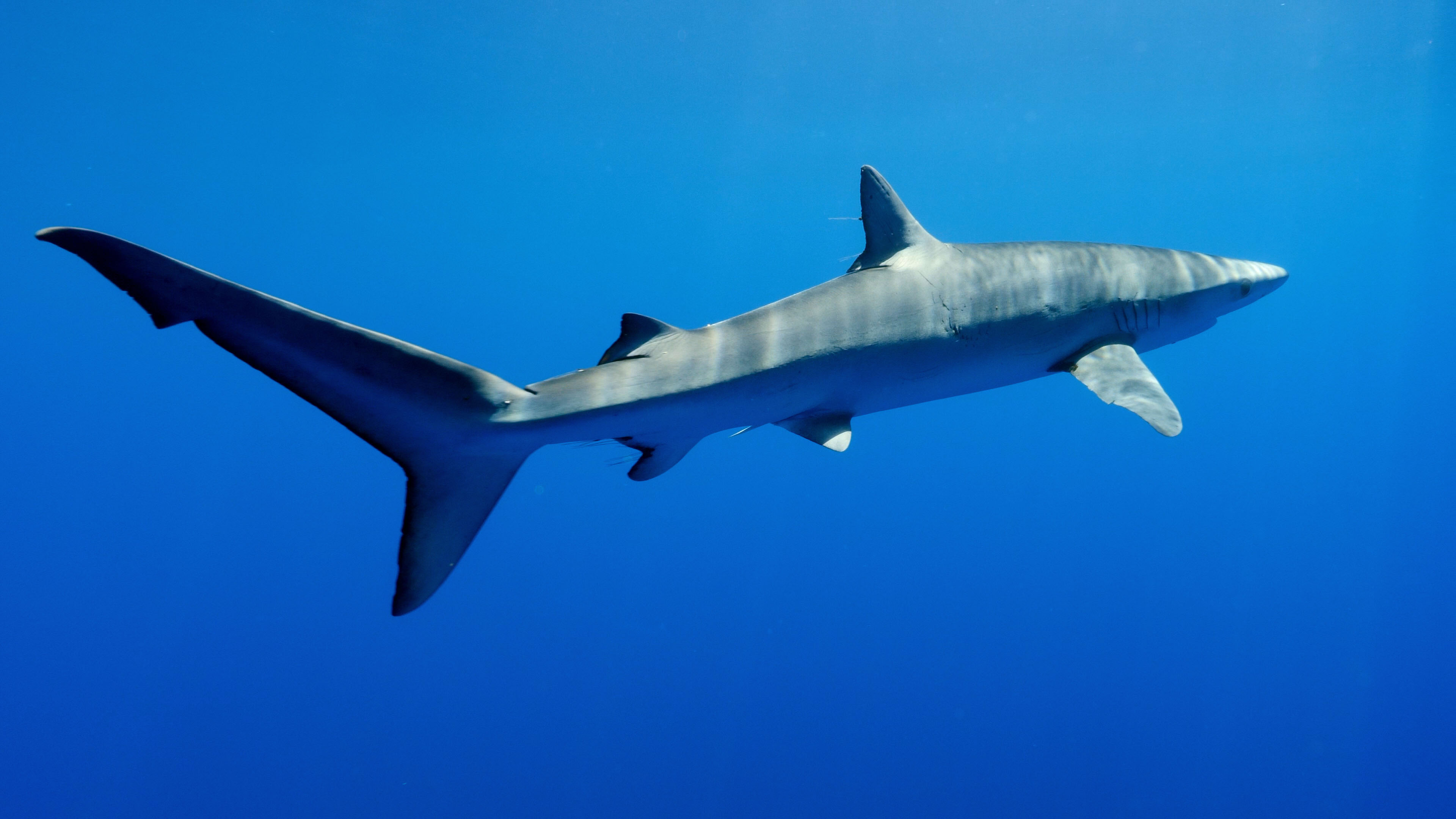
The Med in our name plays on the double meaning of the Mediterranean and “médicos”, doctors. We like to consider ourselves the doctors of sharks because they are in a very serious situation, and action is needed to prevent their disappearance. We can say with certainty that the Mediterranean is the worst place in the world for these animals. Its characteristics as a closed sea with low nutrient levels, unlike other oceans, mean that overfishing has caused some species to disappear by as much as 99.9 per cent. This means they are on the brink of extinction.
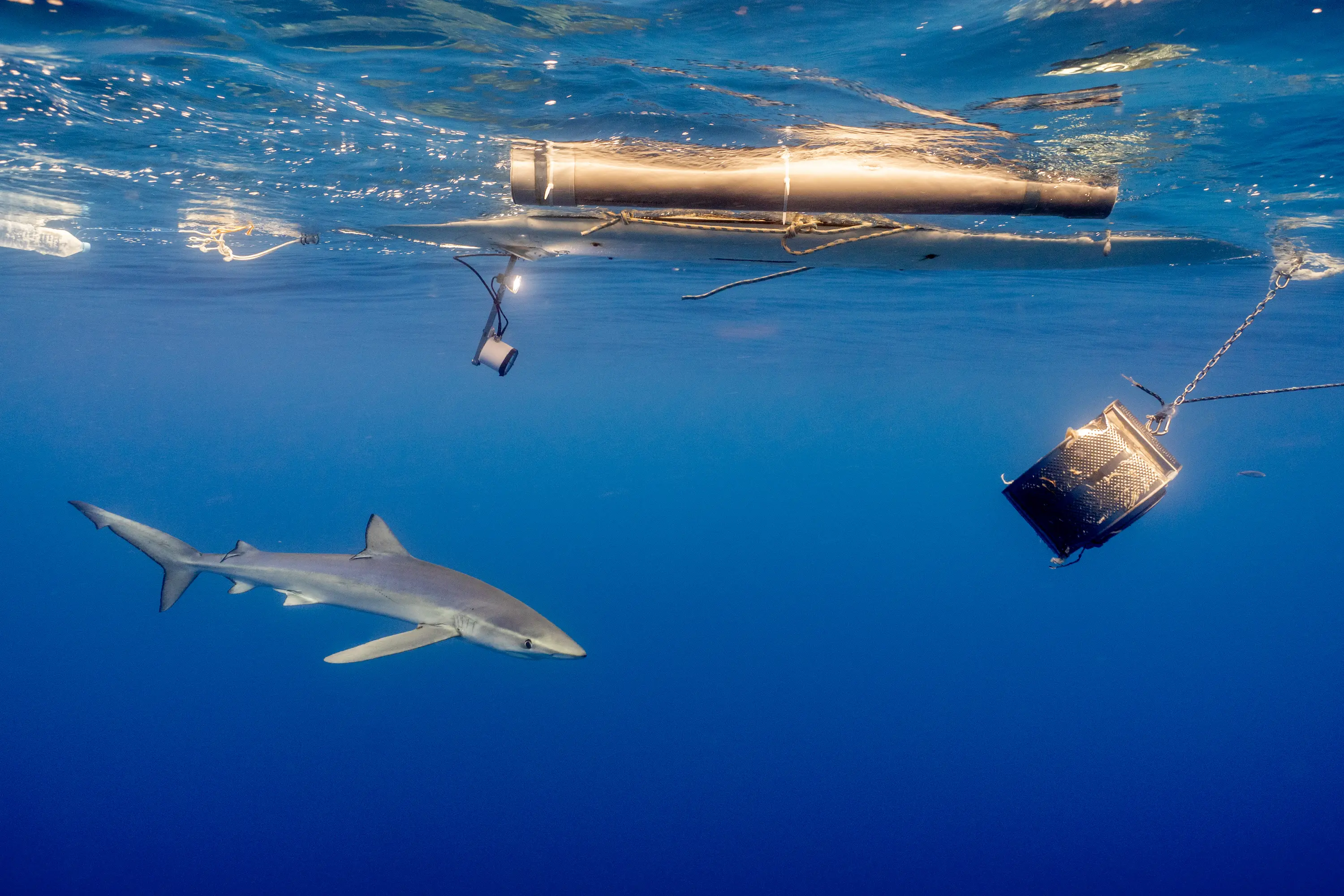
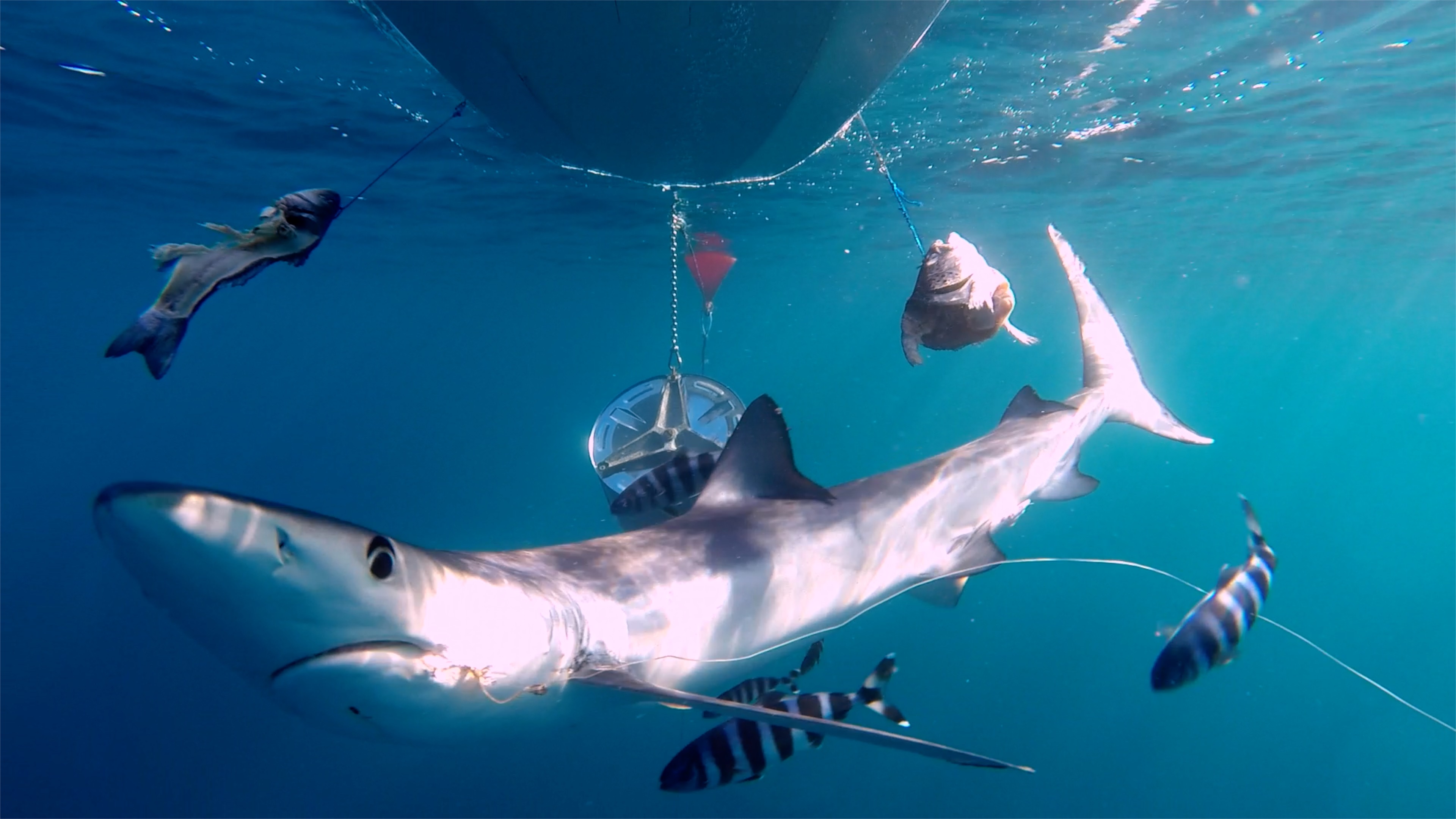
Our main tool and contribution to shark research worldwide has been the development of long-duration BRUVs (Baited Remote Underwater Video). Although baited cameras have been used for decades to study sharks and other species, the scarcity of individuals in our waters required us to adapt the technology to increase our chances of recording them over many days.
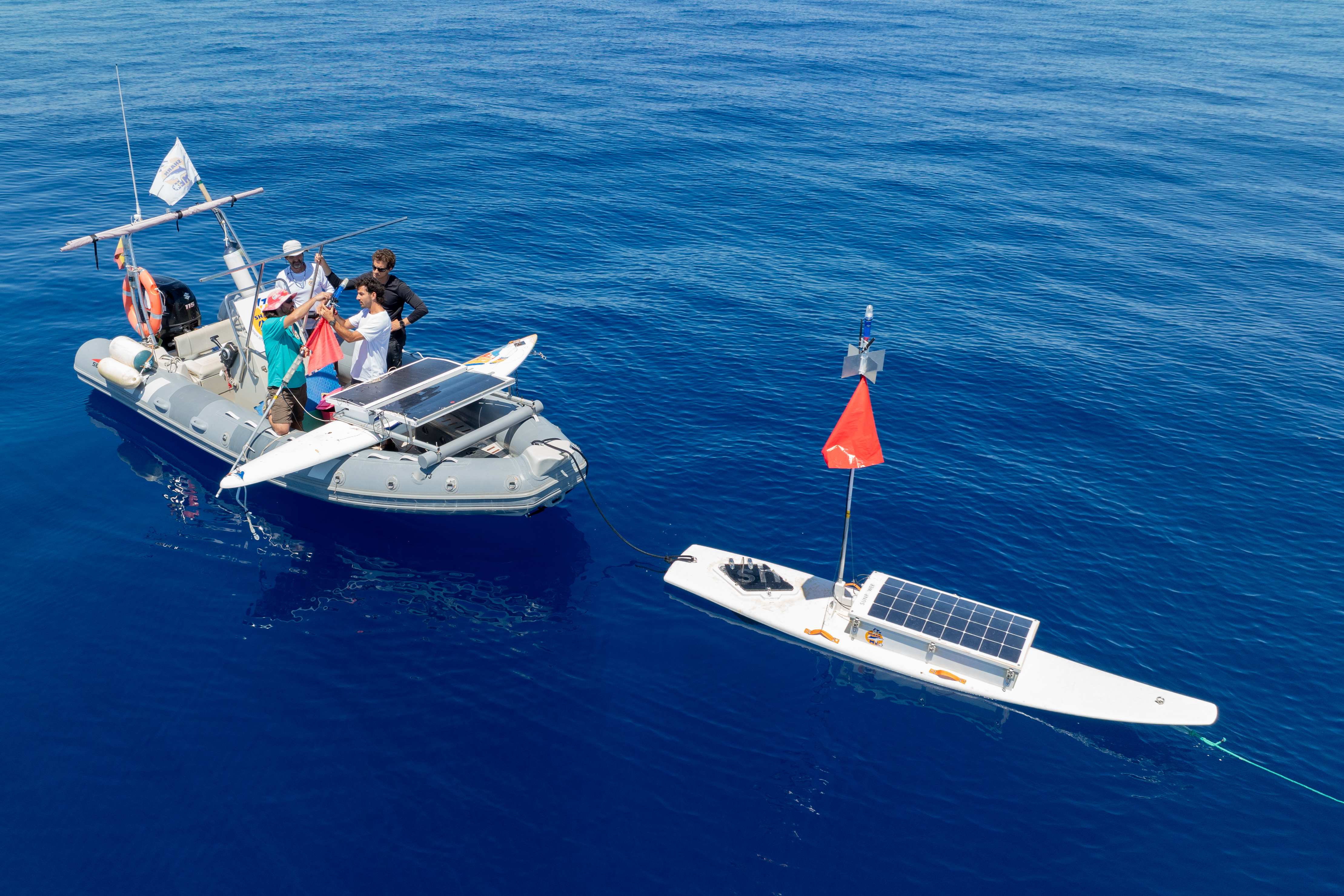
We can now leave baited cameras recording in the open sea for months, visiting them only to refresh the bait and ensure they maintain their ability to attract animals. We can also access live footage from land and see what is happening in front of the camera at any time. With different long-duration BRUV models, we can study pelagic species near the surface and throughout the water column, as well as benthic species close to the seabed, at depths of up to 500 metres. Alongside this technology, which we developed ourselves, we also conduct studies using environmental DNA, satellite tagging and diving.
The species that concern us most are the large predators: great white sharks, shortfin makos, hammerheads, thresher sharks and blue sharks.
As they occupy the top of the food chain, these animals play a fundamental role in maintaining the balance of the entire ecosystem. If large predators disappear, cascading effects throughout the food chain can have catastrophic consequences, including the collapse of entire ecosystems.
nother important function of large predators is scavenging. They remove and recycle other animals that die. Without them, carcasses gradually decompose, potentially causing diseases in other species. The fact that dead dolphins quite frequently appear intact on our beaches is a clear indication that scavengers are disappearing.
Sharks also help prevent contagious diseases from threatening entire species. Sick animals become weaker and are easier prey. Here in the Balearic Islands, we have recent examples of diseases that have severely affected entire fish populations or shells.
Humans once viewed sharks as competitors, believing fewer sharks would mean more fish. This thinking largely justified their overfishing. We now know this view was completely wrong. For all these reasons, a sea with sharks also has many more fish for us.
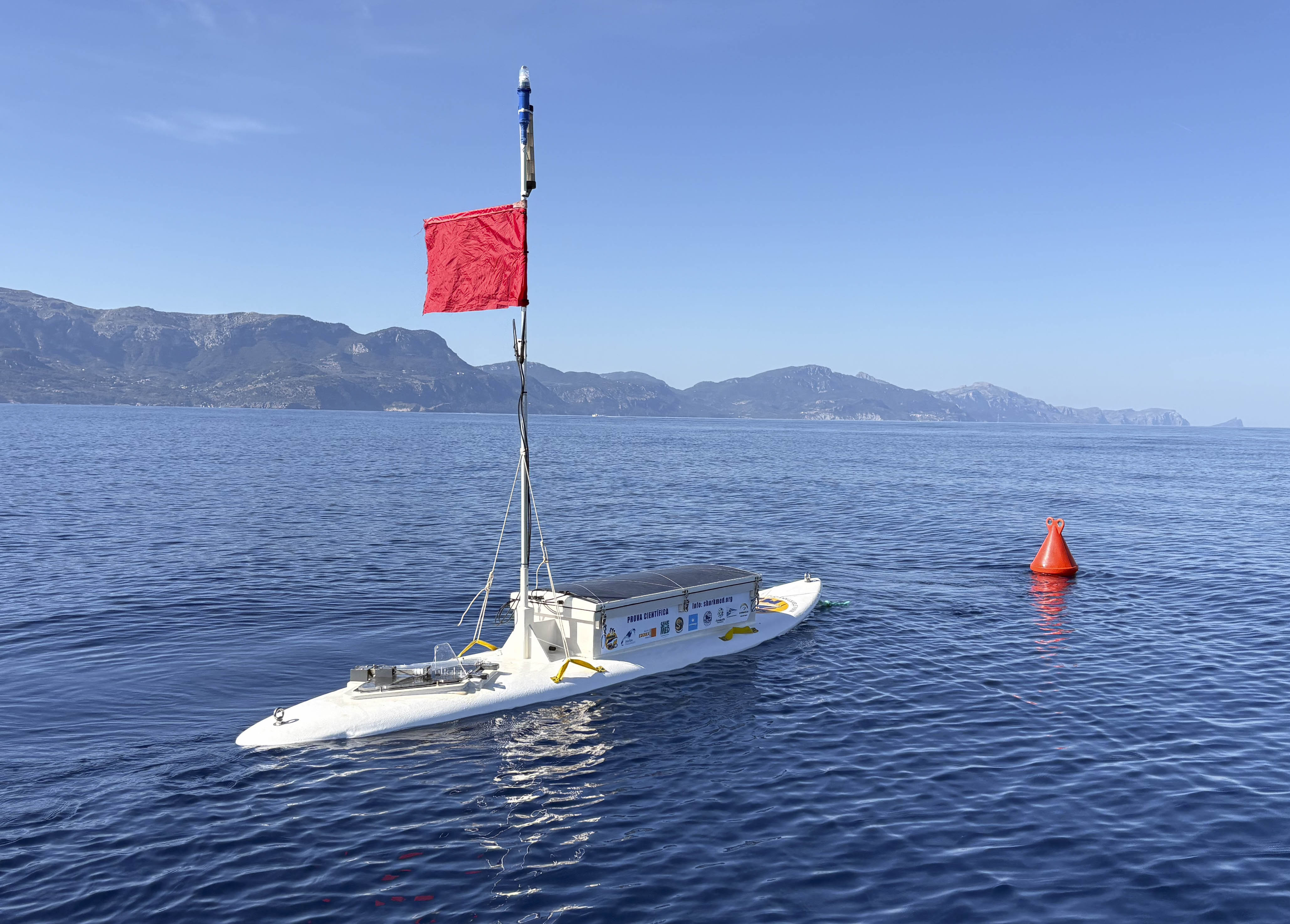
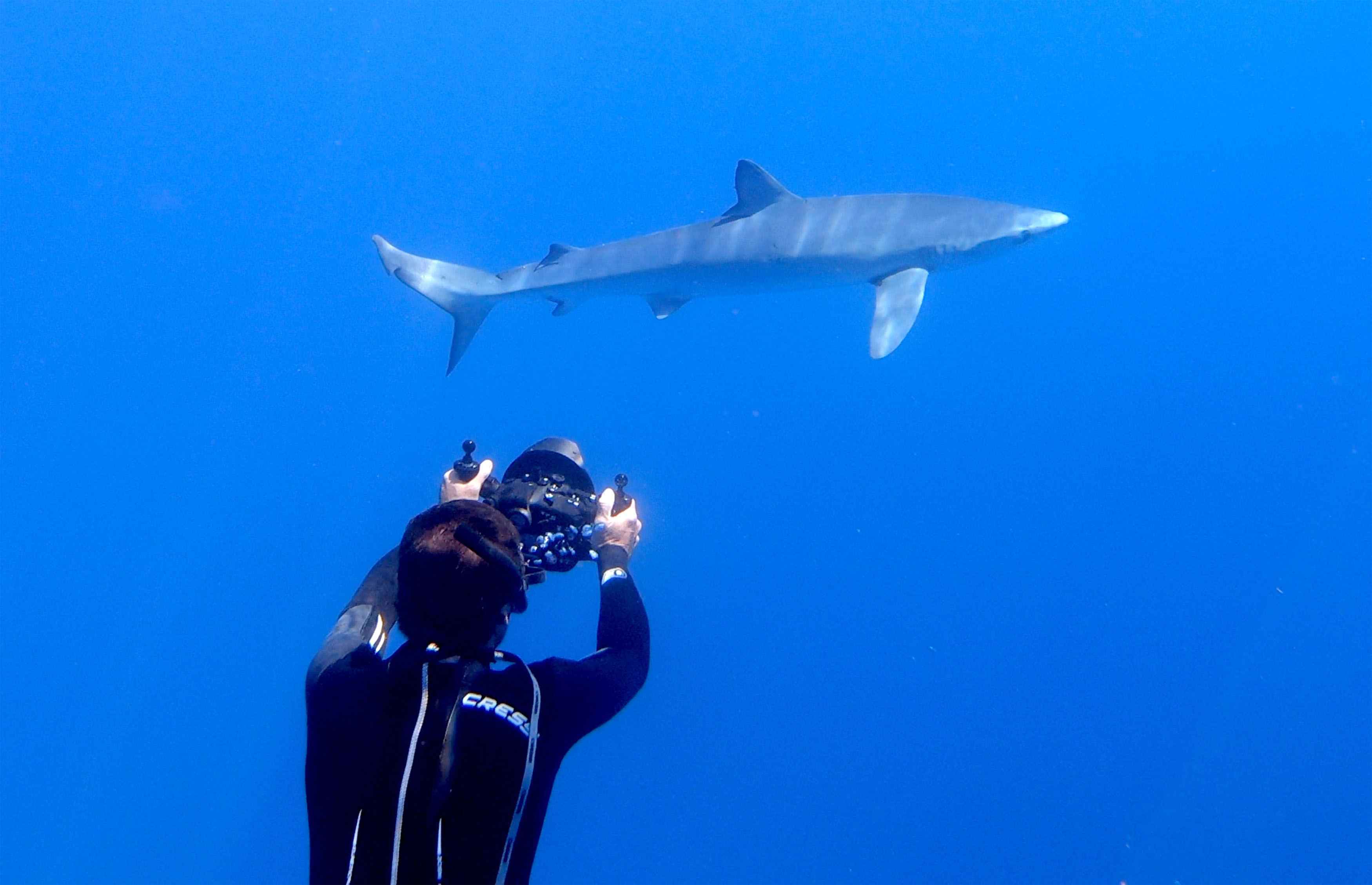
Through the high-quality images of sharks in their natural environment that we have obtained, Shark Med has been able to demonstrate the very high impact of accidental fishing. We have seen that up to 50 per cent of the blue sharks recorded carried hooks embedded in their bodies and often dragged long fishing lines and objects caught on them. The videos also allow us to observe how the wounds and injuries caused by these impacts will eventually lead to the animals’ deaths. For us, the most important point is that this makes it clear that current protection measures are insufficient. If a species is legally protected but continues to be a victim of accidental fishing, that protection is useless. These species have a very low reproductive capacity and, given how close they are to disappearing, they have great difficulty recovering from any impact.
The sensationalist alarm generated by the media whenever a shark of a certain size appears off our coast demonstrates that the general perception is one of fear. For this reason, a large part of the population still believes that a sea without sharks would be safer. Science has shown that this is wrong. Statistically, we know that sharks cause far fewer deaths worldwide than other species we consider less dangerous. This is what we call irrational fear: we are very afraid of something with which we have very little probability of having a problem.
Until the 1970s, great white sharks were common in Balearic waters. Other large sharks, such as the shortfin mako, were abundant until just a few decades ago. During those years, our beaches were already full of tourists and people enjoying water sports, yet there were no recorded shark accidents.
If we try to approach our fear rationally, we will see that the chances of winning the lottery are higher than the chances of having a problem with a shark. Taking this into account, a sea without sharks is far more dangerous than one with sharks because of the serious environmental consequences their disappearance can cause.
The study was carried out along the coast of the Cabrera archipelago and at the Emile Baudot seamount. The most important result has been the confirmation of the absence of large pelagic sharks. Apart from the blue shark, BRUV recordings documented only one shortfin mako at a depth of 80 metres. Environmental DNA also detected the presence of a thresher shark in one of the samples collected at the Emile Baudot Bank.
Species such as the great white, porbeagle, hammerhead and copper shark did not appear in any of the methods we used. We were surprised by the relatively high abundance of sixgill sharks at the Emile Baudot Bank. Using BRUVs, we obtained the first images of this species in its natural environment in the Balearic Islands, at depths between 65 and 140 metres.
Marine reserves play a fundamental role in protecting certain species, especially those that are more sedentary. They are also beneficial for pelagic species like sharks because they help increase the amount of food available to them. However, their extensive migratory movements make them vulnerable as soon as they leave protected waters. In the case of large sharks, neither marine reserves nor restrictions along European coasts guarantee their protection if they are caught while moving through other areas of the Mediterranean.
We believe several areas need to be addressed to make their recovery possible. Fishing gear must become more selective to reduce bycatch. Strict restrictions must protect areas and periods when sharks are particularly vulnerable, such as breeding and nursery grounds. Surveillance and penalties must be increased, and scientific knowledge expanded to fill the gaps that currently make effective protection difficult.
The Directorate-General for Fisheries of the Balearic Government has introduced a pioneering and promising measure. It has created the Elasmobranch Protection Plan (covering cartilaginous fish that includes sharks, rays, and skates) and established a group of experts bringing together representatives from the administration, scientific community, conservation organisations and fishing sector.
This important step has already produced results. A minimum size for fishing common smooth-hounds has been introduced, and fishermen have proposed a possible solution to prevent sixgill sharks and other animals from being accidentally caught in trawl nets. Beyond this initiative, scientific criteria must always be taken into account. Decisions are often negotiated, and compromises are implemented at regional, national and European levels. Scientific criteria are objective, and weakening data-supported recommendations to satisfy economic or political interests can lead to insufficient measures that ultimately harm the fishing sector as well.
We have also consistently emphasised the importance of understanding fundamental aspects of certain species’ biology, such as the breeding seasons and areas of the common smooth-hound. Breeding aggregations are exploited to catch more fish, causing serious damage at a critical moment in the species’ life cycle. Seasonal and area-based fishing closures should be introduced to allow these animals to reproduce and their populations to recover.
In a sea with so few individuals, the main challenge remains finding them in order to study them. Fortunately, the most threatened species are protected, but this also means that we no longer obtain data about their presence through fishing.
Using other research methods, such as our BRUVs or satellite tagging, requires a considerable effort to collect fundamental information about their possible seasonal patterns and migratory routes. Being able to attach a satellite tag to a great white shark in the Mediterranean is the dream of any scientist working in this field. However, the chances of finding one and being prepared to tag it are extremely low.
What motivates us is precisely the awareness that there is still so much to discover and that this information can be crucial to the conservation and recovery of these animals. We are motivated by the thought that we still have time to save these wonderful creatures and, in doing so, contribute to the good health of biodiversity in our Mediterranean Sea.
The sea has always been my passion. Since childhood, it has been the place where I feel in union with nature. Although, from a very young age, I felt that we were degrading it at an alarming rate, we know so little about it that it has never stopped surprising me. I discover something new every time I go.
Being able to swim with sharks here fills me with pride and satisfaction, especially when thousands of people travel to the other side of the world to do so and, just a few years ago, I could not even imagine it myself.
I have always been deeply concerned about the imbalance in our relationship with nature. Pessimism drives me to work hard to try to reverse it. Others say that pessimism paralyses us and makes us give up easily. In my case, it urges me to take action so that I can have the hope of becoming a pessimist who was wrong.