.webp)
Between 1973 and 1977, I was living between Montreal and New York. I was the official photographer for the Montreal Olympics, a set photographer, and I started working for American magazines. I used to go to MoMA a lot; I spent a great deal of time looking at the American Abstract Expressionist painters. I’ve always loved painting, but I’d never had the chance to photograph a painter before.
In 1977, I returned to France and set off with a journalist to do a feature on Spanish anti-Franco intellectuals. There were writers, the singer Raimon, but we were rather groping in the dark. It turned out there was a show in Barcelona, Mori el Merma, a variation on Ubu Roi for which Miró had designed the sets and costumes. An extraordinary show. At the end of the performance, we went to the dressing room and, with all the naivety of youth, I approached Miró and said to him in Catalan: “We work for L’Humanité Dimanche and we’d very much like to do something with you.”
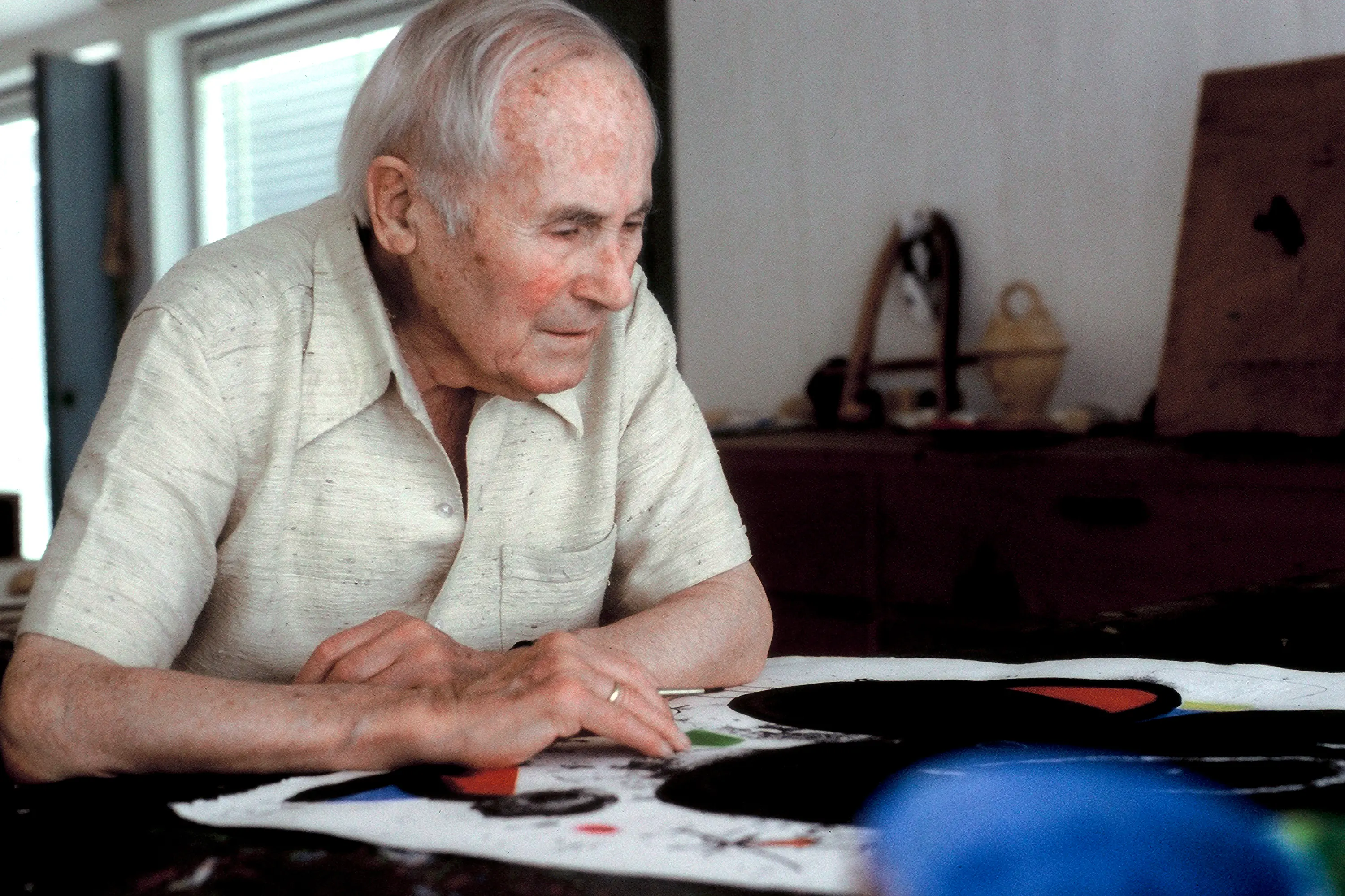
I told him the story of my family, who were Republican refugees in France. He explains that I must come to Palma because he has no studio in Barcelona. A few days later, I arrived in Palma and it was extraordinary. First, discovering this studio, and its incredible architecture. The whole aesthetic of Josep Lluis Sert is encapsulated there. Sert was a truly great architect; he worked with Le Corbusier and trained many American architects as he was exiled to the United States, where he taught at Harvard for 30 years. When I walked into that studio and saw this little man who was so kind — and I don’t mean that in a derogatory sense — I was absolutely awestruck by the objects and the aesthetics of the place. That encounter changed my life.
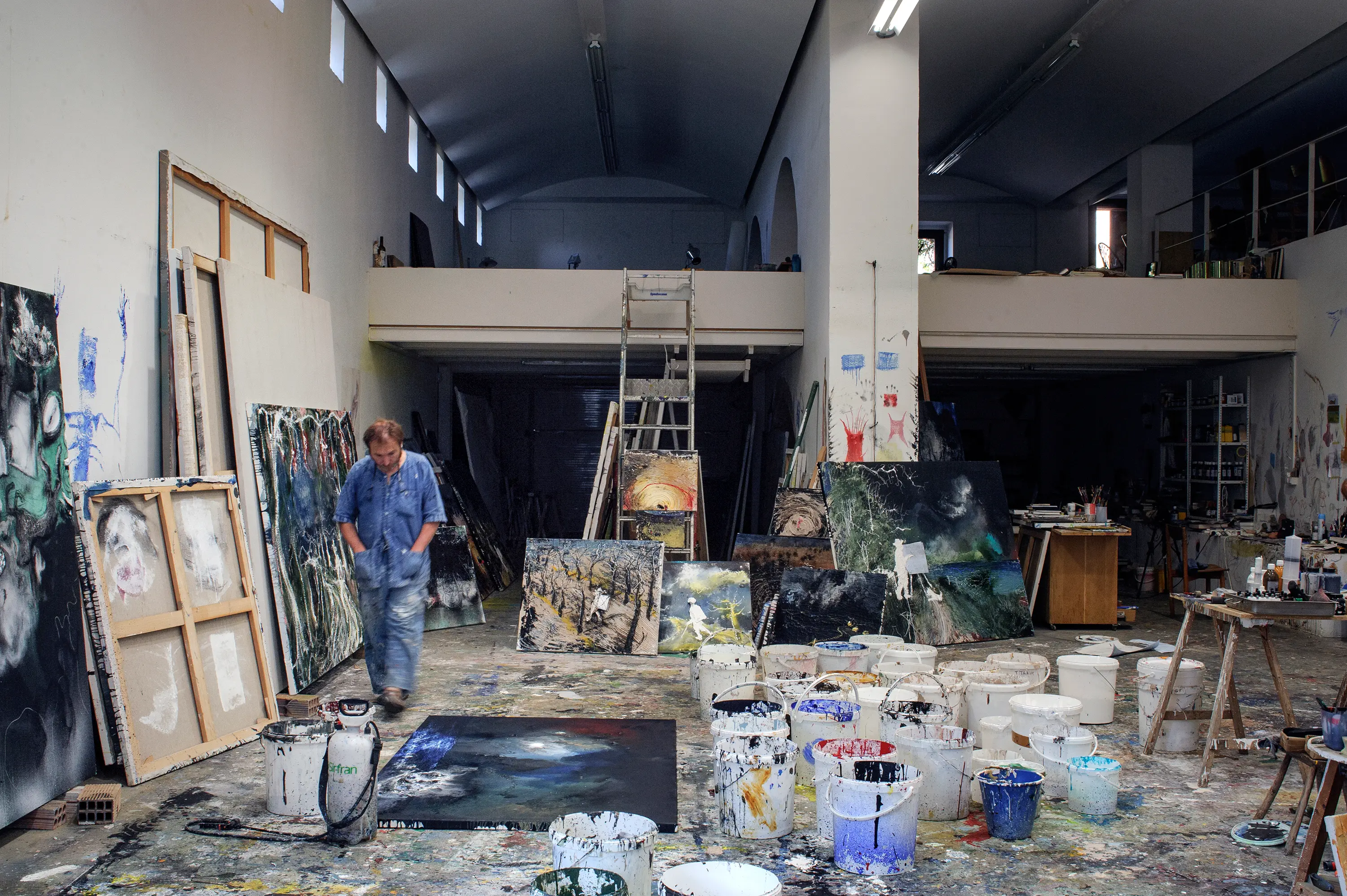
An artist’s studio is a secret place. Very few people go there. Artists don’t like people seeing behind the scenes. But they’re always extraordinary places. It’s fascinating to step into the artist’s mental space. What is the meaning of an object? Why is it there? Why does it move? Why is it looked at more than another?
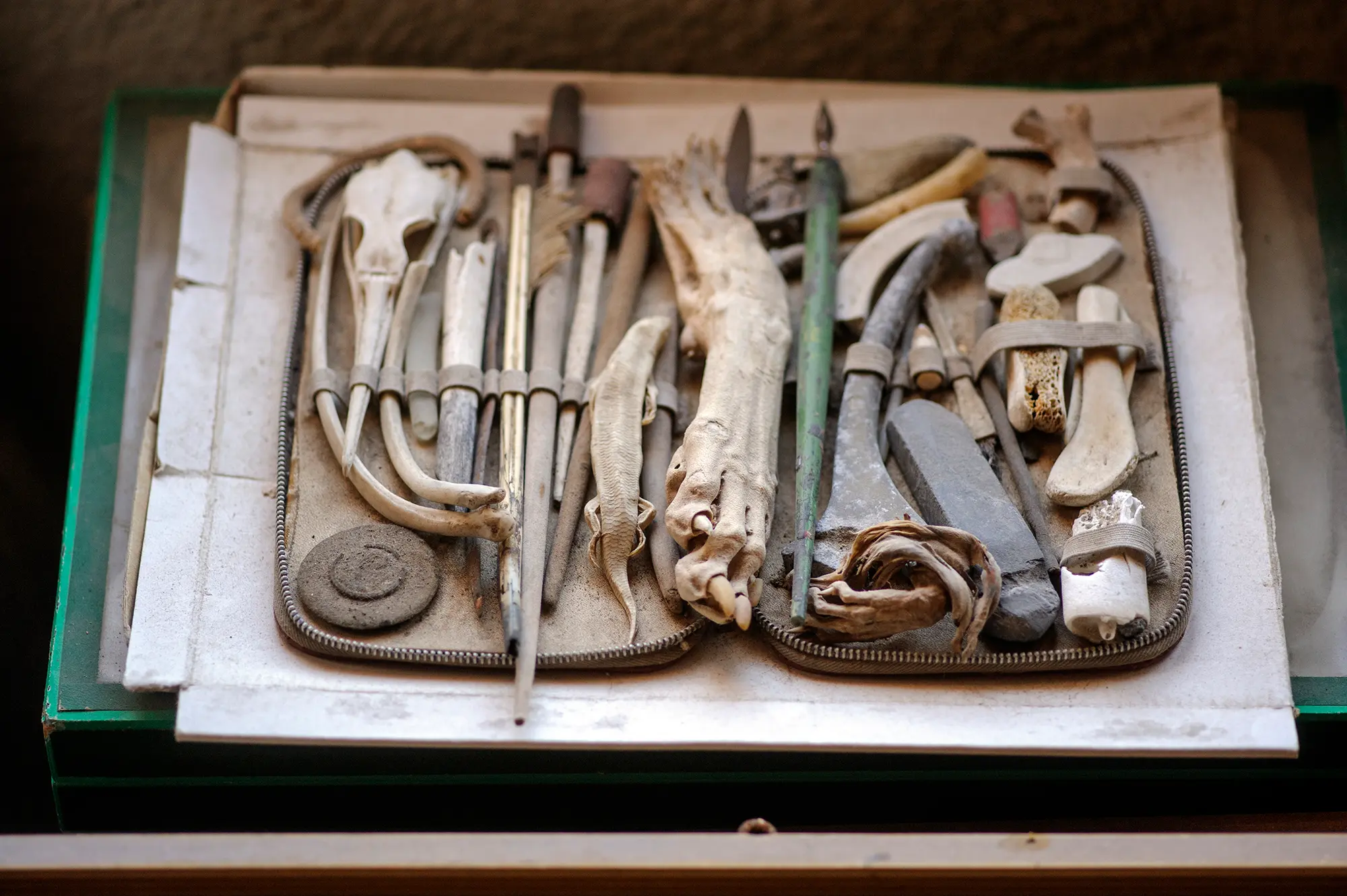
With Miró, it was wonderful because he kept a whole series of objects in a cupboard that made up his mental alphabet. There was everything: a small blue plastic Air France salt shaker sat alongside an archaeological artefact. All that mix is Miró. He was just as interested in a tree as he was in a discarded stone. For me, it was very stimulating to look at these things through a photographer’s eyes, and even beyond that, as someone seeking connections between the imagination and a work of art. The studio doesn’t explain the work, but it familiarises you with the artist’s imagination.
From here, I went to visit some of the exiled Spanish artists, who were part of the École de Paris. People such as Antoni Clavé, Baltasar Lobo, Abel Espinosa, Xavier Valls and Pella Ayo. Nobody went to see them; I knocked on their doors and they all said yes. The idea of continuing these photographs of artists’ studios began to take shape. It was a personal project I undertook alongside my commissioned reporting work. I used to go to New York a lot, and every time I managed to photograph an American painter: Motherwell, Lichtenstein, Frank Stella, Sam Francis, Joan Mitchell…
I photographed over 300 studios, from the great Americans to the great Europeans, all the French artists from Soulages to Combas, the Spanish of course, but also Italians and Chinese. I could describe myself as a collector of artists’ studios.
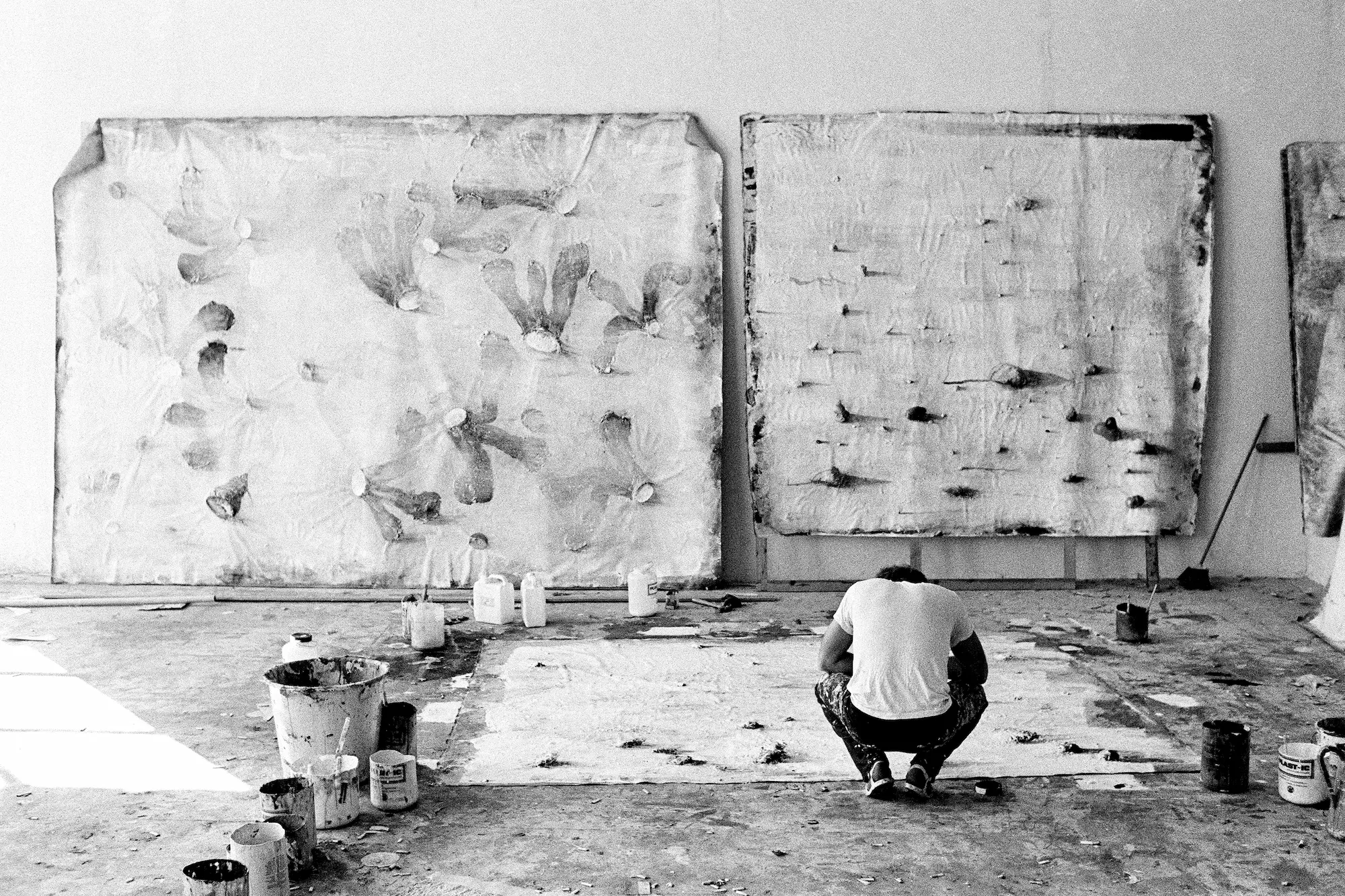
I love working quickly. I arrive, take a quick look around, then focus on the details. There’s something really beautiful about that initial impact when you walk into the studio. You have to capture it straight away, otherwise you lose the energy. I have enormous respect for the work of painters: I’ve never allowed myself to move an object. And I think that’s one of the secrets to capturing the essence of a situation.
The sessions last two hours. No more. Sometimes, when good relationships develop, or even friendships, I return to the studio. But very often, it’s limited to a single session. With Miquel Barceló, several months pass between sessions. You have to let time pass so you can return with a fresh eye.
In the 1980s, there were two important Spanish painters in Paris: Antonio Saura and Eduardo Arroyo. I knew both of them very well. One day, Antonio told me I absolutely had to go and see Miquel Barceló, as well as Miguel Angel Campano — whom I’d photographed and who lived in Sóller. So I rang Miquel. He wasn’t exactly keen, but eventually agreed to meet me on Avenue de Breteuil.
He was painting in a huge flat that the collector Robert Calle, Sophie Calle’s father, had lent him before carrying out some renovation work there. It was completely mad: there were paintings everywhere and Jimi Hendrix blaring out. Miquel was preparing his first exhibition in New York at Leo Castelli’s gallery. I took the photos, we exchanged a few words, then we went downstairs for a coffee at the bistro next door. I could tell we ‘clicked’, but that was about it. I said to him, ‘Listen, I’ll bring you the prints next week. ’ He replied, ‘Very well,’ but he couldn’t have cared less. I went back with the photos. He looked at them and simply said, ‘They’re nice. I’m doing a big project in Barcelona. If you want, come along.’ That’s how it happened. We have a very quiet friendship.
I travelled extensively with Miquel. There was his first monumental work in Barcelona, in 1986; he was painting the huge 12 metre dome for the Mercat de los Flores theatre in a nearby warehouse. It was terribly hot; he was slipping on the edges. I went there twice to photograph the start and the finish.
Then I joined him on his first trip with Javier Mariscal to Africa, to Gao. Then there were all the studios in Paris — Avenue de Breteuil, Belleville, Les Buttes-Chaumont, Le Marais; Nantes for his ceramics, Africa again in Ségou, the Dogon Country, Palermo, and of course Mallorca. I know Miquel’s haunts very well; I can see what’s changed. Miquel uses charcoal a lot to draw on walls, and three months later, it’s covered by something else.
In total, I must have about 12,500 negatives of Miquel Barceló. It’s unique. Next year, Flammarion will publish a monumental book, Barceló Suite, to celebrate these 40 years of work. We’d already done one for his 20th anniversary. He’s an impressive artist, very physical. Whether he’s working in watercolour, ceramics or painting, he exudes an incredible energy.
Absolutely. As the son of an exile, memory has always fascinated me. The turning point came with the Republican exiles in France. They were artists in the shadows: despite having works hung in the Museum of Modern Art and a presence in galleries, they never shone as they should have. I’ve always had this fascination, not with the winners, but with the losers, with the outsiders. I immediately regarded the profession of photography as something very lofty. Photography is the only medium that stops time. It is not about living in the past, but about preserving memory. Even today, from a societal perspective, we are still not fully aware of the sociological importance of photography in our lives.
Yes. I started working at a very young age and I have close to 50,000 negatives today. Nowadays, institutions are taking an interest in my archives. The Soulages Museum contacted me as they know I photographed Pierre Soulages and they wanted to see what was in my boxes. France is a wonderful country in that respect: we’ve always had the good sense to archive things. An institution like the BNF is absolutely extraordinary. Here in Spain, that’s lacking because Francoism prevented that from developing. Things are changing, but we’re many years behind. Recently, the mayor of Palma asked me to carry out a survey of the Gesa building by the architect José Ferragut, with all the furniture he designed still there, albeit a bit in disarray. They want to turn it into a museum and a library; I’m photographing the building as it stands today, to preserve a record of it.
That’s true. There were photos of Miró’s studio from 1978, and others taken as recently as 2024 or 2025. I think it stems from a consistency of vision. When I start a photo essay, I construct it unconsciously, as if it were a film edit. And I’ve realised, with time and experience, that I can photograph an object in the studio of a figurative artist and find the same type of object in the studio of a messy abstract artist. For example, there were two photos taken in different studios of typewriters with an icon on them. Neither Susi Gomez nor Teresa Matas knew that they both had a typewriter. These connections, these objects that travel from one world to another, fascinate me.
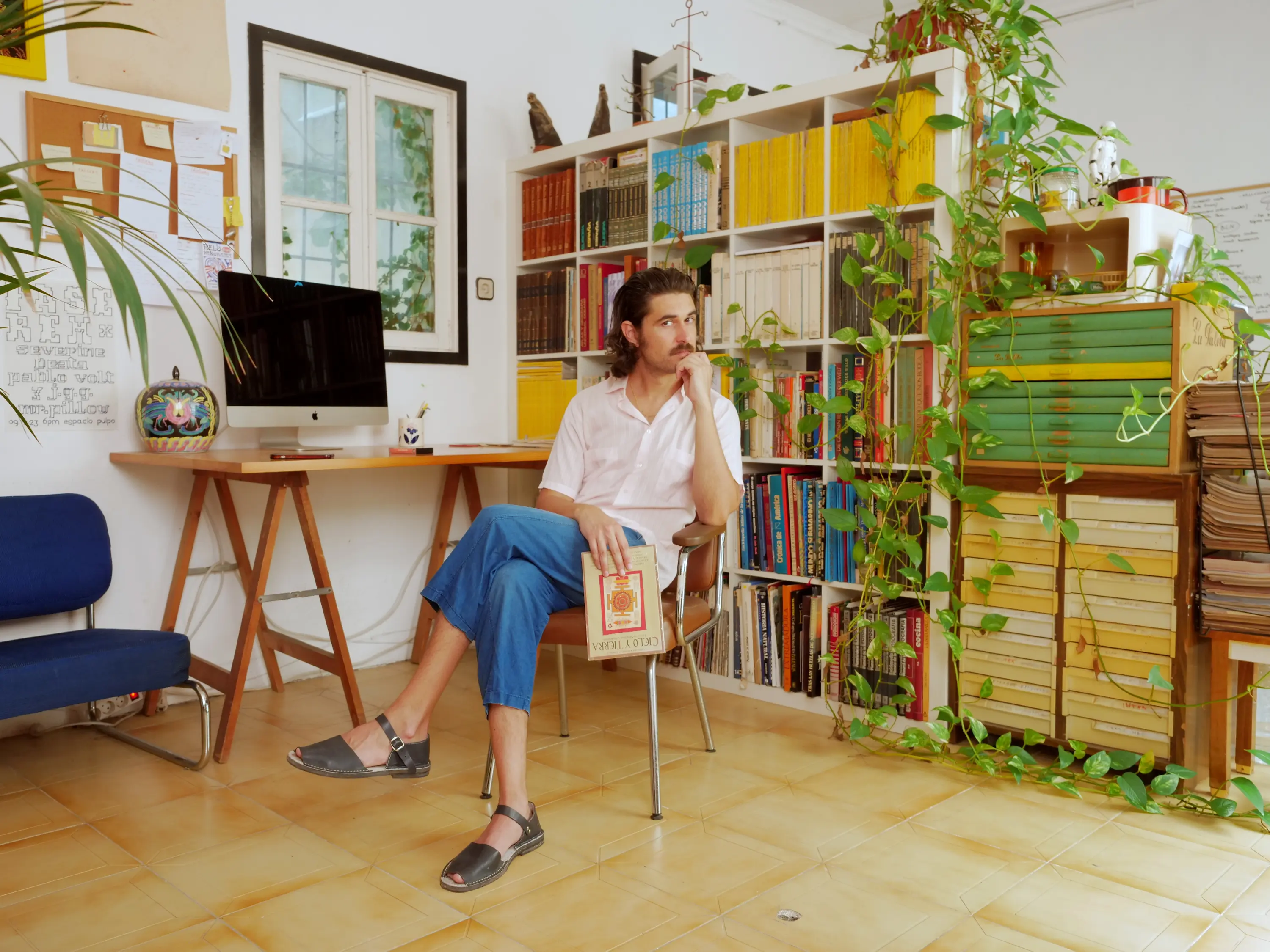
The island is attracting more and more artists and designers who adopt a visual arts approach, whether they work with ceramics or textiles. There are, of course, painters and sculptors… Since moving here, I’ve already photographed around forty studios – it’s impressive.
Everything works by osmosis, like a snowball effect. In Mallorca, we have many friends who are writers or painters who tell us about an exhibition or a talented artist. I go along and, as soon as a piece catches my eye, I ring the artist to visit their studio.
Jean Marie del Moral, Photographs, Horta-Picasso, Miró Mont Roig is on view at the Miro Foundation in Palma from April 15-September 6, 2026.