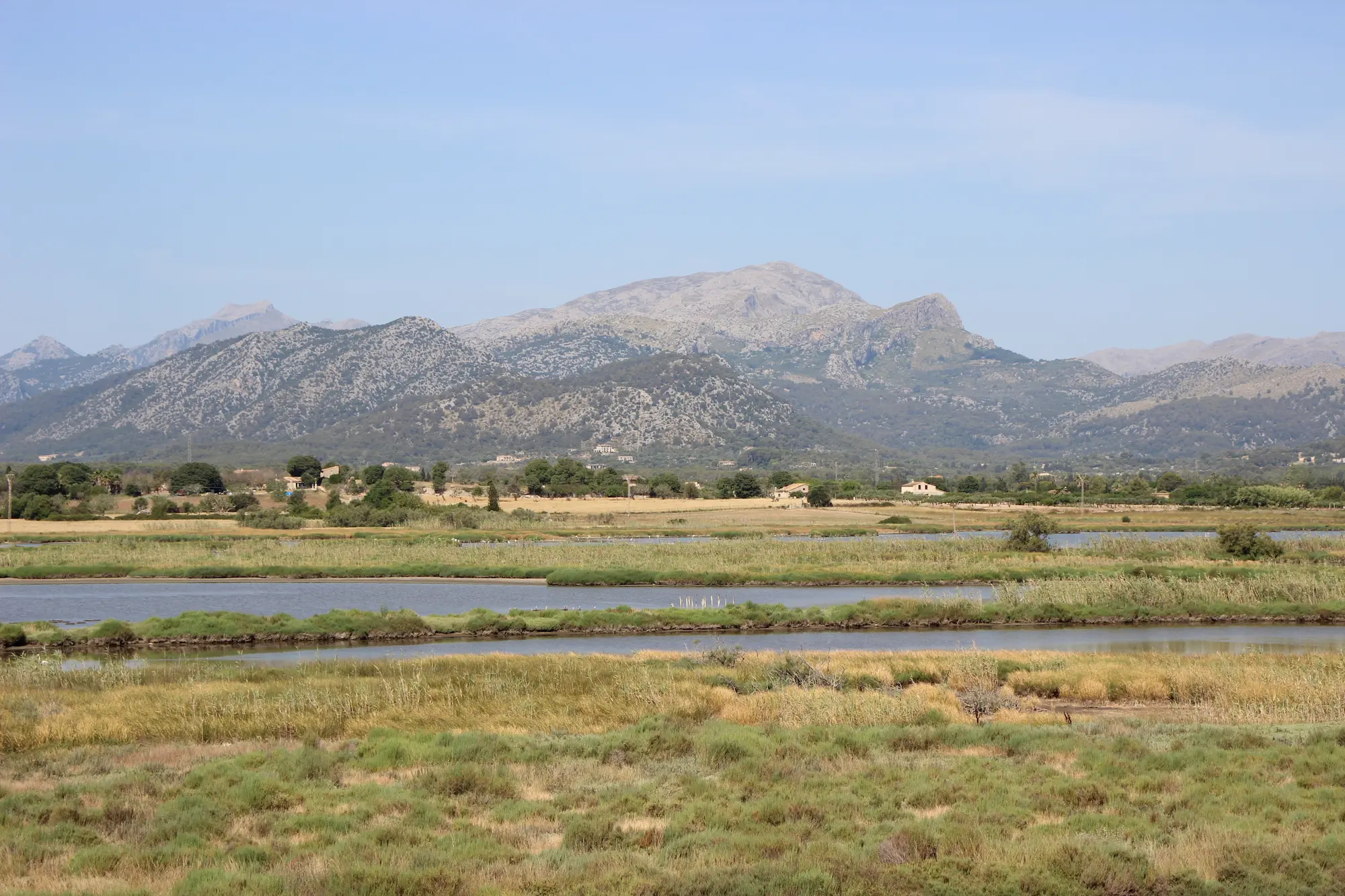
I would say that all wetlands are crucial, especially in a Mediterranean environment like Mallorca, where water is a scarce resource. It is true that S’Albufera is possibly the most significant because it is the largest and the first to be protected as a natural park, but all wetlands are important, even the smallest ones.
Wetlands are biodiversity “hot spots” because they concentrate a huge number of species in a small area. In addition, they act as freshwater reservoirs, help regulate floodwaters in torrents, and prevent flooding in other areas. Precisely because they are flood-prone areas with a high capacity to retain water, they help prevent flooding elsewhere where people live. In addition, they are important carbon sinks and help regulate temperature.
Another very important function is water purification. Contaminated water often reaches S’Albufera, and the wetland acts as a natural filter before the water reaches the sea. Without the protective function of S’Albufera, beaches such as those at Muro would likely suffer many pollution periods. In Mallorca, this function is especially important because we receive a great deal of pollution from tourism, second homes and intensive agriculture.
Aquatic plants retain nutrients and transform them through natural processes. In many places outside Mallorca, water from wastewater treatment plants is passed through so-called green filters, which are essentially artificial wetlands.
%20Maties%20Rebassa.webp)
S’Albufera occupies a very strategic position in the middle of the Mediterranean. Many migratory birds need wetlands where they can stop, feed, restore energy, or simply rest. For this reason alone, it has significant international importance.
This is why it is part of the Ramsar Convention, which protects wetlands of international importance. This recognition highlights its value for waterbirds and also for many other organisms.
For a wetland, water is the most important factor. What concerns us most is everything that affects both the quantity and quality of water reaching S’Albufera. There are other impacts, such as urban development, rising temperatures, sea-level rise, and fires, but the water issue is undoubtedly the most critical.
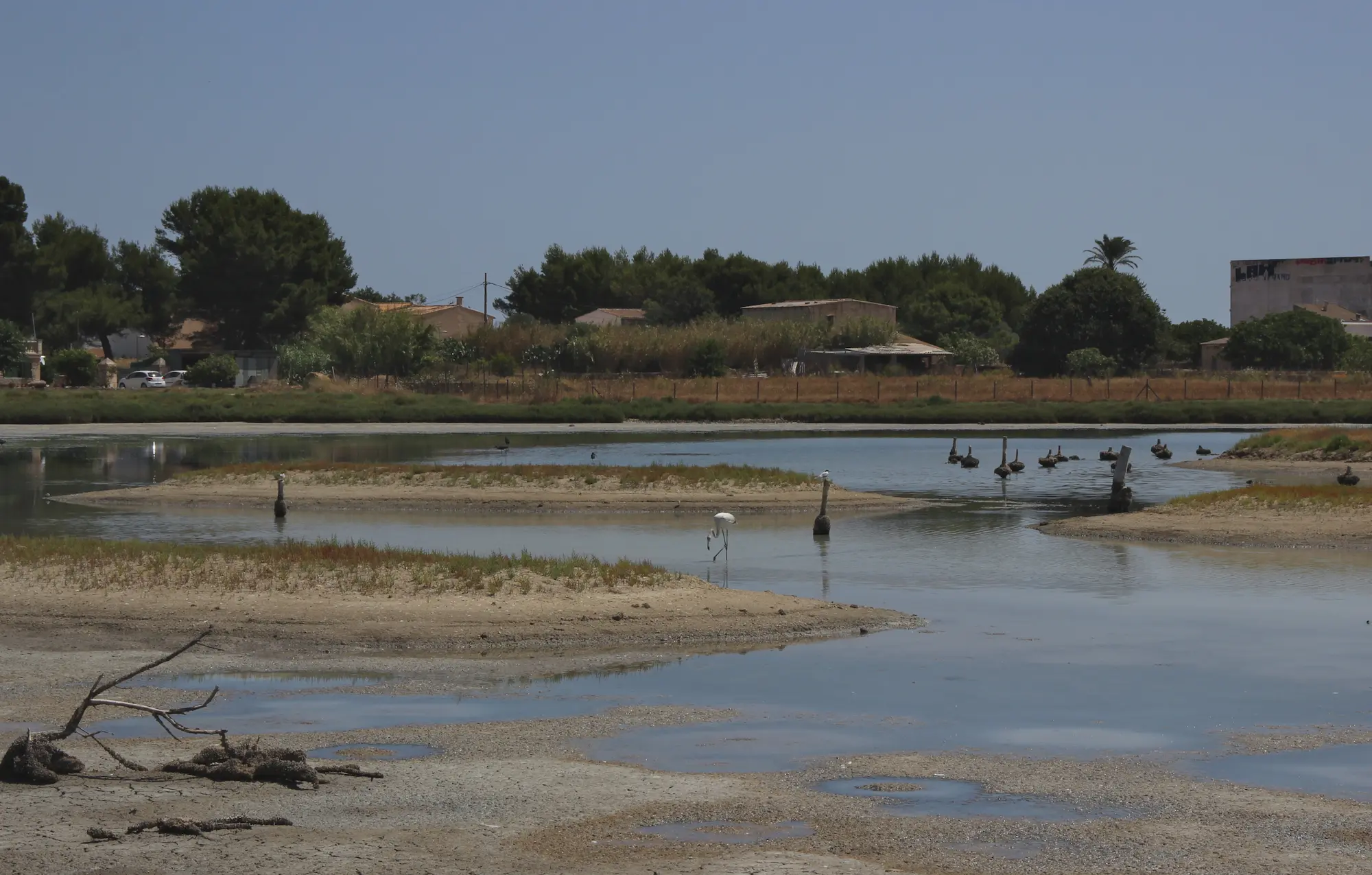
Today, S’Albufera is nothing like it was 30 or 40 years ago. It has lost a great deal of freshwater because much of what used to arrive via aquifers is now diverted to tourist facilities, swimming pools, second homes and agriculture. As a result, more seawater enters, salinity increases, and freshwater habitats are lost.
In addition, pollution has intensified because there are more residents and tourists. With less freshwater entering, pollutants become more concentrated and water quality deteriorates significantly. More sensitive species are disappearing. It is true that other species adapted to saline conditions, such as flamingos, are arriving. But one does not compensate for the other, because there are many saline wetlands in the Mediterranean, while freshwater wetlands are much rarer. This affects birds, fish, insects and the entire associated biodiversity. You used to go to a freshwater channel and see aquatic beetles, all of that has disappeared.
What is being attempted to better protect freshwater inflow is to balance different water uses, but this is very difficult because Mallorca has a highly intensive socioeconomic model. Trying to maintain that model without affecting the environment is practically impossible. Restoring S’Albufera to how it was 40 years ago is extremely difficult. Even if corrective measures are introduced in the future, damage will already have been done.
Where progress can be made is in pollution: improving wastewater treatment plants, separating rainwater and sewage systems, and connecting all properties to the sewage network. All of this requires substantial investment but can improve the situation. Reducing water consumption, however, is much more difficult as long as we continue to have so many residents, tourists and demands on resources.
%20Maties%20Rebassa.webp)
So far, fires have not been one of the main problems in the park compared to water-related issues. However, temperatures are rising, the wetland is drying out more quickly, and fires may become more intense in the future. They are also no longer confined to autumn, as they used to be, but are increasingly occurring in summer, precisely when many species are breeding, so the impact can be greater. Preventive measures include firebreaks that are regularly maintained.
Yes, invasive species are a very serious problem. With globalisation it is much easier for species to reach island territories like Mallorca. In S’Albufera, numerous invasive species have appeared, such as the Florida terrapin, which displaces the native tortoise because it is larger, more aggressive and transmits diseases. There are also invasive plants such as Carpobrotus in the dunes and cortaderia or cotula in wetland areas, which displace native vegetation.
The species causing the greatest impact is probably the carp. It is a major predator of larvae and insects and constantly disturbs the sediment. This puts nutrients and pollutants into suspension, makes the water turbid and prevents light from reaching the bottom. Without light, plants cannot take root. Without aquatic plants, the shelter and food sources for fish, insects and many other species disappear. The carp is affecting the entire food web.
The blue crab is another recent invasion. We know it is a major predator, although its full impact has not yet been studied. Both carp and blue crabs also attract illegal fishing, which leads people into protected areas and disturbs protected species. Every year we try to remove as many invasive species as possible. We know we will not eradicate them, but we aim to keep their populations as low as possible.
Another major issue is feral cats. There are numerous colonies around S’Albufera and it is impossible to prevent them from entering the park. They retain their hunting instinct and prey on birds, lizards and other animals. Many stray cats are also in poor health, but we currently have no authority to control these colonies.
Local hoteliers have realised that protecting S’Albufera has been a great success, as it is an important attraction for nature-oriented tourism. But its value goes far beyond tourism. A friend of mine often says that rather than being a protected space, S’Albufera is a protective space, because natural spaces protect us: they help prevent pollution, disease and other issues that also have social and economic consequences. Protecting nature means protecting both our health and the economy.
We believe natural spaces should not be closed to the public, but visits must be carefully managed. Visitor numbers have increased significantly, which can affect both conservation and the quality of the experience. Many visitors say they enjoyed the park but felt there were too many people.
The advantage is that, as a wetland, access is limited to four or five main routes. The rest of the park remains largely inaccessible to people, allowing wildlife to remain undisturbed. The challenge is to avoid overcrowding while still allowing people to experience and value the site.
We usually receive the most visitors in spring. It is an attractive season because plants are in bloom and migratory birds arrive, but it is also a very sensitive period as many species are breeding. Finding the right balance is therefore essential.
First of all, it is essential to become aware of how important nature is for human beings. We are nature, and nature protects us. Without it, we cannot live.
From that awareness, we need to apply social and political pressure to ensure that nature conservation becomes a priority in decision-making. This is probably the most important thing on an island as heavily impacted as Mallorca.
Protecting a site like S’Albufera is only the first step. It then has to be actively managed, and future impacts must be prevented, because once they occur they are very difficult to reverse and often have a more lasting effect than conservation efforts.